 中文
中文
 Español
 Francés
 Русский
 Português
 العربية
 Deutsch
 Italiano
 한국인
한국인
 Melayu
 ไทย
ไทย
 Việt
Việt
 bahasa Indonesia
 қазақ
қазақ
 Nederlands
 Ελληνικά
 Magyar
 čeština
 Suomalainen
 Filipino
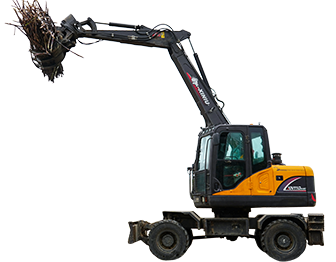
Wheel Excavator for Utility and Road Maintenance Crews
Reviewed by Justin, Product Engineer·Based on official factory specifications, August 2026
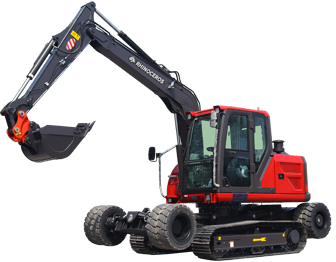
Quick answer: A wheel excavator fits utility and road maintenance crews best when the work is spread across many small, scattered sites— pothole patching, curb ramps, catch basin repair, utility trenching — rather than one continuous site. The advantage isn’t that the machine digs differently; it’s that a crew can reposition between nearby jobs under its own power instead of waiting on a trailer for every move.
Most equipment content compares wheel and crawler excavators by mechanics—ground pressure, digging force, undercarriage maintenance. For a utility or municipal crew, the more useful question is different: how many separate stops does this machine need to make in a day, and how does it get between them?
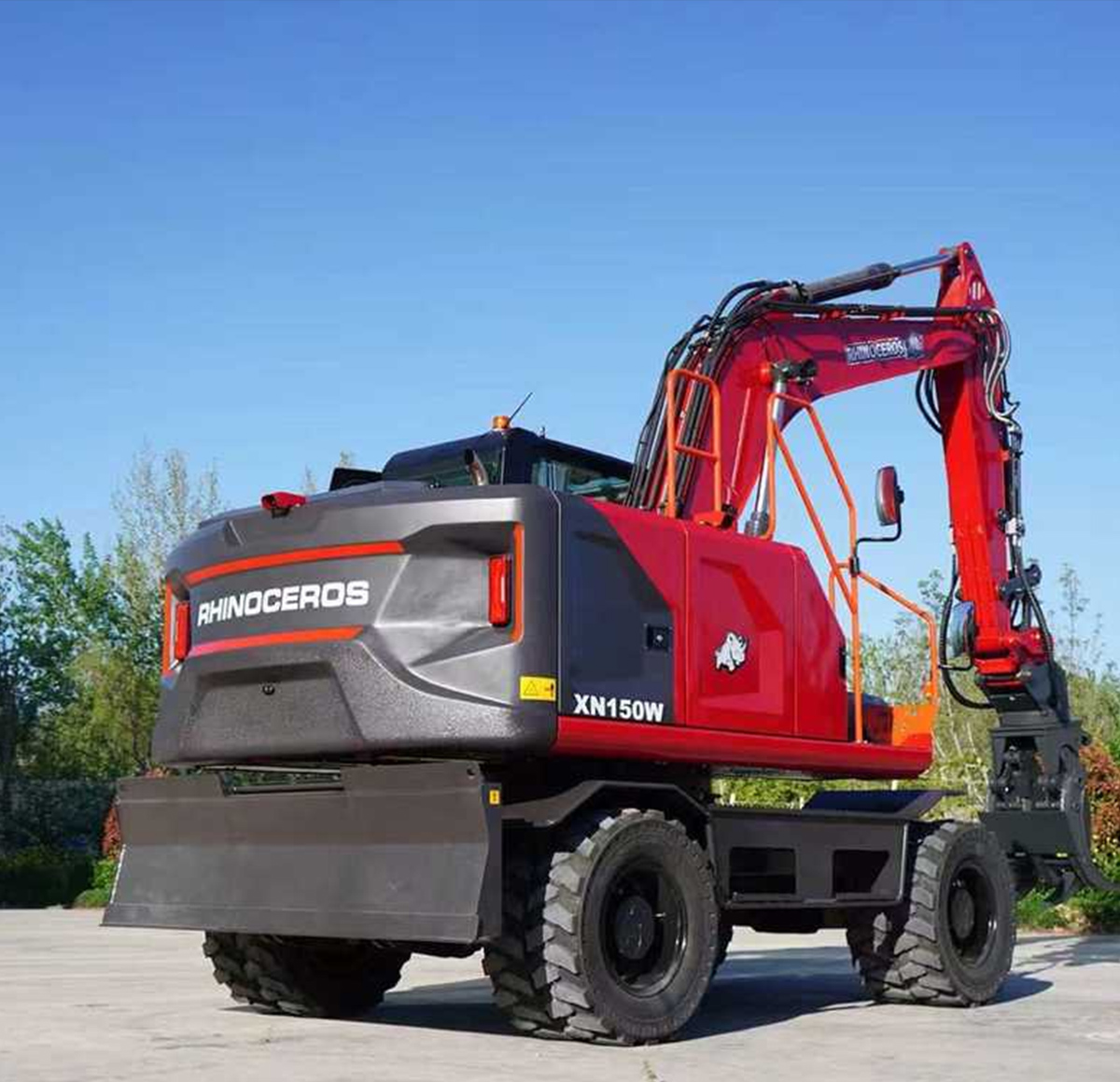
The Workflow This Actually Fits
A crawler excavator working a single foundation or a large earthmoving site stays put for days or weeks, so trailer mobilization happens once. A utility crew’s day rarely looks like that. A typical route might include a curb ramp repair in the morning, a drainage catch basin two streets over at midday, and a utility trench near the end of the day— three separate, unrelated stops, none of them large enough to justify its own trailer trip.
This is the pattern where a wheel excavator’s self-propelled road travel changes the math. We covered the mechanics of that travel capability in Can a Wheel Excavator Drive Itself Between Job Sites?—this article is about who that capability actually pays off for.
Matching Travel Speed to the Route, Not Just the Job
Not every wheel excavator model is tuned the same way, and for a crew covering ground between sites, travel speed is a real buying variable—not a spec-sheet afterthought.
| Model | Machine Weight | Max. Travel Speed | Engine | Best Fit |
|---|---|---|---|---|
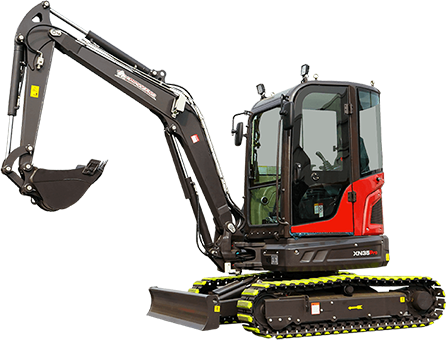
| XN35L | 4100 kg | 10 km/h | Kubota, 18.2 kW | Tight in-town stops, frequent digging within a small service radius |
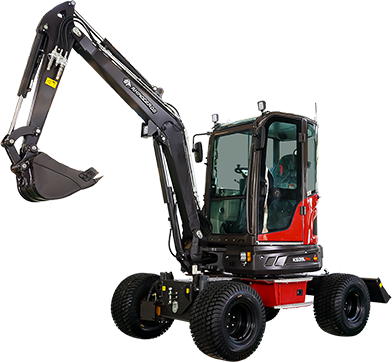
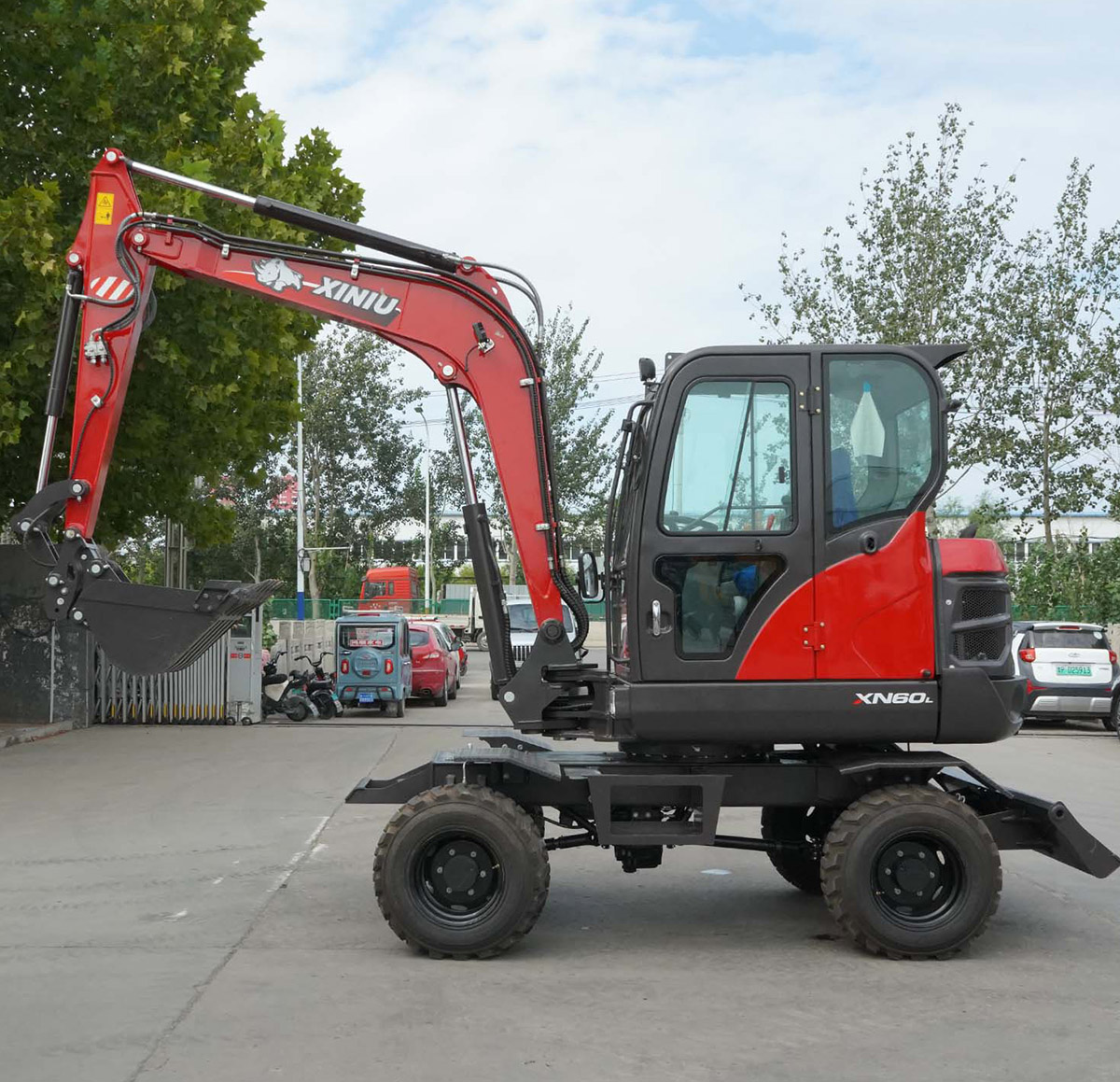
| XN60L | Not published on the official spec page at time of writing | 30 km/h | Yanmar | Routes covering more distance between sites, load-sensing hydraulics for varied attachment work |
Source: Rhinoceros official factory specification pages, rhinocerosequipment.com, August 2026.
The XN35L’s 10 km/h is plenty for a crew working within a few blocks of each stop. The XN60L’s 30 km/h starts to matter once a route spans a wider service area— a rural utility route or a maintenance zone covering several miles, where the difference between driving to the next site and trailering to it adds up over a full week, not just one job.
One Machine, Several Small Task Types
Utility and road maintenance work is rarely just digging. The same crew might need a breaker for a section of cracked concrete, an auger for a sign post or bollard footing, and a standard bucket for a utility trench —sometimes all in the same week. This is where the XN35L’s ISO-SAE dual-mode hydraulic setting is relevant to this buyer specifically: it’s built to accommodate attachments across both hydraulic standards without a separate conversion kit, which matters more to a crew rotating through several task types than to an operator running the same bucket on the same job for months.
What This Doesn’t Solve
Self-propelled road travel is not the same as unrestricted road-legal status. Whether a given machine can travel a given public route without a permit, escort, or additional lighting depends on local regulations, not on the machine’s top speed. That question is covered separately in Buying a Wheel Excavator from China: Certificates and Road-Compliance FAQ, and it’s worth resolving before assuming a crew can drive between every stop on a route.
It’s also not a replacement for a trailer on longer moves. Self-propelled travel is practical for nearby, in-service-area stops; a machine relocating across a longer distance still typically needs to be trailered, the same as any other excavator.
Frequently Asked Questions
Is a wheel excavator a good fit for a crew that mostly works one large site, not several small ones?
Not particularly—the road-travel advantage doesn’t come into play if the machine only needs to move once. A crawler machine is usually the more straightforward choice for a single, extended job site.
Does the ISO-SAE dual-mode feature apply to every wheel excavator model?
Confirm per model. It’s a documented feature on the XN35L; check the specification page for other models before assuming the same compatibility.
Can one wheel excavator realistically replace a small fleet for a scattered-site route?
It depends on how far apart the stops are and how much digging each one requires. It reduces trailer trips between nearby stops, but it doesn’t change how long each individual job takes.
Specifications reflect standard configurations as published on official factory specification pages and may vary by option package or model year; confirm current specifications directly with Rhinoceros before purchase. Road-use legality varies by jurisdiction and is not addressed by this article beyond what is stated above.