 中文
中文
 Español
 Francés
 Русский
 Português
 العربية
 Deutsch
 Italiano
 한국인
한국인
 Melayu
 ไทย
ไทย
 Việt
Việt
 bahasa Indonesia
 қазақ
қазақ
 Nederlands
 Ελληνικά
 Magyar
 čeština
 Suomalainen
 Filipino
Buying a Wheel Excavator from China: Certificates and Road-Compliance FAQ
Reviewed by Justin, Product Engineer·Based on official factory specifications, August 2026
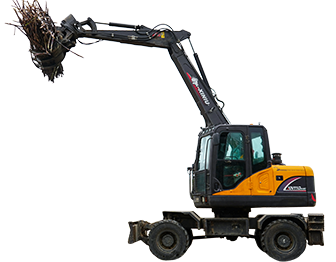
Quick answer: Yes-that's the entire point of a wheel excavator's undercarriage. Rather than loading onto a trailer for every move, a wheeled machine can travel under its own power between nearby sites, at speeds up to 30 km/h on models like the XN60L. Whether that's road-legal without a permit or escort still depends on local regulations, machine width, and required lighting, so it's worth checking before you plan a route that assumes it.
A crawler excavator over a few tons needs a trailer for almost any move-that's the whole subject of moving a large tracked machine between sites. A wheel excavator solves the same problem differently: instead of asking how to transport the machine, it asks whether you need to transport it at all.
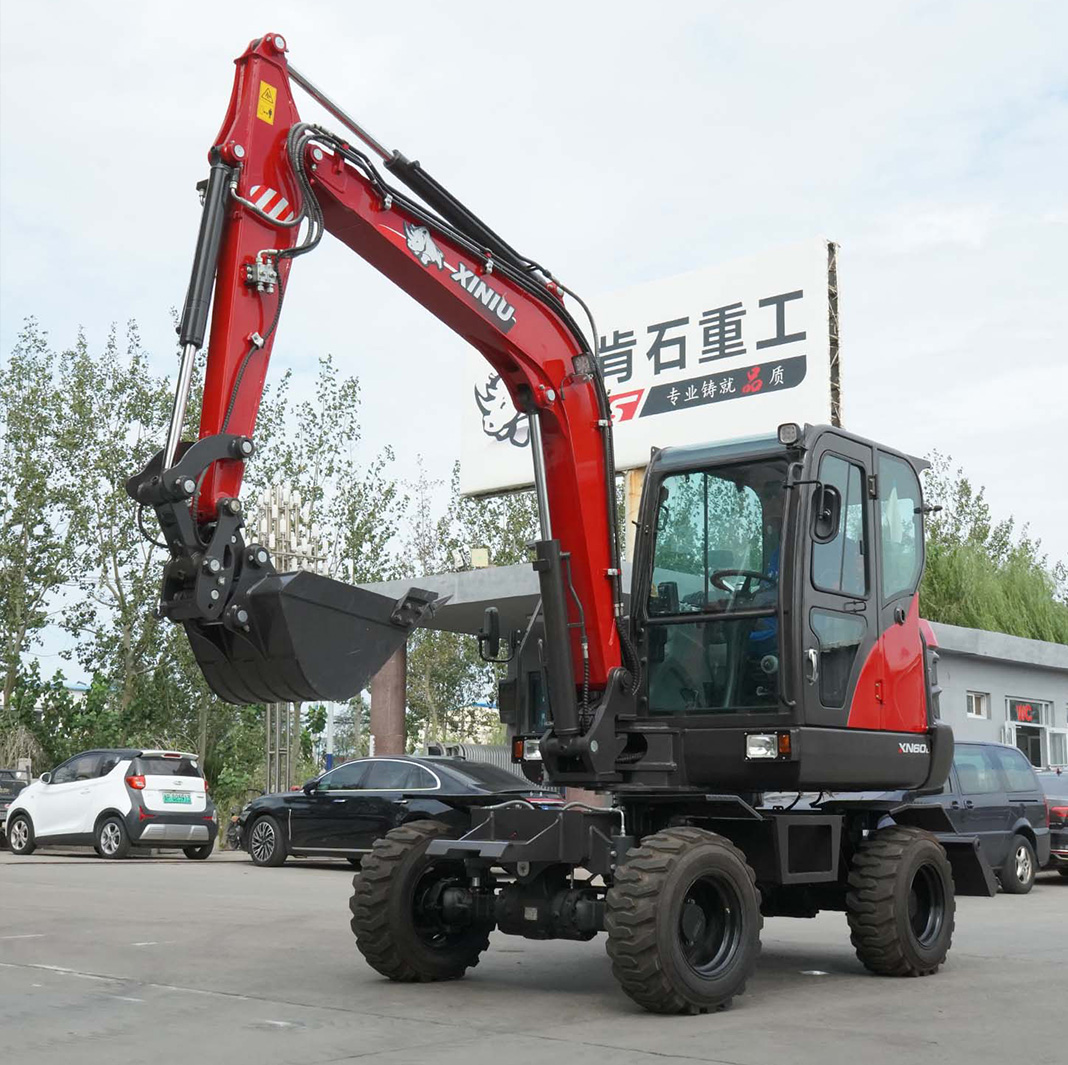
How Fast Is "Under Its Own Power," Actually
| Model | Max Travel Speed | Operating Weight |
|---|---|---|
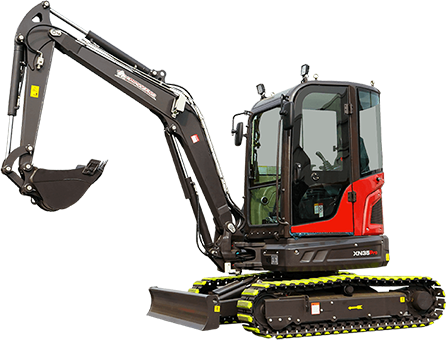
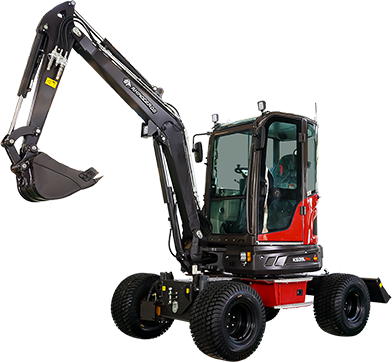
| XN35L | 10 km/h | 4100 kg |
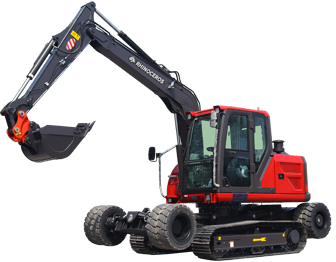
| XN60L | 30 km/h | -; |
Source: Rhinoceros official factory specification pages, rhinocerosequipment.com, August 2026. XN60L operating weight not yet published on the official spec page.
That's a meaningful gap, not a rounding difference. At 10 km/h, the XN35L is built for short repositioning within a site or between adjacent lots-useful, but not something you'd plan a multi-kilometer route around. At 30 km/h, the XN60L moves closer to how a small truck travels on a local road, which changes what"between job sites" actually means in practice: not just next door, but potentially across town on a single tank or charge cycle, depending on the route and local speed limits.
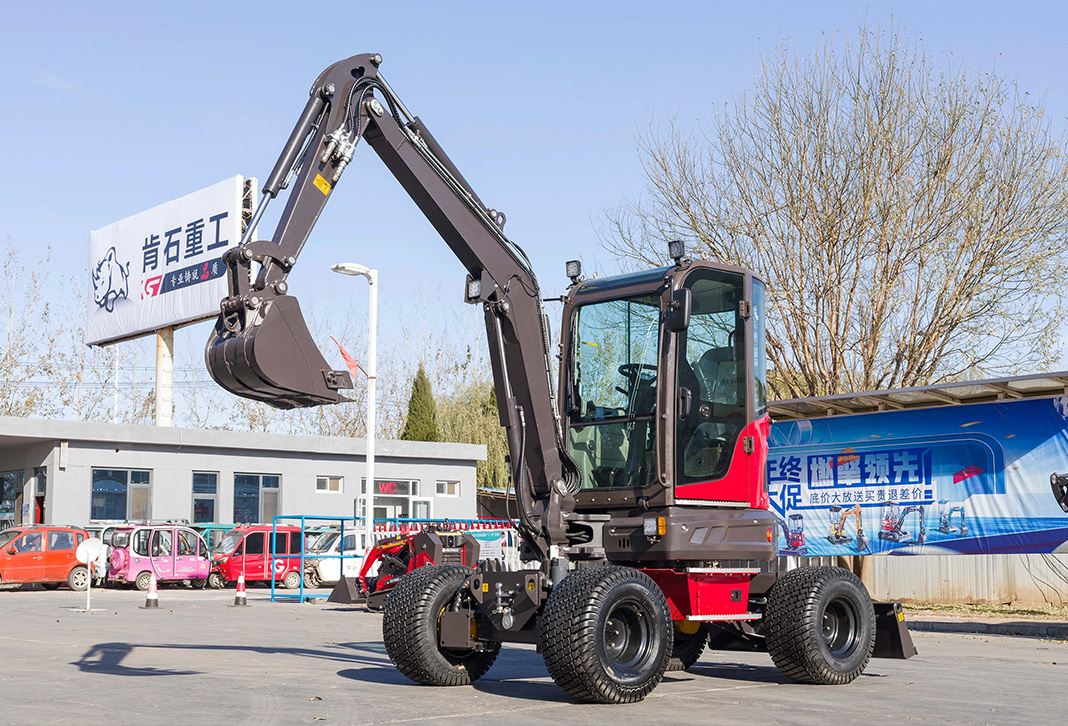
What "Road-Legal" Actually Depends On
Being physically capable of highway-adjacent speeds and being cleared to drive on a public road are two different questions, and the gap between them is entirely local. The factors that typically decide it:
1. Machine Width Versus Local Lane and Load Limits
Some jurisdictions cap the width of self-propelled equipment allowed on public roads without a wide-load permit or escort vehicle. Confirm your local threshold against the specific model's transport width before assuming a route is legal without one.
2. Lighting, Signaling, and Reflective Markings
Road travel usually requires functioning lights, turn signals, and reflective markings that go beyond what a machine needs for job-site work alone. Check what's fitted as standard versus what needs to be added before road use.
3. Operator Licensing
Some regions require a specific road-use license or endorsement to drive heavy equipment on public roads, separate from whatever certification covers operating it on a job site. This varies enough by jurisdiction that it's worth confirming locally rather than assuming.
Where This Actually Saves Time
The clearest case is a contractor or utility crew working several smaller jobs spread across a town or county in the same week-drainage cleanup here, a curb repair there, a utility trench somewhere else. Loading a crawler machine onto a trailer for each move adds a fixed block of time to every relocation, regardless of distance. A wheel excavator that can legally cover that same distance on its own power removes that fixed cost entirely, which is where the time savings compound over a week rather than a single job.
Frequently Asked Questions
Can any wheel excavator drive on public roads?
Physically, most wheeled undercarriages are built for road travel at some speed, but whether it's permitted without additional equipment or a permit depends entirely on local regulations, not on the machine itself.
Why is there such a big speed difference between models like the XN35L and XN60L?
Different engine and hydraulic drive configurations are tuned for different use cases-a machine built primarily for tight-site maneuvering doesn't need the same top speed as one intended for longer between-site travel.
Does a wheel excavator still need a trailer for long-distance moves?
Generally yes. Self-propelled road travel is practical for nearby sites within the same town or region; moving a machine across a longer distance still typically calls for a trailer, the same as it would for a crawler machine.
Specifications reflect standard configurations and may vary by option package; confirm current specifications directly with Rhinoceros before purchase. Road-use requirements vary by jurisdiction and are the operator's responsibility to verify before public road travel.