 中文
 Español
 Francés
 Русский
 Português
 العربية
 Deutsch
 Italiano
 한국인
 Melayu
 ไทย
 Việt
 bahasa Indonesia
 қазақ
 Nederlands
 Ελληνικά
 Magyar
 čeština
 Suomalainen
 Filipino
Zero tail swing and the iron counterweight: how it works
Zero tail swing and the iron counterweight: how it works
Our spec sheet lists zero tail swing and an iron counterweight. Here is how a counterweight stays inside the track width, what an independent reviewer saw on the machine, and what the design trades away.
The real spec this article explains
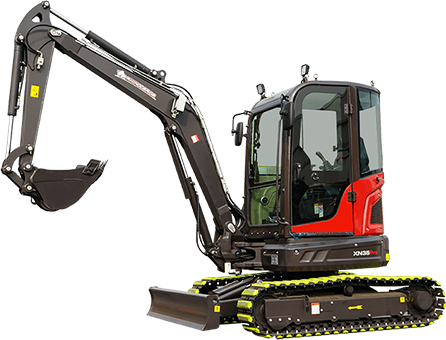
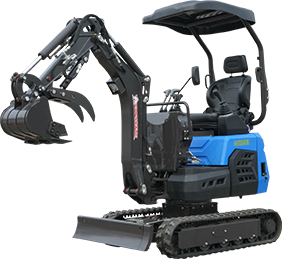
Our XN35PRO mini excavator page lists zero tail swing and an iron counterweight among its features, with an operating weight of 4,000 kg and a width of 1,740 mm. These two features are one engineering question seen from two sides: how do you keep enough counterbalance on a machine whose rear is not allowed to stick out?
What tail swing actually is
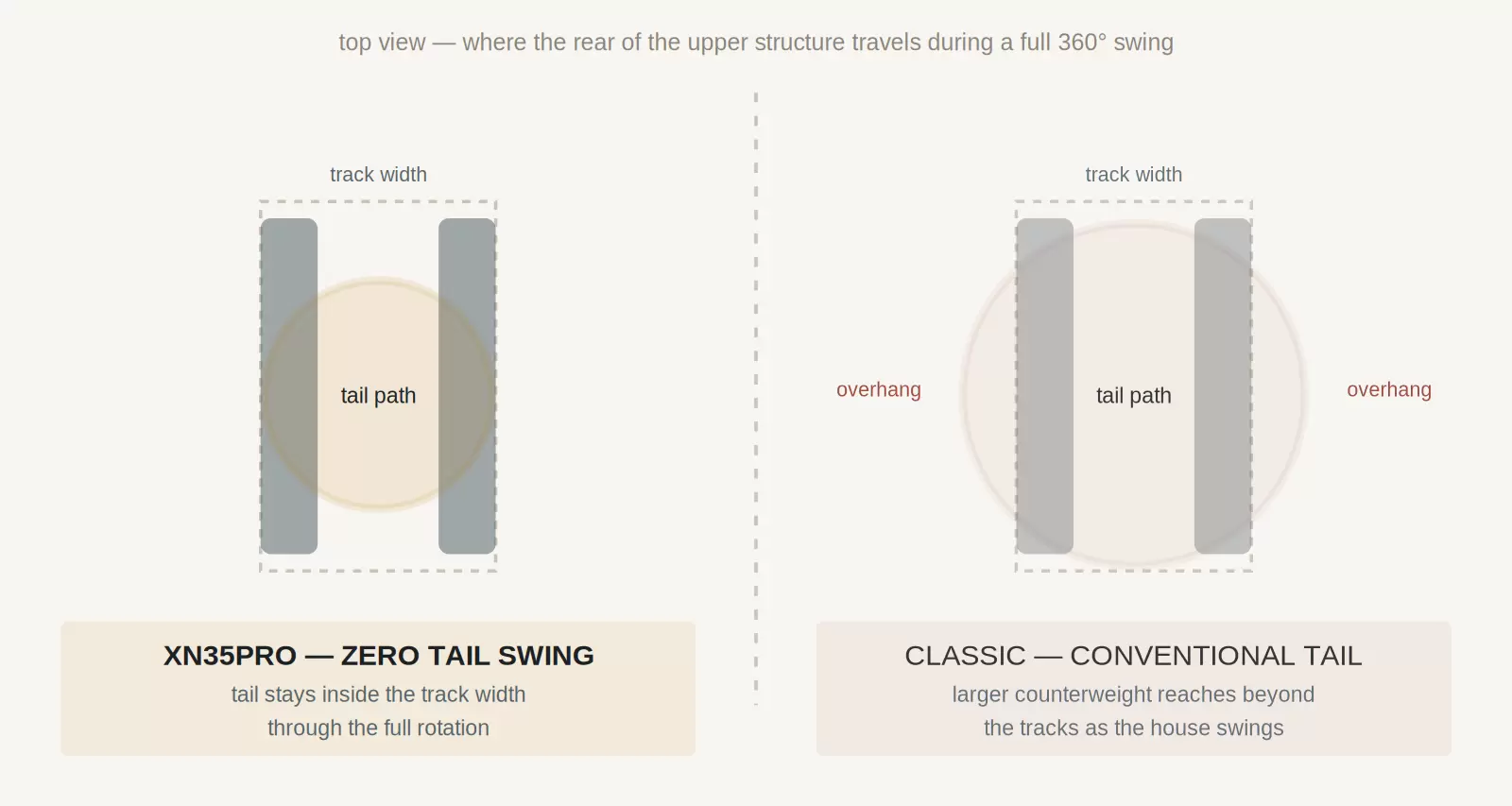
Industry guides describe the difference plainly. On a conventional excavator, a substantial counterweight extends rearward beyond the tracks, which allows the counterweight to be large and heavy and gives excellent stability at maximum reach. The cost is a wide swinging tail that needs clear space around the machine, and operators must keep watching the rear. Zero tail swing machines are engineered so the rear of the upper structure stays within, or very nearly within, the track width through a full rotation, which is why they suit fenced yards, alleys, and work beside walls and traffic.
How a counterweight fits inside the tracks
Material: why cast iron
Industry sources on counterweight design are consistent: most modern machines use cast iron or steel because iron is dense, so a lot of weight fits into a small footprint. Concrete-filled shells appear on some older or budget designs, but concrete is much less dense, so matching the same weight takes a far larger block. One safety engineering source puts it directly: cast iron counterweights are heavy but small, which allows them to stay inside the track width while swinging.
Shape: wrapped, curved, and often a single casting
Material alone is not enough. Engineering literature notes that zero tail swing designs often shape the counterweight to wrap around the engine compartment or make it taller to make up for the lack of depth, and patent documents describe curved, single-piece cast counterweights whose curvature minimises overhang across the full rotation of the upper structure.
What an independent reviewer saw on this machine
An independent equipment dealer, Parsons Link Equipment, published a hands-on walkaround of this machine under the name RH40, the same excavator we sell as the XN35PRO. Two of the reviewer's observations bear directly on this topic:
Door geometry. The reviewer pointed out that the cab door opens back at an angle so that it stays within the zero-swing envelope, instead of sticking out where the rotating machine could catch it.
One-piece counterweight. Looking at the rear, the reviewer noted that the whole back end, including the area around the engine compartment, is part of the counterweight, a single large casting.
These are one dealer's observations of one unit, not a Rhinoceros specification, but they match the design pattern described in the engineering literature above: a single, shaped casting that stays inside the track footprint.
What this design trades away
Sources are consistent on the main costs. Zero tail swing machines trade some counterweight mass and position for compactness, which can reduce maximum lifting capacity and affect stability on grades. One industry guide describes the most significant trade-off as reduced lifting capacity and stability at maximum reach, especially over the side. A safety source adds that zero tail swing machines make work on slopes trickier by increasing tipping risk.
Side by side
| Zero tail swing (XN35PRO) | Conventional tail | |
|---|---|---|
| Rear overhang during swing | Within track width | Extends beyond the tracks |
| Work beside walls, fences, traffic | Well suited | Needs clear rear space |
| Counterweight size | Compact, dense cast iron | Can be larger |
| Lift capacity and stability at full reach | Reduced, especially over the side | Better |
| Stability on slopes | Slightly lower, more care needed | Generally better |
What this does not mean
Zero tail swing does not make the machine immune to tipping, and it does not remove the need to work within the lift chart for your attachment and reach. It removes one hazard, the swinging tail, while accepting a smaller stability margin in return. Operators should treat slopes and full-reach side work with extra care.
Questions to ask before you compare machines
Is the tail truly zero swing, or a reduced or minimal tail swing that still overhangs slightly?
What is the rated lift capacity at your working reach, and over the side versus over the front?
What is the counterweight made of, and is it a single casting?
Does your work involve slopes where reduced stability would matter?
Send us your typical site and work through our inquiry form and we can confirm whether the XN35PRO fits. You can review the full specification on the XN35PRO product page.
Frequently asked questions
What does zero tail swing mean on the XN35PRO?
The rear of the upper structure stays within the track width through a full 360° rotation, so the machine can swing near walls and obstacles without the tail sweeping outward.
Why does the XN35PRO use an iron counterweight?
Cast iron is very dense, so enough counterbalancing mass can fit into a compact shape that stays inside the track width.
Does zero tail swing reduce lifting capacity?
It can. Industry guides note reduced lifting capacity and stability at maximum reach, especially over the side, because there is less room for counterweight.
Is a zero tail swing excavator less stable on slopes?
Slightly, according to industry sources. Conventional designs generally balance better on grades, so slope work calls for extra care.
Did anyone independent look at this machine's counterweight design?
An independent dealer's walkaround review of the same machine under the name RH40 noted a cab door that opens within the zero-swing envelope and a one-piece rear counterweight. These are one reviewer's observations, not a Rhinoceros specification.
Is zero tail swing right for every job?
No. It suits confined sites. For open sites with heavy lifting at full reach or work on grades, a conventional tail can be the better fit.
Feature availability varies by model and configuration; confirm current specifications directly with Rhinoceros before purchase. Engineering comparisons describe general excavator design principles from published industry sources. The independent review described reflects one dealer's observations and is not a claim by Rhinoceros.