 中文
中文
 Español
 Francés
 Русский
 Português
 العربية
 Deutsch
 Italiano
 한국인
한국인
 Melayu
 ไทย
ไทย
 Việt
Việt
 bahasa Indonesia
 қазақ
қазақ
 Nederlands
 Ελληνικά
 Magyar
 čeština
 Suomalainen
 Filipino
The 2-Meter Barrier: How the XN13 Digs 2,020mm Deep in a 1.3-Ton Frame
The 2-Meter Barrier: How the XN13 Digs 2,020mm Deep in a 1.3-Ton Frame
Reviewed by Justin, Product Engineer at Rhinoceros (Shandong Kenstone Heavy Machinery Co., Ltd.). Engineering notes based on official factory specifications, July 2026.
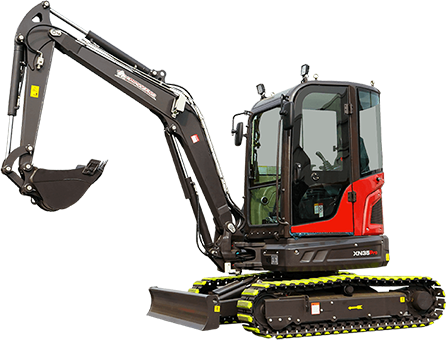
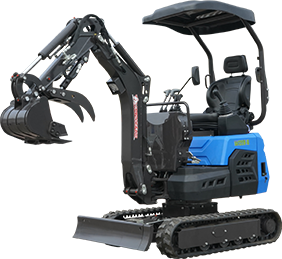
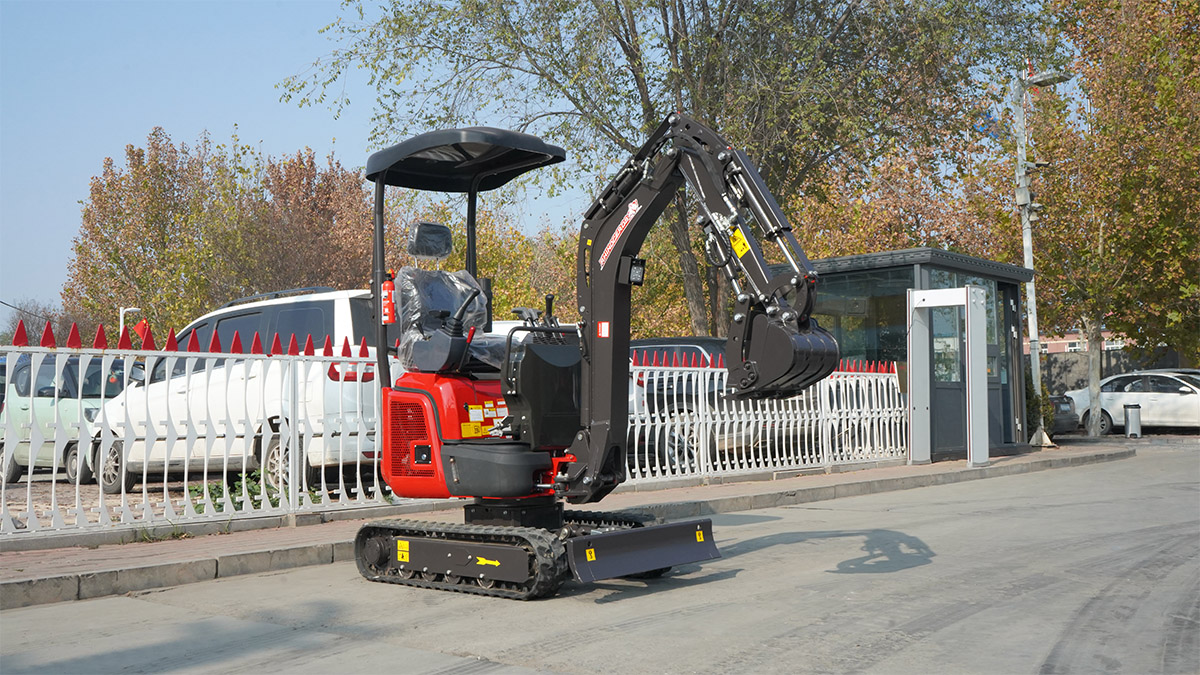
A septic line usually sits somewhere between 1.8 and 2.2 meters down. Anything shallower than that, and a machine simply can't finish the job in one pass-it has to claw partway down, back out, reposition, and go again. In the sub-1.5-ton class, that extra depth is normally the first spec buyers give up on to keep the machine small enough for a trailer or a backyard gate. The Rhinoceros XN13 reaches 2,020 mm without giving up that footprint.
Here's what that number actually means on a jobsite, and what it takes structurally to get there without the machine feeling unstable at full reach.
What 2,020mm Buys You in Practice
Most 1.3-ton class excavators top out around 1,700-1,800 mm of digging depth. The XN13's 2,020 mm clears that by 220-320 mm, which sounds small until it's the difference between finishing a trench for a frost-depth water line and having to switch to hand-digging the last foot with a shovel. For septic lines, deep footings, and utility trenches in colder climates, that margin is often the entire reason a 1.3-ton machine gets picked over a 2-ton one that can't fit through the same gate.
How a Machine This Light Reaches That Deep
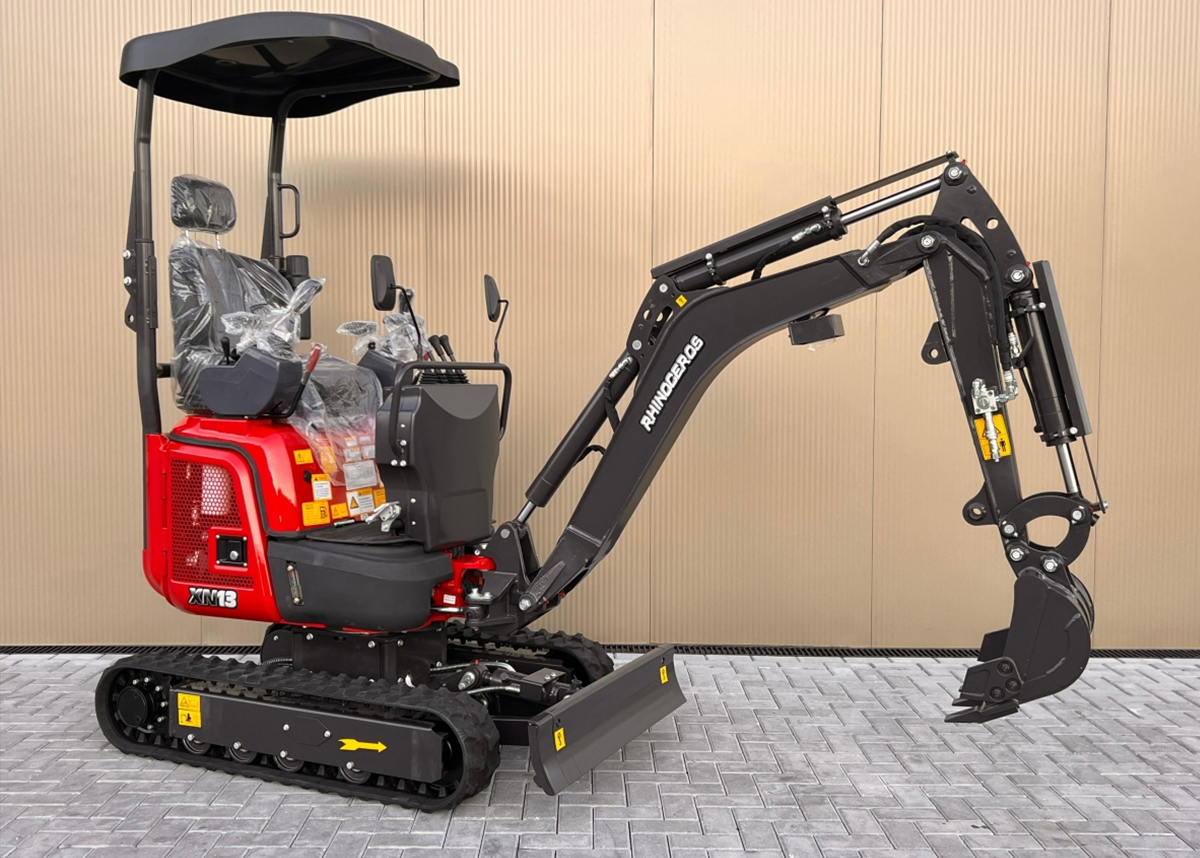
Digging depth in this weight class is a balancing act, not a single spec you can chase in isolation. A longer arm reaches deeper, but a longer arm also shifts more weight forward at full extension-and on a machine this light, that's exactly the point where a poorly balanced excavator starts to lift its rear tracks off the ground.
Rhinoceros addresses that balance from two directions rather than one. The XN13's 1,290 kg operating weight is roughly 170 kg heavier than the class standard, and that mass is placed to counteract the arm's reach rather than just add bulk. On the hydraulic side, the high-flow constant displacement system feeds the arm and bucket cylinders at a steady rate through the full stroke, so digging force doesn't taper off as the bucket approaches maximum depth -a common complaint on lighter machines running variable-flow pumps under load.
The undercarriage does the rest of the work. Tracks that expand from 850 mm to 1,000 mm give the XN13 a wider stance to dig from once it's past a gate or fence line, which matters more at full arm extension than it does when the bucket is close to the machine.
Where This Matters Most
Three job types tend to hit the depth ceiling on lighter excavators first: septic and sewer line installation, footings for additions or retaining walls, and drainage work below the frost line in northern climates. On all three, the alternative to enough digging depth is't a smaller machine-it's more time, more repositioning, and in cold-climate footings, sometimes a failed inspection if the depth requirement is't met on the first attempt.
Technical FAQ
Does the extra digging depth come at the cost of lifting capacity?
No. The added operating weight and counterbalance are specifically there to support the arm at full extension, which is also where lift capacity is most sensitive to machine balance.
Will the XN13 tip forward when the bucket is at maximum depth on soft ground?
The wider 1,000 mm track stance (expanded from the 850 mm transport width) is designed for exactly this scenario-full digging reach on uneven or soft terrain.
Specifications are based on official factory data for 2026 Rhinoceros XN13 configurations.