 中文
 Español
 Francés
 Русский
 Português
 العربية
 Deutsch
 Italiano
 한국인
 Melayu
 ไทย
 Việt
 bahasa Indonesia
 қазақ
 Nederlands
 Ελληνικά
 Magyar
 čeština
 Suomalainen
 Filipino
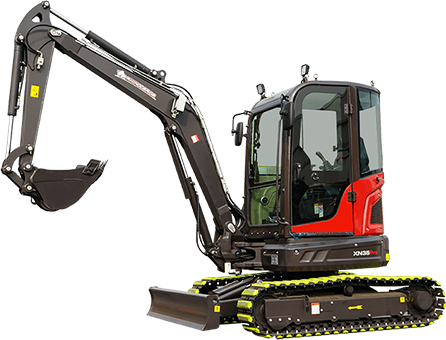
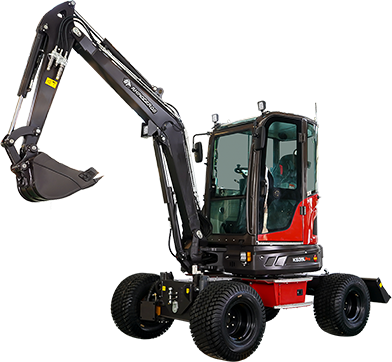
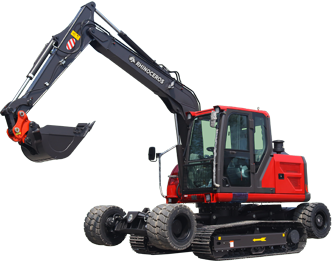
Cylinder on the Top: Why the XN13’s Boom Cylinder Sits Above the Boom, Not Below
Why the XN13's boom cylinder sits on top, not underneath
Our spec sheet lists "Cylinder on the Top" as a feature. Here is the actual mechanical reason it matters, and why Kubota, CAT, JCB, and Volvo build their own compact excavators the same way.
The real spec this article explains
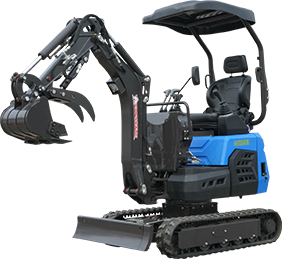
Our XN13 mini excavator page lists "Cylinder on the Top" among its features, alongside a swing boom, telescopic chassis, and pilot control. It is easy to read past a short phrase like that. It describes a specific mechanical choice with a specific, well-documented reason behind it, and it is worth understanding before you compare the XN13 against a machine that mounts its cylinder the other way.
Two ways to mount a boom cylinder
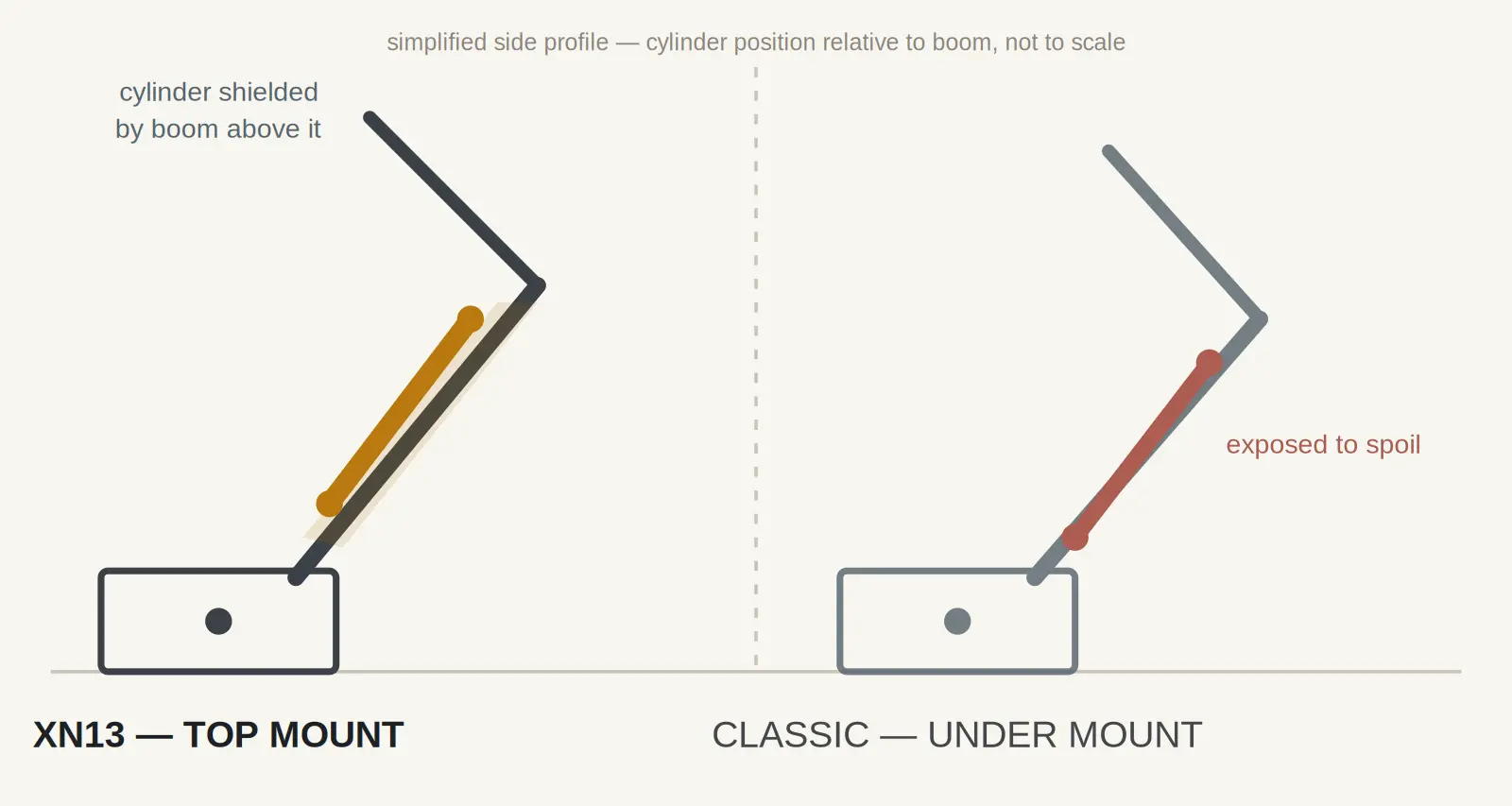
A mini excavator's boom is raised and lowered by a hydraulic cylinder connecting the boom to the main frame. On machines up to roughly two tons, that cylinder can be mounted in one of two positions: above the boom, or below it. Industry comparisons of mini excavator design describe the under-boom position as the classic, typically lower-cost configuration, and the over-boom position as the one preferred by several major manufacturers, including Kubota, CAT, and Volvo CE, on their compact excavator lines.
What changes when the cylinder sits on top
Two concrete, measurable things change, not just a visual difference.
1. Greater maximum digging depth for the same boom length
Industry comparisons of mini excavator geometry are specific on this point: for machines of the same size, an over-the-boom cylinder mount results in a greater maximum digging depth than an under-the-boom mount. The geometry of where the cylinder's force is applied changes how far the arm can extend downward before the cylinder runs out of travel.
2. The boom itself shields the cylinder
A hydraulic cylinder is a precision component: a scored or dented rod, or a damaged seal, can take the machine out of service. Industry documentation on this exact design choice explains the mechanism plainly: when the cylinder sits on top, the boom itself sits between the cylinder and the material being excavated, physically protecting it from impact and abrasion during digging. One equipment manufacturer's own documentation on a comparable compact excavator describes this as protecting the cylinder "against wear and tear" during normal digging, loading, and transport.
Side by side
| Cylinder on top (XN13) | Cylinder underneath (classic) | |
|---|---|---|
| Max digging depth, same boom length | Greater | Lower |
| Exposure to excavated material during digging | Shielded by boom | More exposed |
| Typical cost position in the market | Mid-to-upper | Often lower |
| Common on trench boxes / deep, narrow digging | Better clearance | Cylinder can obstruct |
What this does not mean
A top-mounted cylinder does not make the hydraulic system immune to damage. It reduces exposure to one common failure mode, contact with excavated material or nearby surfaces, it does not eliminate the need for careful operation, and a cylinder shield or guard can still add a further layer of protection on top of the mounting position itself, particularly if you run a hydraulic breaker or another attachment that throws debris. Treat this as one real design advantage among several factors that affect a machine's durability, not the only one that matters.
What to ask before you compare two mini excavators
Is the boom cylinder mounted above or below the boom on this specific model?
Does that change the machine's maximum digging depth compared with a similarly sized machine mounted the other way?
Is any additional cylinder shield fitted or available, particularly if you plan to run a hydraulic breaker?
How does the cylinder's position affect clearance when digging in a trench box or other confined excavation?
Send us your typical digging depth and site conditions through our inquiry form, and we can confirm the XN13's exact geometry for your job. You can review the full specification on the XN13 product page.
Frequently asked questions
What does "Cylinder on the Top" mean on the XN13?
It means the boom's hydraulic lift cylinder is mounted above the boom rather than below it, which is the configuration used by several major compact excavator brands for the reasons explained above.
Does this make the XN13 dig deeper than a machine with the cylinder underneath?
For machines of the same size, an over-the-boom cylinder mount generally allows a greater maximum digging depth than an under-the-boom mount, according to industry comparisons of mini excavator geometry.
Is the under-boom cylinder position a worse design?
Not automatically. It is typically the lower-cost, classic configuration and is still common across the industry. The trade-off is reduced digging depth and more exposure to excavated material for the cylinder, not a defect.
Does a top-mounted cylinder eliminate the need for a cylinder guard?
No. It reduces one common source of damage, but a dedicated cylinder shield can still add protection, particularly for attachments like hydraulic breakers that throw debris.
Which other brands use a top-mounted boom cylinder?
Industry comparisons describe this as the preferred configuration on compact excavators from several major manufacturers, including Kubota, CAT, and Volvo CE, among others.
Does this affect how the XN13 is serviced?
The cylinder's position can affect access during maintenance. Confirm specific service procedures with Rhinoceros or your dealer's technical documentation.
Feature availability varies by model and configuration; confirm current specifications directly with Rhinoceros before purchase. Comparisons of cylinder mounting positions describe general mini excavator engineering principles reported across the industry and are not claims made about specific competitor products by Rhinoceros.