 中文
 Español
 Francés
 Русский
 Português
 العربية
 Deutsch
 Italiano
 한국인
 Melayu
 ไทย
 Việt
 bahasa Indonesia
 қазақ
 Nederlands
 Ελληνικά
 Magyar
 čeština
 Suomalainen
 Filipino
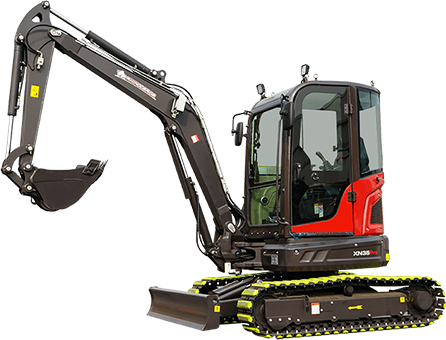
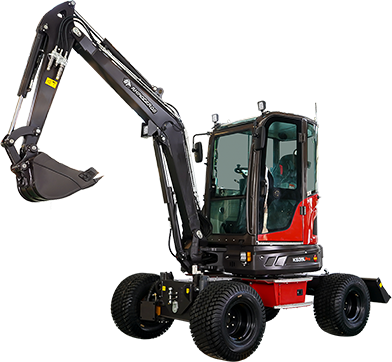
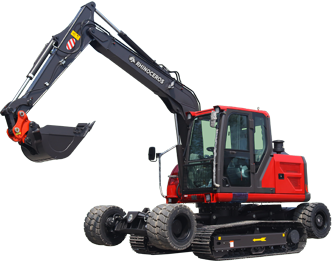
Why does the XN120L wood grapple use a manganese steel body instead of standard AR plate?
By Justin, Product Engineer · Based on official factory specifications and metallurgical industry documentation, September 2026
TL;DR: Manganese steel gets harder the more it is struck, which suits a grapple that repeatedly impacts logs or scrap. Standard abrasion-resistant plate is built for sliding wear instead. The XN120L wood grapple variant uses manganese steel for that reason.
The real spec this article explains
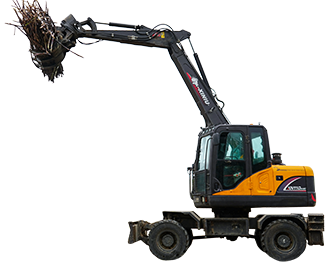
Our wheel excavator range includes an XN120L Wood Grapple configuration, listed with a manganese steel plate body, a customized hydraulic system, and optional Euro V emissions. This is a distinct variant built for log handling, scrap sorting, and similar grapple work, not a general digging machine with an attachment bolted on. The material choice behind "manganese steel plate body" is worth explaining, because it is a specific, deliberate decision, not a generic strength claim.
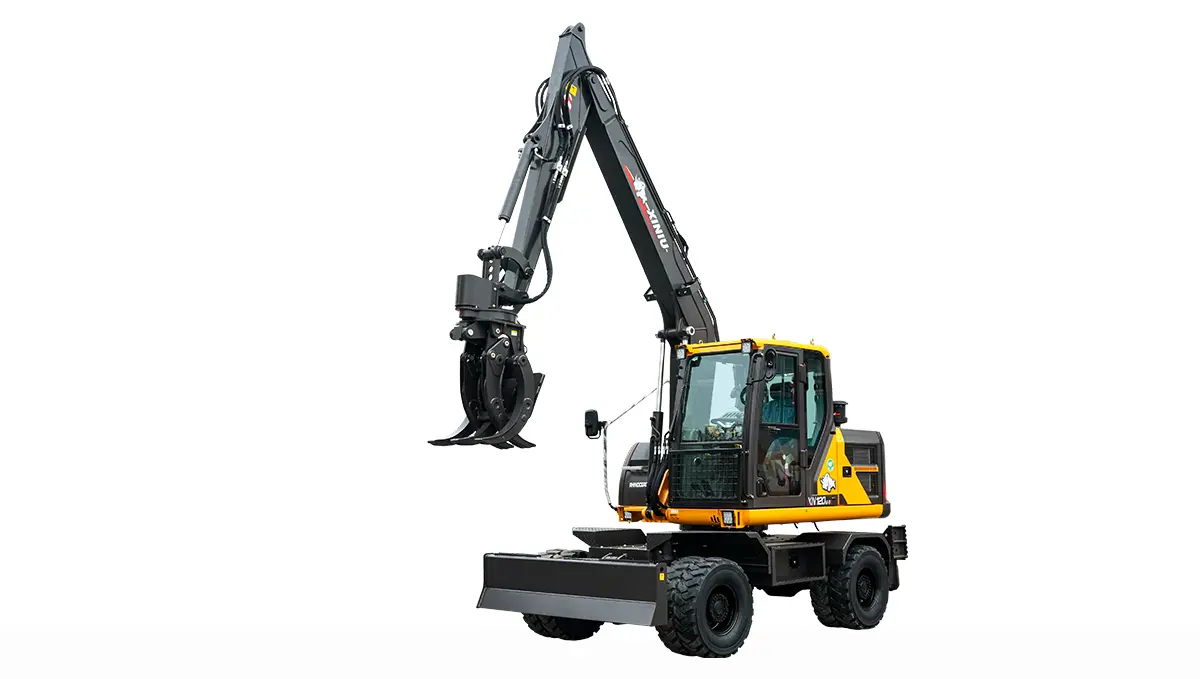
Why grapple work is a different wear problem than digging
Most wear-resistant equipment parts, an excavator bucket edge scraping through soil, for example, face sliding and scraping wear. A grapple body faces something different: repeated impact. Every time the jaws close around a log, a length of pipe, or a piece of scrap metal, the body takes a shock load, over and over, all day. Metallurgical documentation on wear-resistant steels is clear that different wear mechanisms call for different steel chemistries, and that choosing the wrong one for the actual wear pattern leads to premature failure even if the steel is nominally "hardened."
What makes manganese (Hadfield) steel suited to impact
Manganese steel, more precisely austenitic manganese steel, known in metallurgy as Hadfield steel after its inventor, has one property that makes it specifically suited to grapple-type impact work: it work-hardens. Patent and technical literature on the material describes it as combining high ductility with the ability to become significantly harder at the surface the more it is struck or worked, while the core of the material stays tough rather than brittle. Industry documentation on manganese steel confirms it is used extensively in equipment that faces severe impact and gouging, including earth-moving equipment, crushers, and grinding machinery, specifically because the material gets harder with use rather than wearing down in the way a simple hard-but-static plate would.
Standard abrasion-resistant (AR) steel plate, the kind more commonly used for bucket floors and digging edges, is engineered differently. It is typically through-hardened to a fixed hardness level, which performs well against sliding and scraping wear from soil and aggregate, but does not have the same ability to toughen further under repeated impact. Choosing manganese steel for a grapple body reflects an impact-focused wear case, not the sliding-wear case a digging bucket is built for.
Side by side
| Manganese (Hadfield) steel | Standard AR plate (such as AR400/AR500) | |
|---|---|---|
| Best suited wear type | Impact and gouging, such as crushing and grappling | Sliding and scraping wear, such as digging and scooping |
| How it responds to use | Work-hardens at the surface under repeated impact; core stays tough | Fixed hardness from heat treatment; does not harden further with use |
| Typical applications | Grapples, crusher jaws, grinding mill liners | Bucket floors, cutting edges, dump bodies |
| Weldability consideration | Requires specific welding methods due to its heat sensitivity | Generally more straightforward to weld and fabricate |
What the customized hydraulic system is addressing
A wood grapple is not a bucket. It needs continuous rotation to orient logs or scrap, independent clamp force to hold an irregular load securely without crushing or dropping it, and flow control tuned for that clamp-and-rotate motion rather than the dig-and-curl motion a standard bucket uses. The "customized hydraulic system" on this variant reflects that functional difference, not a cosmetic change. Confirm with us the specific flow and pressure settings for your grapple attachment if you plan to pair it with implements from a different supplier.
What this means if you handle logs or scrap
If your work involves repeatedly gripping and releasing irregular, heavy loads, logs, pipe, demolition debris, scrap metal, a body material chosen for impact resistance matters more than one chosen for digging wear. Ask any wheel excavator or grapple supplier directly which wear case their material was chosen for, rather than assuming "heavy-duty steel" on a spec sheet automatically means the right steel for your specific use.
Questions to ask before you order a grapple-configured machine
Is the grapple body manganese steel, AR plate, or another material, and what wear case was it chosen for?
What does the customized hydraulic system change compared with the standard digging configuration, in terms of flow, pressure, and rotation?
Is Euro V emissions compliance required in your market, and is it included or optional on this configuration?
What is the recommended inspection or maintenance interval for the grapple body and pivot points under heavy impact use?
Send your intended material (logs, scrap, demolition debris) and typical load size through our inquiry form, and we will confirm the XN120L Wood Grapple's configuration for your use case. You can review the full wheel excavator range on our wheel excavator page.
Frequently asked questions
What is manganese steel, and why is it used on a grapple?
Manganese (Hadfield) steel is an alloy that work-hardens under repeated impact, becoming more wear-resistant at the surface the more it is struck, while staying tough at the core. That property suits the repeated clamping impact of grapple work.
Is manganese steel better than AR plate?
Neither is universally better. Manganese steel suits impact and gouging wear, such as grappling. AR plate suits sliding and scraping wear, such as digging. The right choice depends on the wear pattern of the actual job.
Can the XN120L Wood Grapple also dig normally?
This variant is configured specifically for grapple work, including a customized hydraulic system. Confirm with Rhinoceros whether a quick-change configuration is available if you need both functions.
Does manganese steel need special welding or repair methods?
Yes. Due to its heat sensitivity, manganese steel generally requires specific welding approaches. Any repair work should be carried out by a technician familiar with the material.
Is Euro V emissions compliance included on the Wood Grapple variant?
Our listing shows it as optional. Confirm whether it is included or an added option for your specific order and market.
Who typically uses a wood grapple wheel excavator?
Forestry and log handling operations, scrap metal yards, and demolition contractors handling irregular, heavy material that needs to be gripped and moved rather than dug and scooped.
Feature availability varies by configuration and market; confirm current specifications directly with Rhinoceros before purchase. Metallurgical information is drawn from published technical and patent literature and is general material science, not a performance claim specific to any Rhinoceros component unless separately confirmed.