 中文
 Español
 Francés
 Русский
 Português
 العربية
 Deutsch
 Italiano
 한국인
 Melayu
 ไทย
 Việt
 bahasa Indonesia
 қазақ
 Nederlands
 Ελληνικά
 Magyar
 čeština
 Suomalainen
 Filipino
Wheel Excavator vs Backhoe Loader: What's the Difference?
Reviewed by Justin, Product Engineer· Based on official factory specifications and industry reporting, August 2026
TL;DR: A backhoe loader has a front bucket and a rear digging arm on one chassis. A wheel excavator has one 360-degree rotating arm and no front loader. They solve different problems.
"Wheel loader backhoe" shows up often enough in procurement searches that at least one industry publication has written specifically to correct the phrase. The confusion is understandable. Both machines run on wheels, both dig, and both move fast between job sites. The similarities mostly stop there.
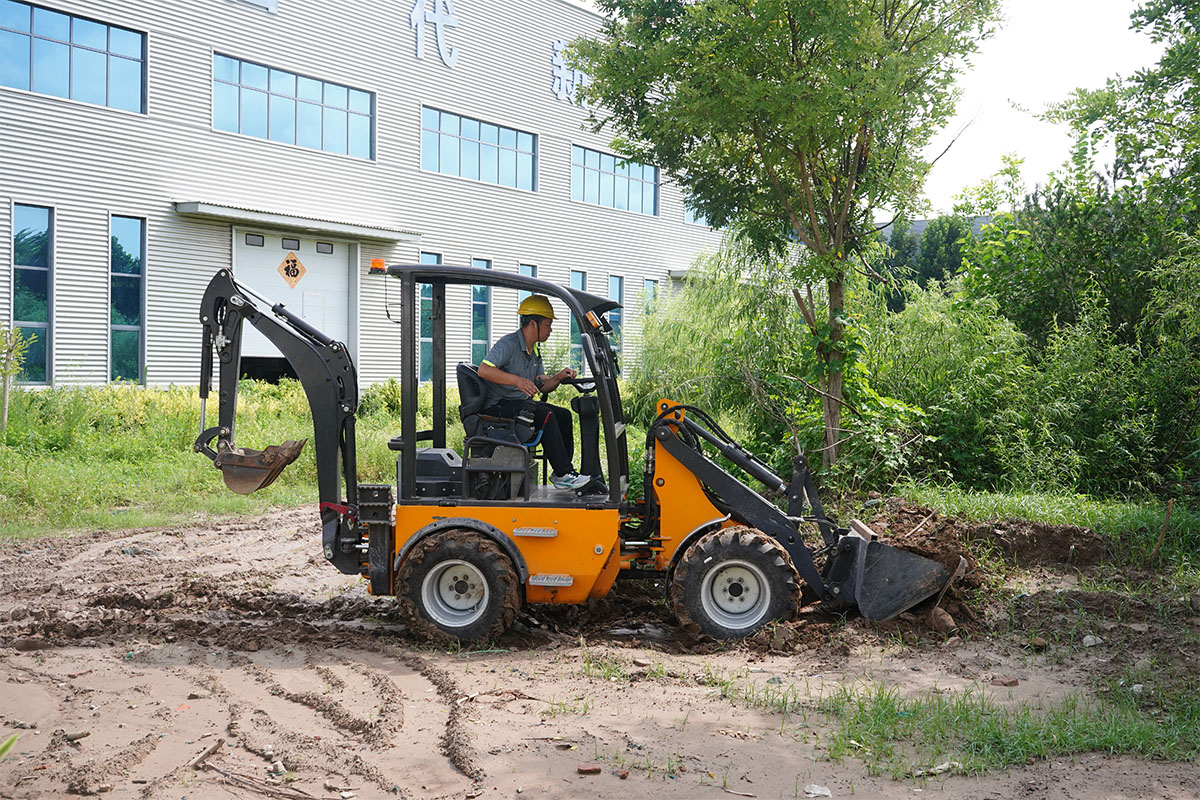
Two genuinely different machines, not two names for the same thing
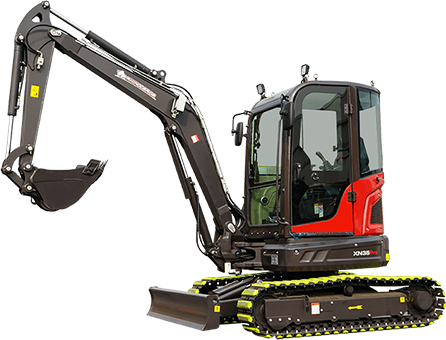
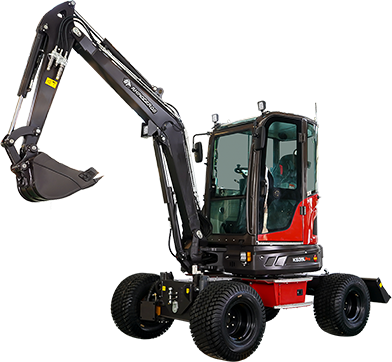
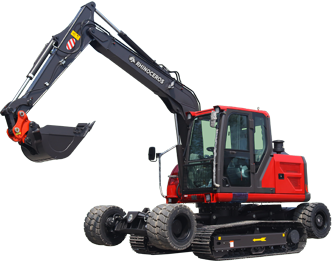
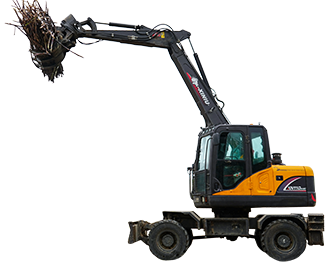
A backhoe loader is one chassis built to do two jobs: a front-mounted loader bucket for scooping and grading, and a rear-mounted digging arm for trenching, all controlled from a single cab that faces forward for loading and backward for digging.A wheel excavator is built to do one job very well: a single boom and arm mounted on a fully rotating upper structure, with wheels underneath instead of a front loader.
That single design difference, full rotation versus a fixed front-and-back layout, drives almost every other difference between the two machines.
Five numbers that show the actual gap
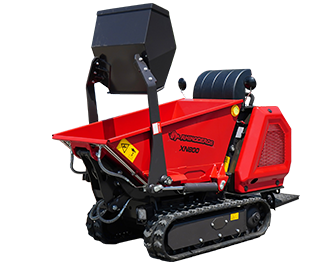
| Spec | Rhinoceros XN35L (wheel excavator) | Rhinoceros XN290 (backhoe loader) |
|---|---|---|
| Operating weight | 4100 kg | 2965 kg |
| Max digging depth | 3025 mm | 2460 mm |
| Max digging radius | 5575 mm | 3350 mm |
| Top travel speed | 10 km/h | 18 km/h |
| Front loading bucket | None | 0.3 m³; |
| Rotation | 360 degrees | Fixed front and rear, no rotation |
Figures for both models from official Rhinoceros factory specifications: XN35L wheel excavator and XN290 backhoe loader, August 2026.
The numbers hold a genuine surprise. At this compact size class, the XN290 backhoe loader is actually lighter and shorter-reaching than the XN35L wheel excavator, not larger, which runs against the common assumption that a dual-function machine is automatically the bigger one. That's specific to comparing two compact, mini-class machines. Full-size backhoe loaders built for larger commercial sites do run considerably heavier than a compact wheel excavator, so the size relationship flips depending on which class of each machine is being compared.
The rotation gap stays constant regardless of size class, and it's the difference that actually determines which machine finishes a given dig faster.
Why full rotation is the feature that actually matters
A backhoe loader's rear digging arm doesn't rotate independently of the chassis in the way an excavator's does. To dig at a different angle, the entire machine often has to reposition. A wheel excavator's upper structure rotates a full 360 degrees on the spot, letting the arm dig, swing, and dump in a different direction without moving the undercarriage at all.
On a site with obstacles, tight corners, or a trench that changes direction, that difference compounds fast. A wheel excavator working around a fixed obstruction, a utility pole, an existing structure, a parked vehicle, can often complete the job without repositioning, where a backhoe loader has to reset its position repeatedly to approach from different angles.
Why a backhoe loader still wins on other jobs
The backhoe's dual-function design is a genuine advantage when a job actually needs both loading and digging in the same session. Grading a surface with the front bucket, then digging a trench with the rear arm, without switching machines, is something a wheel excavator alone can't do, since it has no front loader bucket at all.
Dual-speed travel is the other backhoe advantage worth noting. The XN290's 4WD and dual-speed travel system tops out at 18 km/h, nearly double the XN35L's 10 km/h, which matters on a larger property or a job requiring frequent repositioning between work areas.
A side-by-side decision guide
Choose a wheel excavator when:
The job involves precision digging around obstacles, working at various angles without repositioning, or trenching in a tight or irregular pattern where full rotation saves real time. Choose it too when the job is digging-focused without a genuine need for a front loader function on the same machine.
Choose a backhoe loader when:
The job genuinely needs both loading and digging functions in the same session, when road travel over longer distances between sites is a regular requirement, or when a single versatile machine needs to cover multiple task types without switching equipment.
The cost and complexity trade-off
A backhoe loader's dual-function design generally makes it a more mechanically complex machine than a comparably capable wheel excavator built for digging alone, since it runs two separate working ends off the same hydraulic system. That complexity shows up in purchase price and in maintenance scope, regardless of how the two machines compare on weight at a given size class.
A wheel excavator, built around a single function, tends to be simpler and less expensive to maintain for the specific job of digging, at the cost of not being able to load and grade with the same machine.
Where the terminology confusion actually causes problems
Beyond the "wheel loader backhoe" misnomer itself, the deeper confusion happens during procurement, when a buyer searching for one machine type ends up comparing listings for the other without realizing it. A search for "wheeled digging machine" can return both wheel excavators and backhoe loaders, and the two aren't interchangeable despite both technically fitting that description.
Getting the terminology right before requesting quotes saves real time, since a supplier quoting a backhoe loader against a wheel excavator request, or vice versa, is answering a different question than the one being asked, even if both machines are broadly in the same size and price range.
What this means for a mixed fleet
A contractor or rental fleet running both digging-heavy and loading-heavy work often ends up owning both machine types rather than choosing one over the other permanently. The two aren't really competitors for the same job in that context. They're complementary tools that happen to look similar from a distance because both run on wheels and both have a bucket somewhere on the machine.
Fleet planning around this distinction is more useful than trying to find a single machine that does both jobs equally well, since the dual-function compromise built into a backhoe loader is a real trade-off, not a free combination of two specialized machines' full capability.
How to tell them apart from a spec sheet in ten seconds
The fastest way to identify which machine a listing actually describes is checking for two things: a front-mounted loader bucket, and a stated rotation figure. If both a front bucket and a rear digging arm are listed, it's a backhoe loader. If the spec sheet mentions 360-degree rotation and there's no front loader bucket in the photos, it's a wheel excavator.
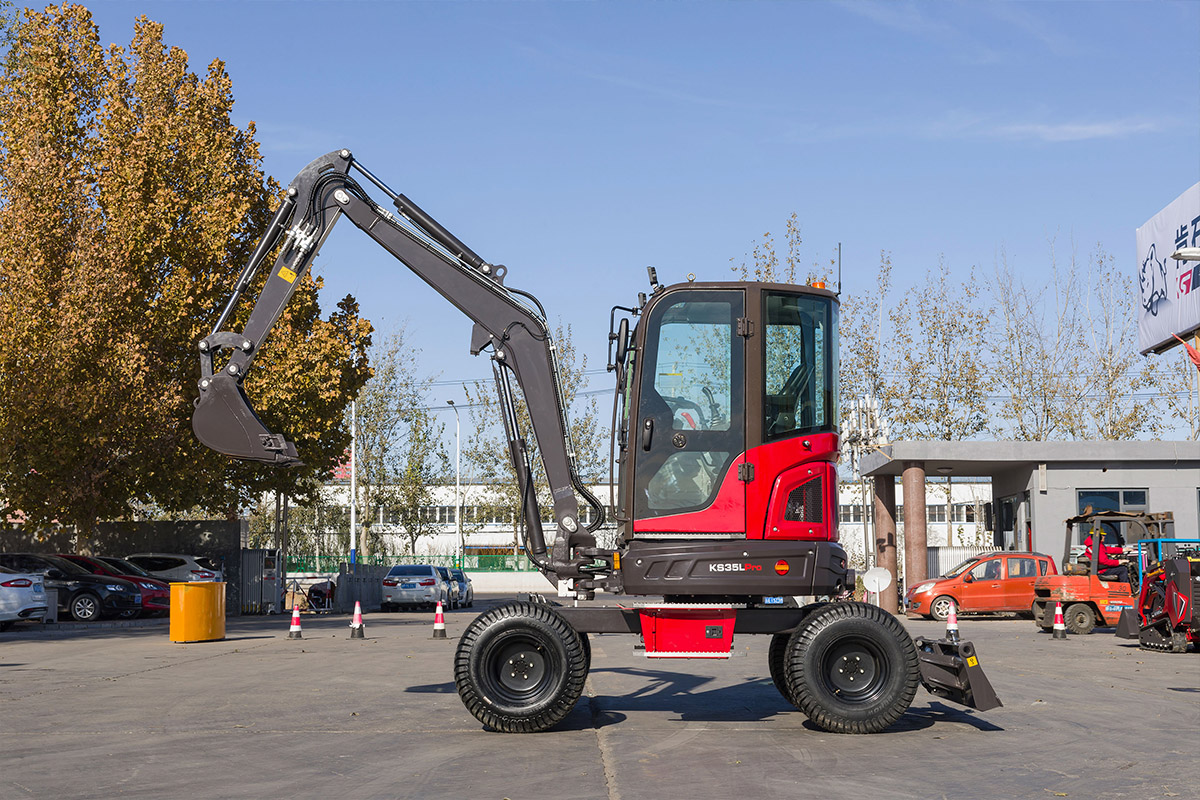
The operator's perspective: why the cab matters
A backhoe loader's cab is built around switching between two working directions, forward for the loader bucket, backward for the digging arm, which typically means the operator's seat rotates or the controls switch orientation depending on which end is in use. A wheel excavator's cab faces the single working arm at all times, and rotates with the upper structure as a unit, so the operator's orientation to the work stays consistent through a full digging cycle regardless of which direction the arm swings.
That consistency matters more than it might sound on paper. An operator working a wheel excavator through a complex dig, swinging the arm through a wide arc to work around an obstacle, never has to reorient mentally the way a backhoe operator does when switching from loading to digging mode.
Attachment compatibility: a real practical difference
Wheel excavators, built around a single working arm, generally support a wider range of quick-attach digging and demolition tools on that one arm, hydraulic breakers, augers, grapples, since all of the machine's hydraulic capacity is dedicated to one function. A backhoe loader splits its hydraulic capacity between the front loader and rear digging arm, which can mean less available flow for a high-demand attachment on the digging end specifically, depending on the model and configuration.
This matters most for a buyer planning to run demolition or breaker attachments regularly, where a wheel excavator's dedicated hydraulic capacity on its single arm can be a genuine performance advantage over a comparably sized backhoe loader splitting capacity across two functions.
Utility and scattered job-site work: which one actually wins
For utility crews working multiple small, scattered sites in a day, the comparison genuinely gets close. The XN290's 18 km/h top speed helps cover more ground faster between stops, while the XN35L's rotation advantage helps finish each individual dig faster once on site. Neither wins outright. The better fit depends on which variable, moving between stops or digging once in place, actually dominates a crew's typical day.
A crew making many short stops with quick digs at each one tends to benefit more from the wheel excavator's per-stop efficiency. A crew that also needs to load and grade material at each stop tends to benefit more from the backhoe loader's dual-function versatility.
Resale value considerations
Backhoe loaders have a long, well-established used equipment market across nearly every region, which generally supports steadier resale value and faster resale times. Wheel excavators are a comparatively newer and more specialized category in many markets, which can mean a narrower pool of buyers for a used unit, though this varies significantly by region and is narrowing as the category grows in popularity.
A buyer weighing resale value heavily as part of the purchase decision should research local used equipment demand for each machine type specifically, rather than assuming national or global market trends apply evenly to their particular region.
Training and licensing: mostly similar, with one difference
Operating either machine typically requires the same category of heavy equipment operator training in most jurisdictions, since both involve hydraulic boom control and safe operation around a job site. Neither the XN35L's 10 km/h nor the XN290's 18 km/h reaches typical highway speed thresholds, so both machines generally fall under job-site and low-speed transport rules rather than road-legal vehicle licensing in most regions, though this varies locally and is worth confirming before public road use.
This is worth confirming locally rather than assuming, since licensing requirements for both machine categories vary meaningfully by country and even by state or province within some countries.
Common misconceptions worth clearing up
A few beliefs about these two machine types persist despite not holding up well in practice. A wheel excavator is not simply a lighter-duty backhoe loader; it's built around a different core function entirely, not a scaled-down version of the same concept, and at the compact size class both companies build in, the wheel excavator can actually be the heavier of the two. A backhoe loader's front bucket is not equivalent to a dedicated wheel loader's bucket in capacity, typically closer to 1.3 cubic yards versus a wheel loader's much larger range, according to equipment rental industry comparisons of loader bucket capacities, so a backhoe's front end is sized for grading and light loading, not bulk material handling at the scale a dedicated wheel loader manages. And assuming a backhoe loader is always the larger, road-faster machine doesn't hold up consistently across size classes either, which is exactly why comparing two specific models beats comparing two general categories.
A quick comparison for a first-time buyer
A buyer purchasing their first piece of wheeled digging equipment, without existing fleet experience to draw on, benefits from starting with the actual task list rather than the machine category. List the specific jobs the machine needs to do over a typical month, digging depth and radius needed, whether loading or grading is a regular requirement, how far apart job sites typically are, and match that list against the two machine profiles above rather than starting from a brand or price point and working backward.
This approach consistently produces a better-fitting purchase than starting with "which is better," since the honest answer to that broader question is that neither machine is better in general, only better suited to a specific mix of tasks.
Two short scenarios that make the choice concrete
Scenario one: a municipal water line repair
A crew needs to dig around an existing gas line marker, cut a narrow trench along a curved path following the water main, and backfill afterward without disturbing a nearby sidewalk. The obstacle avoidance and precise rotation a wheel excavator offers fits this job closely, since the crew can reposition the arm rather than the whole machine every time the trench direction changes.
Scenario two: a rural farm access project
A farm needs a new gravel access road graded, a drainage ditch dug alongside it, and material loaded onto a truck at the end of the day, all across a single long site with no nearby equipment to borrow. The backhoe loader's combined loading and digging function fits this job better than bringing two separate specialized machines would, since one machine covers grading, digging, and loading without switching equipment mid-job.
Purchase price context
Purchase price between the two categories depends more on hydraulic complexity and attachment configuration than on which machine happens to weigh more at a given size class. A dual-function backhoe loader generally costs more than a comparably sized single-function wheel excavator specifically because it runs two working ends off one hydraulic system, not because it's necessarily the larger machine. A buyer comparing quotes across both categories should confirm exactly which specifications are included at a given price point rather than assuming size or weight predicts price, since configuration differences account for much of the spread within each category.
Frequently asked questions
Is a wheel excavator just a smaller, cheaper backhoe loader?
No. They're built around different core functions. A wheel excavator has no front loader bucket at all, and its main advantage, full 360-degree rotation, isn't a feature backhoe loaders have.
Can a wheel excavator do everything a backhoe loader can?
No, specifically not front-loading and grading, since it lacks the loader attachment entirely. It's purpose-built for digging and rotation-dependent work.
Why do people call backhoe loaders "wheel loader backhoes"?
It's a common but technically incorrect term that conflates a dedicated wheel loader, a separate machine type, with a backhoe loader's front bucket function. Industry guidance recommends avoiding the phrase to prevent procurement confusion.
Which machine is faster to move between job sites?
Between these two specific models, the XN290 travels faster at 18 km/h versus the XN35L's 10 km/h. That gap matters most on larger properties or multi-stop days where repositioning time adds up, though it's still worth confirming published travel speed directly when comparing other model pairs, since the relationship isn't fixed across every size class.
Is a wheel excavator less versatile than a backhoe loader?
For digging specifically, no, since full rotation often makes it more efficient at trenching and working around obstacles. For combined loading and digging tasks, yes, since it has no front loader function.
Does the Rhinoceros XN35L compete directly with backhoe loaders?
Not directly. It's built for dedicated digging work with full rotation, which serves a different use case than a backhoe loader's combined loading and digging function.
XN35L and XN290 specifications reflect standard factory configurations and may vary by option package; confirm current specifications directly with Rhinoceros before purchase.