 中文
 Español
 Francés
 Русский
 Português
 العربية
 Deutsch
 Italiano
 한국인
 Melayu
 ไทย
 Việt
 bahasa Indonesia
 қазақ
 Nederlands
 Ελληνικά
 Magyar
 čeština
 Suomalainen
 Filipino
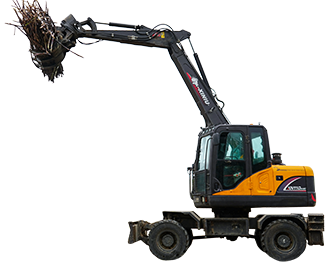
What does TRUMPF laser cutting and robotic welding mean for a wheel excavator's build quality?
By Justin, Product Engineer · Based on official factory specifications and manufacturing industry documentation, September 2026
TL;DR: TRUMPF laser cutting and robotic welding control two different things: how precisely steel parts are cut, and how consistently they are joined. Both affect a wheel excavator's long-term structural reliability more than most buyers realise.
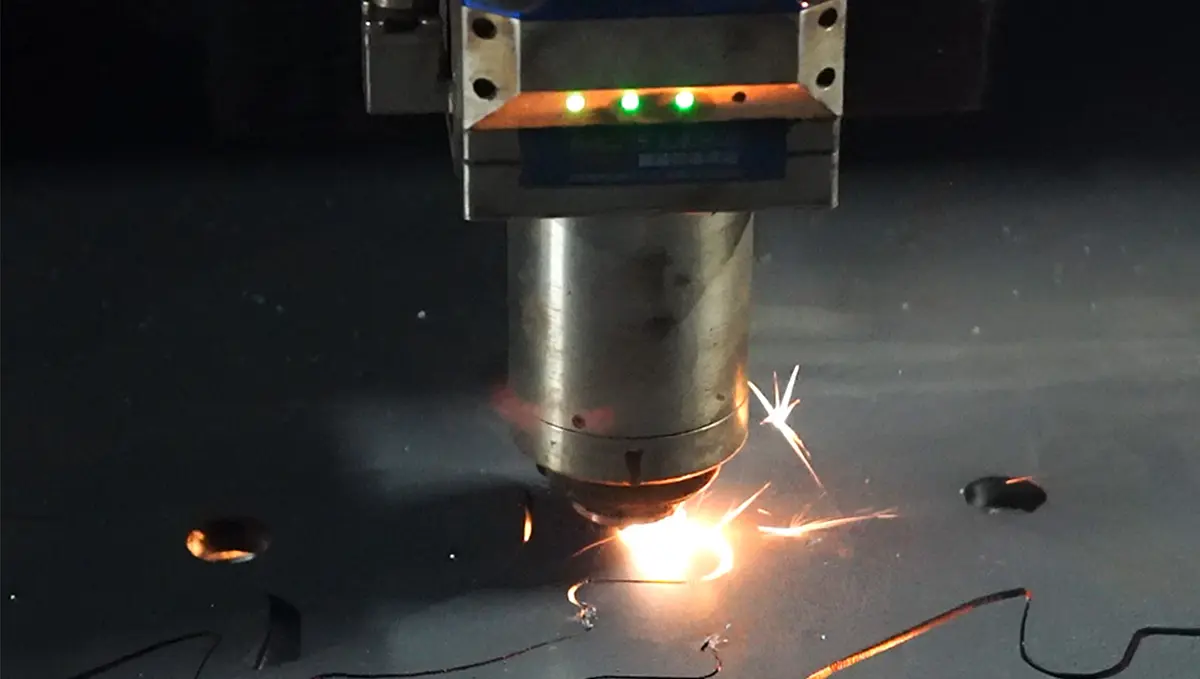
The real claim this article checks
Our company page states that our factory, operating since 1995, uses TRUMPF laser cutting and robotic welding across our manufacturing process, alongside five assembly lines and more than 30 patents. These are specific, named manufacturing technologies, not a generic claim of "quality production." It is worth explaining what each one actually controls, because the difference between a well-built structural frame and a poorly built one on a wheel excavator shows up years later, not on day one.
What laser cutting actually controls
Before a steel frame, boom, or arm is welded together, its individual plates have to be cut to shape. TRUMPF is a German manufacturer of industrial laser cutting machines, widely used across heavy equipment and metal fabrication industries for sheet and plate steel cutting. Industry documentation on fiber laser cutting describes its main advantages as tight dimensional tolerance, a narrow kerf (the width of material removed by the cut), and a clean edge that needs little or no secondary finishing before the next manufacturing step.
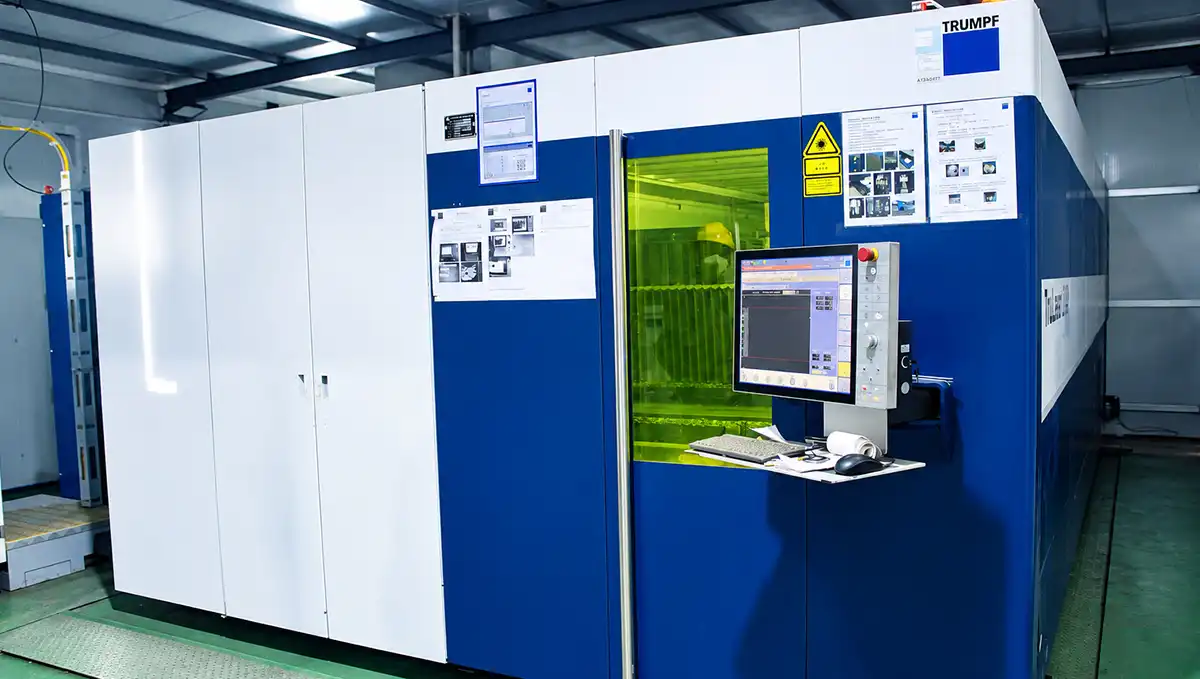
Why this matters on a wheel excavator specifically: the boom, arm, and main frame are built from multiple steel plates joined at precise angles. If those plates are cut imprecisely, either the welder has to compensate with extra filler material at the joint, which can introduce stress concentrations, or the final assembly ends up slightly out of the intended geometry. Consistent, high-precision cutting is one of the preconditions for a structural assembly that behaves the way it was engineered to, cycle after cycle, for years.
What robotic welding actually controls
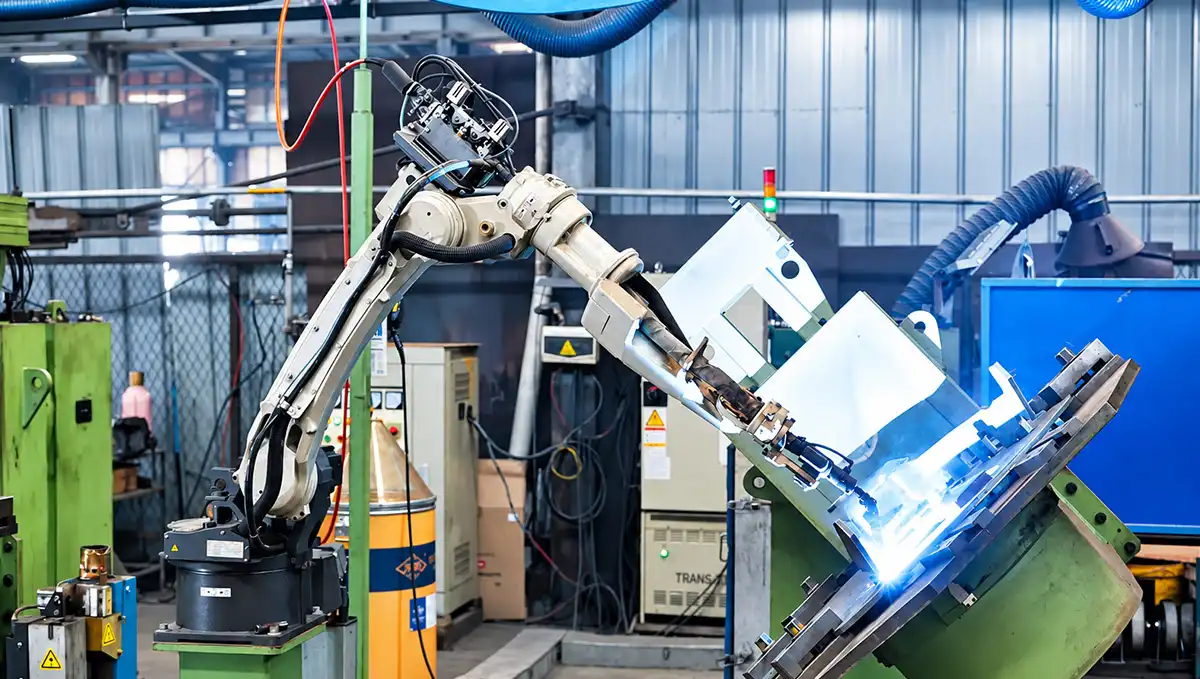
Cutting gets the plates to the right shape. Welding is what actually holds the structure together, and this is where consistency matters even more. Industry comparisons of robotic versus manual welding describe a measurable difference: robotic welding systems are documented delivering lower defect rates than manual welding, largely because a programmed robot repeats the same travel speed, arc length, and torch angle on every single weld, where a human welder's technique can vary with fatigue, position, and shift.
On a wheel excavator, the structural welds joining the boom, arm, and frame are subjected to repeated, cyclical loading every time the machine digs. A weld with inconsistent penetration or a hidden defect is a weak point that may not show a problem immediately, but is more likely to develop a stress crack over years of cyclical use than a consistently executed weld. Robotic welding does not eliminate the need for good design and material selection, but it does remove a major source of weld-to-weld variability.
What these two technologies do not guarantee by themselves
Precision cutting and consistent welding are preconditions for a well-built structure, not a complete guarantee of one. They do not replace sound structural engineering of the boom and frame geometry itself, correct steel grade selection for the loads involved, or proper quality inspection after welding (such as visual or non-destructive testing of critical welds). A well-cut, well-welded frame built to a poor structural design is still a poorly designed frame. These technologies are the manufacturing foundation; the engineering and inspection layered on top of them are what turn that foundation into a finished, reliable machine.
What to ask any wheel excavator manufacturer about this
| Question | What a specific answer looks like |
|---|---|
| What cutting method is used for frame and boom plates? | Names a specific process (such as fiber laser cutting) and, ideally, the equipment brand |
| Is critical structural welding manual, robotic, or both? | Specifies which joints are robotic and which, if any, still require manual work such as fit-up or finishing welds |
| Is welded steel inspected after welding, and how? | Describes an actual inspection step, such as visual inspection or a specific testing method, rather than just "quality checked" |
| Can the factory be visited or verified by video? | A manufacturer confident in its process is generally willing to show it |
This last question connects directly to a concern we cover in our guide on verifying a wheel excavator supplier: confirming a supplier and its claims are real before you rely on them. That article covers how to confirm a supplier exists and is who they say they are. This one covers what to ask once you are talking to a real manufacturer, to understand what their process actually controls.
Send your questions about our frame and boom manufacturing process through our inquiry form, or review the full wheel excavator range on our wheel excavator page.
Frequently asked questions
Does laser cutting alone make a wheel excavator more durable?
Not by itself. It improves the precision of the parts going into the structure, which supports durability, but structural engineering, material selection, and welding quality all contribute as well.
Is robotic welding always better than manual welding?
For repetitive, high-volume structural welds, robotic welding generally produces more consistent results with lower defect rates. Some joints or finishing work may still require skilled manual welding, which is not a weakness, but a normal part of a mixed manufacturing process.
What is TRUMPF?
TRUMPF is a German manufacturer of industrial laser cutting and sheet metal fabrication equipment, widely used across heavy equipment and metal manufacturing industries.
How can I verify a manufacturer's cutting and welding claims?
Ask specific questions about the process, as listed above, and ask whether the factory can be shown by video or visited in person. A manufacturer confident in its process is typically willing to demonstrate it.
Does this affect how long a wheel excavator's frame lasts?
Consistent cutting and welding reduce the likelihood of manufacturing-introduced weak points that can develop into fatigue cracks under repeated loading. It is one factor among several, including design, material, and maintenance, that determine structural life.
Where does Rhinoceros use these manufacturing processes?
Our company page lists TRUMPF laser cutting and robotic welding as part of our manufacturing capability. Ask us directly which specific components or models these processes apply to if you want model-specific confirmation.
Feature availability and manufacturing processes may vary by component and model; confirm specifics directly with Rhinoceros. Industry comparisons of cutting and welding methods are drawn from published manufacturing documentation and are general, not claims specific to any Rhinoceros model unless separately confirmed.