 中文
 Español
 Francés
 Русский
 Português
 العربية
 Deutsch
 Italiano
 한국인
 Melayu
 ไทย
 Việt
 bahasa Indonesia
 қазақ
 Nederlands
 Ελληνικά
 Magyar
 čeština
 Suomalainen
 Filipino
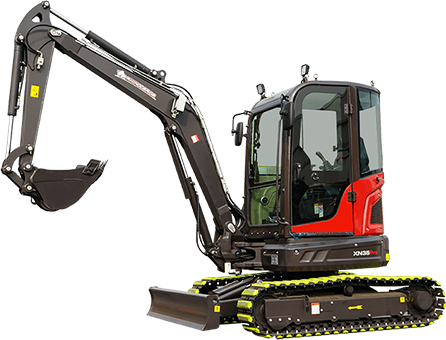
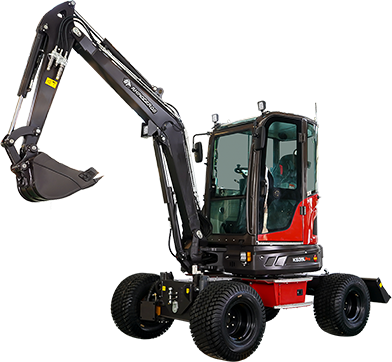
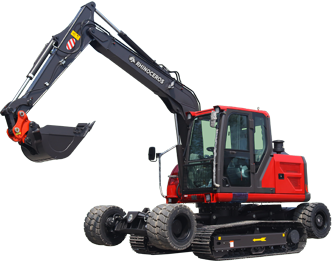
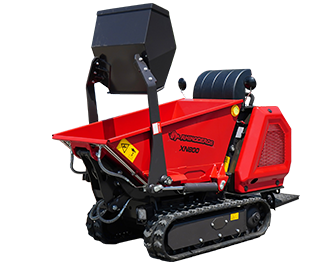
Is Telematics on a Wheel Excavator Real, or Just Marketing?
Reviewed by Justin, Product Engineer·Based on official factory specifications and industry reporting, August 2026
TL;DR: Telematics and GPS are real and growing in mid-size and large excavators. In the sub-5-ton wheel excavator class, ask what's actually included before assuming it's standard.
Every excavator trade publication in 2026 mentions telematics, GPS machine control, or AI-assisted operation somewhere in the first paragraph. Almost none of them specify which weight class those features are actually shipping on. That gap is where a buyer's expectations and a supplier's spec sheet can quietly stop matching.
What's actually driving the trend
Telematics, in its simplest form, means the machine reports data back to an owner or fleet manager: location, hours run, fault codes, sometimes fuel or battery usage. It's not new technology. What's changed is how far down the size range it's being marketed, and mid-size and large excavators from major manufacturers increasingly ship with some level of remote monitoring built in.
GPS machine control is a related but separate feature, typically found on grading and larger excavation equipment, where it helps an operator hit a design grade without manually checking elevation constantly. It's a genuinely useful feature on the machines built for that kind of precision work, and a largely irrelevant one on a compact wheel excavator digging a utility trench.
Where the marketing gets ahead of the machine class
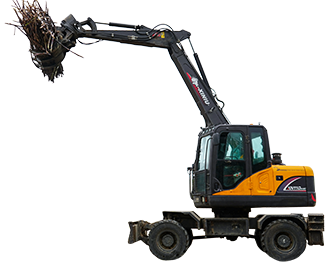
A wheel excavator in the sub-5-ton class is built around a different value proposition than a 10-ton or 20-ton machine: mobility, tight-site access, and lower purchase cost. Adding full telematics and GPS grade control to that class raises the price in a way that works against the exact reasons a buyer chooses a compact machine in the first place.
That doesn't mean the technology never appears on smaller machines. It means a buyer researching this class should treat "telematics-ready" or "smart-equipped" language in marketing copy as a starting question, not a confirmed feature list, until a specific supplier confirms exactly what's included.
What larger manufacturers are actually shipping in 2026
Looking at where telematics and connected features are genuinely landing helps calibrate expectations for the compact class. Industry coverage of 2026 model updates from major manufacturers shows next-generation mid-size compact excavators arriving with redesigned cabs, increased hydraulic flow, and expanded wheeled model lineups, according to reporting from Equipment World's 2026 buyer's guide coverage. Several manufacturers have also expanded their wheeled excavator offerings in the 6 to 11 metric ton range specifically, positioning those wheeled models around mobility and short tail-swing footprints for tight sites.
That size range sits meaningfully above most compact wheel excavators built for residential and light commercial work, which is exactly the gap that matters here. Features debuting on 6-ton-plus wheeled machines don't automatically imply anything about what ships on a machine built for narrower, lighter-duty applications.
Broader 2026 industry analysis covering excavators generally frames AI-assisted operation, GPS machine control, and electric powertrains as an integrated trend across the category, according to coverage from industry trend reporting on 2026 excavator technology. That same coverage frames machine selection as depending heavily on site conditions, access needs, and duty cycle rather than technology features alone, which lines up with how a compact-class buyer should actually be evaluating these options.
Five questions that cut through the marketing language
Is remote monitoring included standard, or is it a paid add-on package?
Does the telematics system report location and hours only, or does it include fault codes and maintenance alerts?
Is there a recurring subscription cost to keep the telematics connection active?
Does the system work in the buyer's country, or is coverage limited to specific regions?
What happens to the feature if the connectivity provider changes or the subscription lapses?
A supplier who can answer all five clearly and consistently is describing a real feature. A supplier who answers with general enthusiasm about "smart technology" without specifics is often describing a marketing category, not a confirmed spec.
What telematics is actually worth to a small fleet
For a fleet running one or two compact wheel excavators, the case for telematics is weaker than it is for a fleet running dozens of machines across a wide area. Location tracking and hours reporting matter most when a fleet manager can't otherwise see every machine regularly, which is less true for a small operation where the owner or a supervisor already has direct visibility into daily use.
The calculation changes for a rental company or a utility fleet running many machines across scattered sites, where remote visibility into hours, location, and fault codes genuinely reduces the coordination cost of managing the fleet. The same feature that's marginal value for a two-machine operation can be meaningfully useful at fleet scale.
AI-assisted operation: further off than the headlines suggest
"AI-powered excavation" appears frequently in 2026 industry coverage, generally referring to assisted digging functions on larger machines: automated boom leveling, collision avoidance between the bucket and cab, or semi-autonomous grading against a digital design file. These are real developments, concentrated on larger construction and mining equipment, not on compact wheel excavators.
A buyer in the compact class encountering "AI-assisted" language in marketing material for a sub-5-ton machine should ask specifically what the feature does, since the term gets applied loosely across a wide range of actual functionality, from genuinely automated systems down to basic electronic depth indicators being relabeled with more current terminology.
What actually matters more in this weight class
For a compact wheel excavator, fuel efficiency, hydraulic responsiveness, and serviceability tend to affect a buyer's total cost of ownership more directly than remote monitoring does. A machine that's easy to service locally and holds up on daily use delivers more practical value than a connectivity feature that primarily benefits a fleet manager overseeing dozens of units.
That's not an argument against telematics as a category. It's a reminder that feature relevance depends heavily on fleet size and use case, and a compact-class buyer evaluating two similar machines shouldn't let a connectivity feature checklist outweigh fundamentals like digging performance, stability, and parts availability.
The subscription cost most buyers don't budget for
A telematics system that reports data over a cellular connection typically depends on an ongoing service plan, not just a one-time hardware cost. That recurring fee is easy to overlook when comparing purchase prices side by side, but it compounds over the life of the machine in a way that a one-time hardware premium doesn't.
Ask specifically whether the quoted price includes a set number of years of connectivity, or whether the subscription starts billing immediately and continues indefinitely. A machine that looks cost-competitive on day one can end up costing more over five years once a recurring telematics fee is factored in, particularly for a feature the buyer may use only occasionally.
Data ownership and connectivity dependence
A connected machine raises a question that a purely mechanical one doesn't: who owns the location and usage data being collected, and what happens to it if the buyer switches suppliers or the connectivity provider changes hands. This matters less for a casual buyer and more for a fleet operator with data privacy obligations or contractual reporting requirements to municipal or utility clients.
It's also worth understanding what happens to the feature itself if the telematics provider discontinues service or the subscription lapses. In most cases, the machine continues operating normally since telematics is a reporting layer, not a control system, but losing remote visibility unexpectedly is worth planning around rather than discovering after the fact.
Resale value: does telematics actually help?
A machine with a documented usage and maintenance history through telematics data can be an easier sell in the used market, since a buyer can verify hours and service patterns more directly than relying on an hour meter and the seller's word alone. This advantage is more meaningful on higher-value, mid-size and large equipment than on a compact machine, where the resale premium for documented history tends to be smaller relative to the machine's overall value.
For a compact wheel excavator specifically, mechanical condition and maintenance records still carry more weight in a resale negotiation than whether the machine happened to have a telematics subscription active at some point during its working life.
How this trend is likely to develop
Basic telematics, location and hours reporting at minimum, is likely to become more common across smaller equipment classes over the next several years as the underlying hardware cost continues to drop. Full GPS grade control and AI-assisted digging functions are more likely to remain concentrated on mid-size and large equipment for longer, since the cost-to-benefit case is strongest where precision grading and large-scale automation actually save meaningful labor cost.
Buyers evaluating a compact wheel excavator today are better served asking what's confirmed and included now than budgeting around features that may or may not reach this weight class on the timeline marketing materials imply.
A short glossary, since the terms get used loosely
Telematics
The general term for a machine reporting operating data, typically location, hours, and fault codes, back to an owner or fleet manager over a cellular or satellite connection. This is the most mature and widely available of the three technologies covered here.
GPS machine control
A system that guides an operator, or in more advanced setups automatically adjusts the machine, to hit a specific design grade or elevation using GPS positioning data. Common on larger grading and excavation equipment, uncommon on compact machines built for general-purpose digging.
AI-assisted operation
A broad marketing term currently applied to a wide range of actual functionality, from genuinely automated boom leveling and collision avoidance on larger machines, down to basic electronic depth or angle indicators being described with more current language. The term alone doesn't tell you which end of that range a specific machine falls on.
The case for skepticism, and the case against it
There's a reasonable argument that "AI" and "smart" language in heavy equipment marketing has outpaced what's actually shipping on most machines, particularly in the compact class, and that skepticism is a healthy default when evaluating a spec sheet. Marketing copy is written to generate interest, and a term like "AI-assisted" costs a copywriter nothing to include, whether or not it accurately describes the underlying feature.
At the same time, dismissing the entire category as hype misses that basic telematics is genuinely useful for the right buyer, and that the underlying technology trend is real even where individual marketing claims overstate it. The productive response isn't blanket skepticism or blanket enthusiasm. It's asking specific, answerable questions about what a given machine actually includes, and treating vague answers as information in themselves.
A practical way to evaluate two competing offers
When comparing two compact wheel excavators where one advertises telematics or smart features and the other doesn't, separate the evaluation into two questions rather than one. First, does the core machine, engine, hydraulics, stability, and build quality, meet the actual job requirements on its own merits. Second, is the connectivity feature something the buyer will genuinely use, given fleet size and how the machine will be tracked day to day.
A machine that wins on the first question but lacks the second is usually still the better purchase for a small operation. A machine that leads with connectivity features but falls short on core mechanical fundamentals is a weaker choice regardless of what the spec sheet highlights first.
Why the source of the claim matters as much as the claim itself
A feature claim printed directly on a manufacturer's official specification page carries more weight than the same claim repeated by a reseller, import broker, or marketplace listing that may be describing the category generally rather than the specific unit being sold. This distinction matters more with connectivity features than with purely mechanical specs, since a physical dimension is easy to verify on arrival, while a software or connectivity feature is much harder to confirm after the machine has already shipped.
Before finalizing an order based partly on a telematics or smart-feature claim, ask specifically whether that feature appears on the manufacturer's own official documentation for the exact model and configuration being purchased, not just in general marketing material about the product line. A reputable supplier will have no difficulty pointing to that documentation directly.
What this means for a first-time compact excavator buyer
A buyer purchasing their first wheel excavator, without an existing fleet to compare against, is often the most exposed to overstated technology claims, simply because there's no internal baseline to judge them against. The most reliable approach is treating every connectivity or automation claim as a question to verify rather than a feature to assume, regardless of how confidently it's presented in marketing material.
This doesn't mean assuming bad faith from every supplier. It means applying the same due diligence to a software or connectivity claim that a careful buyer would already apply to a mechanical spec like digging depth or operating weight, verifying it against official documentation rather than taking a general product description at face value.
Putting it together: a five-minute pre-purchase checklist
Before signing off on a quote that mentions telematics, GPS, or AI-assisted features on a compact wheel excavator, run through this short sequence. It takes a few minutes and closes most of the gap between marketing language and what actually ships.
Confirm the feature appears on official manufacturer documentation for the exact model and configuration quoted, not just general product-line marketing. Ask whether it's included in the base price or billed as a subscription, and get that answer in writing. Check whether connectivity coverage extends to your country or region specifically. Ask what happens to the feature if the subscription lapses or the provider changes. Finally, weigh the answer against how the machine will actually be used, since a feature genuinely useful for a twenty-machine fleet may add cost without adding value for a one- or two-machine operation.
None of this requires technical expertise. It requires treating a connectivity claim with the same scrutiny a careful buyer already applies to a digging depth spec or an engine displacement number, rather than as marketing language.
Frequently asked questions
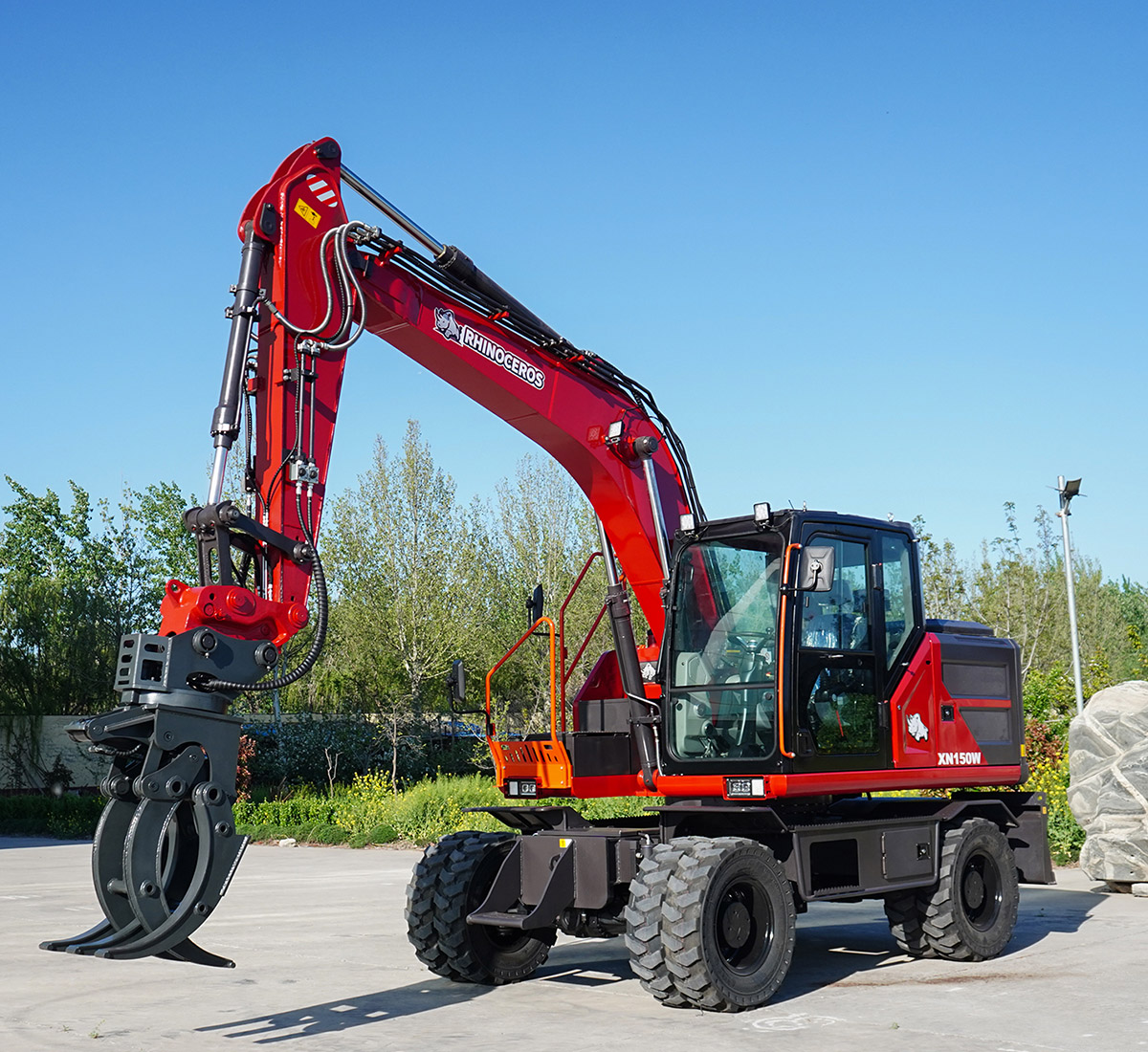
Does Rhinoceros offer telematics on its wheel excavator line?
Confirm current availability directly with Rhinoceros for the specific model and configuration you're evaluating, since feature availability varies by model year and market.
Is GPS grade control useful on a sub-5-ton wheel excavator?
Generally less so than on larger grading-focused equipment. It's a feature more commonly justified on machines built specifically for precision grading work at larger scale.
Does adding telematics significantly increase the purchase price of a compact machine?
It can, particularly if it includes a recurring subscription cost on top of any hardware premium, which is worth factoring into total cost of ownership rather than just the sticker price.
Is "AI-assisted" excavation available on compact excavators yet?
Largely not in any meaningful sense as of 2026. The term is used broadly in marketing, and it's worth asking a supplier to define specifically what function is being described rather than assuming it matches larger-machine capability.
How do I know if telematics data will actually work in my country?
Ask the supplier directly about regional connectivity coverage before purchase, since some telematics systems rely on cellular networks or providers with limited international coverage.
Is it worth paying extra for telematics on a two-machine fleet?
Usually less critical than for a larger fleet, since a small operation typically already has direct visibility into how its machines are used without needing remote reporting.
Will compact wheel excavators eventually get the same technology as larger machines?
Basic telematics is likely to spread further down the size range over time as hardware costs drop. Full GPS grade control and advanced automation are more likely to remain concentrated on larger equipment, since the cost-to-benefit case is strongest where large-scale precision work justifies the added expense.
How can I verify a telematics or smart-feature claim before I buy?
Ask for the specific feature to be documented on the manufacturer's official specification page for the exact model and configuration, rather than relying on general marketing language from a reseller or broader product line description.
Feature availability varies by model, configuration, and market; confirm current specifications directly with Rhinoceros before purchase. This content reflects general industry trends as of August 2026 and does not represent a confirmed feature list for any specific Rhinoceros model.