 中文
 Español
 Francés
 Русский
 Português
 العربية
 Deutsch
 Italiano
 한국인
 Melayu
 ไทย
 Việt
 bahasa Indonesia
 қазақ
 Nederlands
 Ελληνικά
 Magyar
 čeština
 Suomalainen
 Filipino
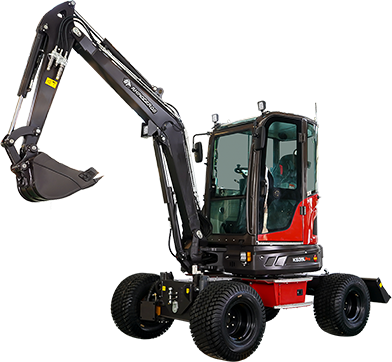
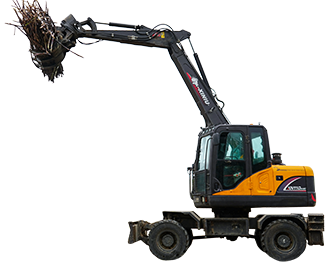
Wheel Excavator Resale Value: What Drives Depreciation
Reviewed by Justin, Product Engineer·Based on official factory specifications and industry reporting, August 2026
TL;DR: Excavators lose 15-25% of value in year one, then 8-15% annually through year five. Documented service history and moderate hours matter more than age alone.
Two identical wheel excavators, same year, same original price, can sell for meaningfully different amounts used. The gap almost never comes down to the machine itself. It comes down to hours, documentation, and how predictably the depreciation curve was managed.
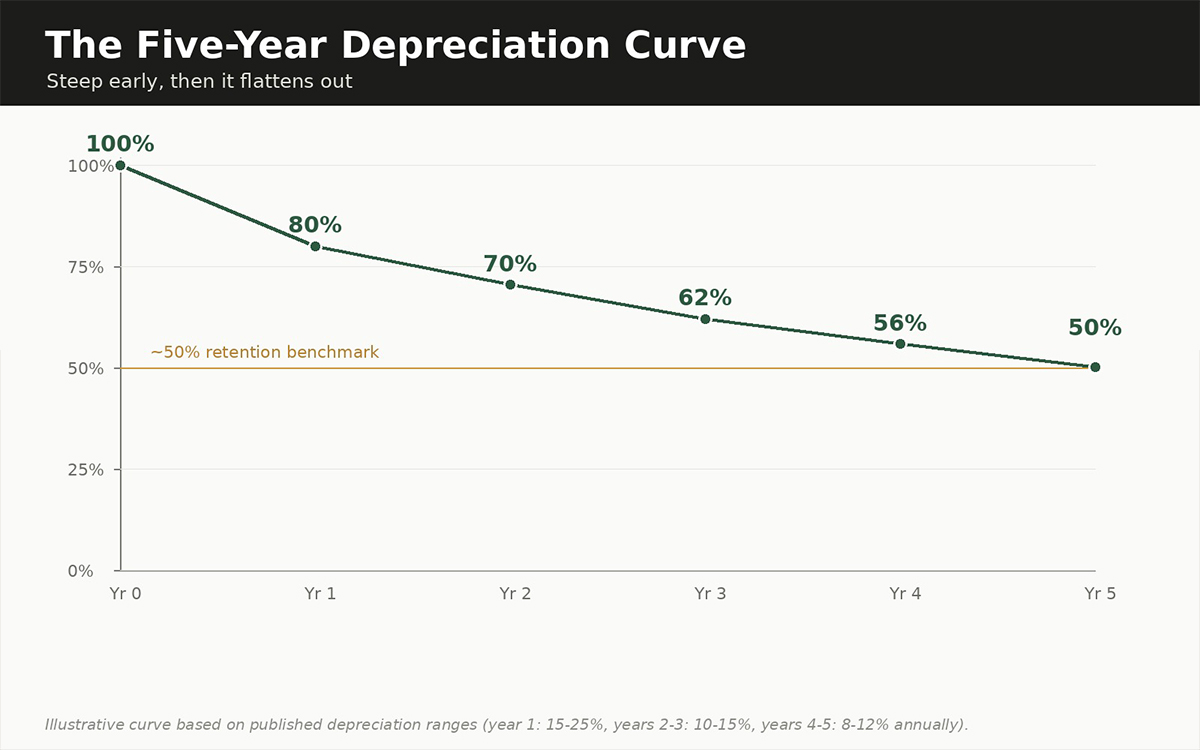
The depreciation curve, year by year
Excavator depreciation follows a fairly consistent pattern across the industry: a steep first-year drop of roughly 15 to 25 percent, since a machine becomes "used" the moment it's delivered regardless of actual condition. Years two and three typically see annual depreciation in the 10 to 15 percent range as hours accumulate and the machine moves from "like new" to genuinely used in the market's eyes. By years four and five, the curve flattens to roughly 8 to 12 percent annually, and after year six, decline often slows further to 5 to 10 percent a year for a mechanically sound, well-presented machine, according to 2026 excavator depreciation life analysis.
That curve shape, steep early, flattening later, is worth understanding for both buyers and future sellers. A well-maintained machine can retain roughly 50 to 60 percent of its original value after five years, according to separate industry resale guidance, which gives a useful benchmark for evaluating whether a specific used listing is priced reasonably.
Why hours matter more than age once you're comparing used machines
Calendar age is only half the picture. A three-year-old machine with 6,500 hours typically carries a lower resale value than a five-year-old machine with only 1,500 hours, since hours reflect actual wear far more directly than years since manufacture do. Buyers in the used market consistently favor an older, lower-hour machine over a newer one that's been worked hard, according to 2026 equipment depreciation and resale value guidance.
This is worth internalizing at purchase time, not just at resale: a machine bought new and used moderately holds value differently than one bought and run at maximum utilization from day one, even if both are technically the same age when it's time to sell.
Five factors that actually move resale price, beyond age
Documented service history, since verifiable maintenance records reduce a buyer's perceived risk meaningfully
Operating hours relative to age, with moderate hours in the 1,000-3,000 range generally most attractive to used buyers
Brand and dealer network strength in the resale region, since parts availability affects a used buyer's confidence
Attachment and coupler configuration, since a hydraulic coupler and included attachments can add real resale value
Regional demand and season, since equipment prices commonly peak in spring and run 10 to 18 percent lower in winter sales
What documentation is actually worth at resale
The gap between two comparably aged, comparably worked machines can be substantial based on documentation alone. Industry pricing data has shown two machines in the same general category selling more than $90,000 apart, with the primary difference being hours, brand, condition, and documentation, not the underlying machine type, according to 2026 used heavy equipment pricing analysis. A buyer able to verify maintenance history through receipts and service records is taking on meaningfully less risk than one relying on a seller's word, and that reduced risk translates directly into what they're willing to pay.
Where and how you sell changes the number too
The sales channel itself affects realized price independent of the machine's condition. Auction prices typically run 10 to 20 percent below private or direct sale prices, while dealer retail pricing sits 15 to 25 percent above wholesale trade values, according to the same 2026 pricing analysis. A seller prioritizing speed and certainty over maximum price often chooses auction or wholesale trade-in, while one willing to invest more time in the sale process can generally realize a higher price through private or direct sale.
Timing a sale: does it actually matter?
Seasonal timing has a measurable effect. Equipment prices commonly peak in the February-through-May window, while winter sales typically return 10 to 18 percent less than spring sales for comparable machines, according to industry pricing data. For a seller with flexibility on timing, this is a real, quantifiable factor worth planning around rather than simply listing a machine whenever the decision to sell is made.
How wheel excavators compare to crawler machines on resale
Depreciation patterns aren't identical across every excavator type. Mid-2026 market data showed crawler excavators experiencing some of the steepest depreciation in the broader equipment category, while loader-backhoes and mini excavators saw relatively increasing value over the same period, according to June 2026 used heavy equipment market data. Wheel excavators specifically weren't broken out as their own category in that data, but the broader pattern is a reminder that depreciation isn't uniform across every excavator type, and category-specific market conditions can shift faster than a general depreciation curve alone would predict.
What this means for buying decisions, not just selling ones
Understanding this curve changes how a purchase should be evaluated too. A buyer planning to keep a wheel excavator for its full working life cares less about resale timing than one planning to trade up within a few years. For the latter, buying during a period of relatively higher used values and planning to sell before the steepest depreciation years, or timing a sale for spring rather than winter, can meaningfully affect the total cost of ownership over the machine's time with that specific buyer.
A worked example across five years
Picture a wheel excavator purchased new for $60,000. Following the general curve: a 20 percent first-year drop brings it to $48,000. A further 12 percent in year two brings it to roughly $42,240. Year three, another 12 percent, lands around $37,170. Years four and five, slowing to roughly 10 percent annually, bring the value to approximately $30,100 by the end of year five, close to the 50 percent retention benchmark cited earlier for a well-maintained machine. A poorly maintained or high-hour equivalent could easily fall well below that figure over the same period, while a documented, moderately used machine could land above it.
This kind of year-by-year projection is useful less as a precise forecast and more as a planning tool: it gives a rough sense of what a machine might realistically be worth at a given point, which matters directly for anyone weighing a trade-in timeline, a lease-end purchase option, or simply budgeting for an eventual upgrade.
How financing interacts with depreciation timing
A buyer who financed the purchase, covered in more detail in a separate look at wheel excavator financing options, should pay particular attention to how depreciation timing lines up with the loan or lease term. A machine financed over five years that depreciates faster than the loan balance decreases can leave an owner owing more than the machine is worth for a period, sometimes called being underwater on the asset. Structuring loan terms with this curve in mind, shorter terms or larger initial payments when possible, reduces the window where that mismatch exists.
What Rhinoceros owners can do to protect resale value
None of the factors driving resale value are outside an owner's control. Keeping dated service records from day one, avoiding unnecessary hour accumulation on jobs that don't require the machine, and maintaining the machine to a standard that presents well at resale time are all practical habits that directly counter the steepest parts of the depreciation curve described above. A machine that's been cared for and documented consistently outperforms an identical machine that hasn't, regardless of brand.
Frequently asked questions
Does a wheel excavator depreciate faster or slower than a crawler excavator?
Market data doesn't show a single fixed answer here, but broader 2026 data suggested crawler excavators depreciating faster than some other compact equipment categories in that specific period, which is a reminder that current market conditions matter alongside the general depreciation curve.
Is it better to sell a used wheel excavator through a dealer or privately?
Dealer trade-in is typically faster and lower-risk but returns a lower price; private sale takes more time and effort but generally realizes a higher price.
How much does documented service history actually add to resale value?
It varies by machine and market, but documentation consistently reduces buyer-perceived risk, and machines with verified records have sold for tens of thousands more than comparable undocumented machines in some cases.
Should I avoid buying a wheel excavator with high hours even if the price is low?
Not automatically. A high-hour machine with excellent documented maintenance can be a sound purchase; the key is verifying condition and history rather than avoiding hours as a blanket rule.
Does adding attachments increase a wheel excavator's resale value?
Often yes, particularly a hydraulic coupler and commonly used attachments included in the sale, since they add practical value a buyer would otherwise have to purchase separately.
Is spring really the best time to sell used equipment?
Generally yes, based on industry pricing patterns showing spring sales outperforming winter sales by a meaningful margin, though regional demand and current market conditions can shift this.
Depreciation and resale figures reflect general industry data and market conditions as of 2026, which change over time and vary by region, brand, and machine condition. This content is general information, not a valuation of any specific machine.