 中文
 Español
 Francés
 Русский
 Português
 العربية
 Deutsch
 Italiano
 한국인
 Melayu
 ไทย
 Việt
 bahasa Indonesia
 қазақ
 Nederlands
 Ελληνικά
 Magyar
 čeština
 Suomalainen
 Filipino
Quick Coupler vs Manual Pin: Worth It on a Wheel Excavator?
Reviewed by Justin, Product Engineer·Based on official factory specifications and industry reporting, August 2026
TL;DR: A hydraulic quick coupler pays back fastest when attachments swap often. If one tool runs most of the day, a manual pin often makes more financial sense.
Swapping a bucket for an auger on a manual pin system means climbing down, lining up pins by hand, and climbing back in. A hydraulic quick coupler does the same swap without leaving the seat. The question isn't whether that's convenient. It obviously is. The question is whether the convenience is worth what it costs.
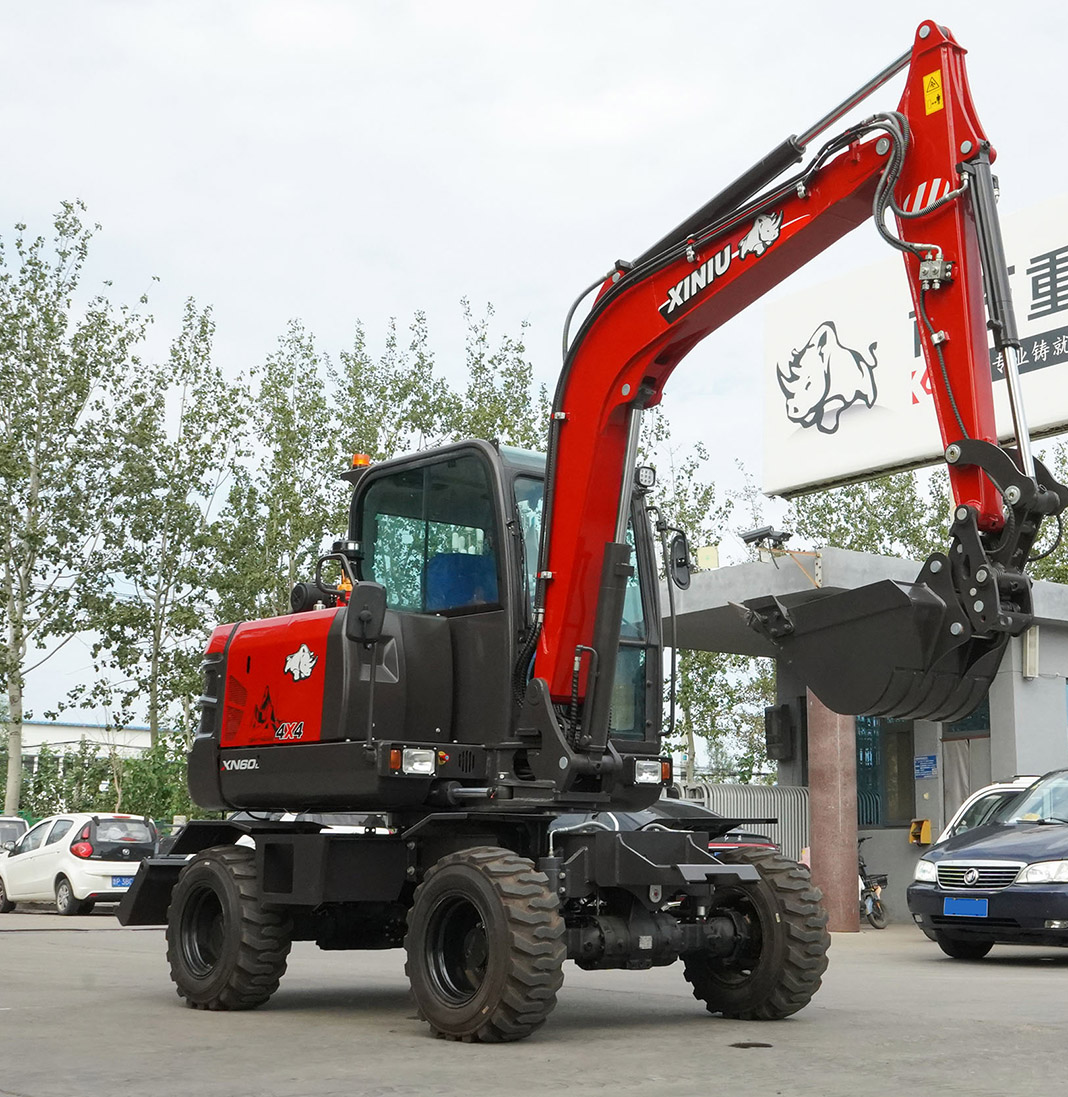
What a quick coupler actually replaces
A manual pin coupler is the simplest, cheapest connection between an excavator's arm and an attachment: physical pins, hand-aligned and secured, with no hydraulics involved in the connection itself. A hydraulic quick coupler replaces that manual process with a cab-operated hydraulic lock, letting an operator disconnect one attachment and connect another without leaving the machine.
Manual couplers remain common specifically on machines and jobs where attachment swaps are rare, since there's little reason to pay for hydraulic convenience that rarely gets used. Hydraulic couplers earn their cost on jobs involving frequent swaps between digging, breaking, grading, and other attachment types within the same working day.
The actual math behind the payback
Industry cost modeling for excavator attachment systems frames the payback calculation simply: total installed cost of the coupler, divided by daily labor savings, where daily labor savings equals the time difference between a manual and hydraulic swap, multiplied by swaps per day, multiplied by operator hourly rate, according to That same analysis found contractors switching frequently between attachments, bucket, auger, grapple, across residential jobs reaching payback in roughly 4 to 8 months on hydraulic couplers, while operations where a single attachment runs 95 percent or more of total operating hours saw payback stretch beyond 24 months, effectively erasing the financial case for upgrading.
That gap is the entire decision in one comparison. The same piece of equipment can be a fast financial win or a poor one depending entirely on how often the machine actually switches tools, not on anything about the coupler itself.
Five questions that predict which side you're on
How many times per day does the machine actually switch attachments?
How much operator time does a manual pin swap currently take, start to finish?
What's the fully loaded hourly cost of the operator running the machine?
Does one attachment dominate the work, or does the job mix genuinely rotate through several?
Is climbing down for a manual swap a safety concern on this specific job site?
A machine running the same bucket nearly all day, every day, rarely justifies the added cost. A machine cycling between digging, breaking, and grading multiple times a shift usually does, often within well under a year.
Manual vs hydraulic vs tilting: a quick reference
| Coupler type | Operator leaves seat? | Best fit |
|---|---|---|
| Manual pin | Yes, every swap | Single-attachment jobs, infrequent swaps |
| Hydraulic quick coupler | No | Frequent swaps between multiple attachments |
| Tilting quick coupler | No, plus tilt angling | Grading and trench-slope work needing left-right angle control |
General category comparison based on published industry cost and function guidance, August 2026.
Where a tilting coupler fits into this decision
A step beyond a standard hydraulic quick coupler, a tilting coupler adds the ability to angle the attachment left and right without repositioning the whole machine, useful specifically for grading and trench-slope work. Industry comparisons generally find a tilting coupler delivers a large share of a full tiltrotator's productivity benefit at a meaningfully lower cost, making it the more common choice for contractors who need angle control but not full continuous rotation.
A full tiltrotator, offering continuous rotation for complex utility and urban work, sits at the premium end of the category and is generally justified only by job types requiring that specific capability regularly, not as a default upgrade path from a standard hydraulic coupler.
The safety angle, beyond just labor time
Repeated manual coupling isn't just slower, it's also repeated exposure to a job site's hazards every time an operator climbs down to make a connection. A hydraulic coupler that keeps the operator in the cab reduces that specific exposure across every swap over the life of the machine, which is a real factor beyond the pure labor-cost calculation, particularly on sites with active traffic, overhead hazards, or uneven ground near the machine.
What this means for a compact wheel excavator specifically
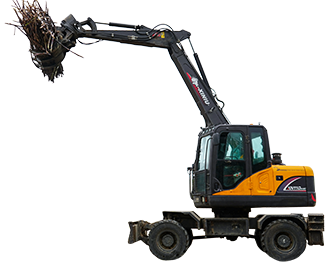
The payback logic above applies across excavator classes, but the absolute numbers shift for a compact wheel excavator. A smaller machine generally means a lower-cost coupler to begin with, which can shorten the payback period compared with the same swap-frequency scenario on a larger machine. At the same time, compact wheel excavators are often used for narrower, more repetitive digging tasks where attachment variety is naturally lower than on a larger, more general-purpose machine, which can push the calculation the other direction.
The honest takeaway for this size class is that neither assumption, "coupler always pays off" or "coupler rarely pays off on a small machine", holds universally. Running the actual swap-frequency numbers for the specific job mix remains the only reliable way to answer the question.
Confirm what's actually standard before assuming
Quick coupler availability varies by model, engine configuration, and hydraulic flow rating, and it's not safe to assume a specific wheel excavator ships with hydraulic coupler capability standard. Confirm directly with Rhinoceros whether a hydraulic quick coupler is included, available as an option, or requires an aftermarket retrofit for the specific model and configuration being purchased, since this varies enough across the lineup that a general assumption risks an expensive mismatch between expectation and delivery.
What to ask before buying either system
Beyond the five decision questions above, a few supplier-specific questions help avoid surprises after purchase. Ask whether the coupler's hydraulic function shares flow with other attachment functions, since shared hydraulics can reduce simultaneous performance under heavy use. Ask whether the coupler is compatible with attachments from other manufacturers or locked to a proprietary system, since compatibility affects future attachment purchasing flexibility. And ask for the actual swap time in a real demonstration rather than a marketing claim, since actual cycle times can vary meaningfully from published figures depending on attachment weight and hydraulic pressure.
Where tiltrotators fit above this comparison entirely
Beyond tilting couplers sits a further step up: the full tiltrotator, offering continuous 360-degree rotation rather than a fixed left-right tilt range. Industry buyer guidance frames the decision between a tilting coupler and a full tiltrotator primarily around whether a job needs continuous rotation for complex 3D positioning, common in urban utility work and tight corridors, or whether simple left-right angling covers the actual need, according to That same guidance notes tilting couplers typically deliver a large share of a tiltrotator's productivity benefit at a fraction of the cost, which is why most contractors evaluating this upgrade path stop at the tilting coupler rather than continuing to a full tiltrotator, unless the specific job genuinely requires continuous rotation.
For a compact wheel excavator specifically, a full tiltrotator's added weight and cost are worth weighing carefully against the machine's overall lift and stability ratings, since the feature was originally developed for larger utility-focused machines rather than compact general-purpose equipment.
Attachment versatility as a broader trend
The growth of quick-coupler adoption across the compact excavator category more broadly reflects a wider industry shift toward attachment versatility as a core buying factor, not just a convenience feature. Industry coverage of the compact excavator market attributes rising popularity in this equipment class partly to increased attachment versatility enabled by higher hydraulic flows and modern coupler systems, alongside reduced size and easier transport, according to That trend context is useful background for understanding why coupler technology has become a standard talking point in equipment marketing, even though, as covered above, the actual financial case still depends entirely on a specific job's swap frequency rather than the broader trend itself.
Maintenance considerations specific to hydraulic couplers
A hydraulic coupler adds a component that needs its own inspection routine on top of the machine's standard maintenance checklist. Hydraulic seals and locking mechanisms should be checked periodically for wear, and a coupler that doesn't fully lock or shows hydraulic fluid residue around the connection point is worth addressing immediately rather than continuing to use, since a failed lock during operation is a genuine safety hazard, not just a mechanical inconvenience.
This added maintenance point is real but modest relative to the rest of a wheel excavator's maintenance routine, and it's a fair trade for crews genuinely using the swap capability often enough to justify the coupler's purchase in the first place.
A realistic example, worked through
Consider a small utility crew running a compact wheel excavator that switches between a digging bucket and a hydraulic breaker roughly three times per day, clearing debris from a valve box, then digging, then breaking through old pavement at the edge of a repair. A manual pin swap takes several minutes each time the operator has to climb down, align pins, and climb back in. Across three swaps a day, that adds up to a meaningful chunk of paid time spent on coupling rather than working, every single day the pattern repeats.
A hydraulic coupler collapses that same three-swap day into seconds of cab-operated switching instead. Multiplied across a work week, and then a work year, the saved time is exactly the kind of recurring, predictable labor cost the payback formula above is built to capture. This is the profile, frequent swaps, predictable daily pattern, real operator time cost, that consistently produces the fastest payback periods in the industry data cited earlier.
When the upgrade genuinely isn't worth pursuing
Not every job profile favors the switch, and it's worth being direct about that rather than defaulting to a universal recommendation. A machine dedicated almost entirely to one task, trenching with the same bucket day after day on a single long project, gets little practical benefit from coupler speed, since there's nothing to swap to in the first place. In that scenario, the money is better spent elsewhere, on the digging bucket's own condition, the machine's core maintenance, or simply kept as working capital rather than invested in a convenience feature the job doesn't call for.
Comparing coupler cost against the rest of a compact wheel excavator budget
A hydraulic coupler's cost should be weighed against the scale of the rest of the purchase, not evaluated in isolation. On a compact wheel excavator, coupler cost represents a smaller share of the total machine budget than it would on a larger excavator, which can make the relative decision easier even when the absolute swap-frequency math is close to break-even. A buyer already spending significantly on the base machine, engine configuration, and other options may find the incremental cost of adding coupler capability modest enough to justify on convenience and safety grounds alone, even in scenarios where the pure labor-savings payback period runs longer than ideal.
That said, this shouldn't be used to justify the upgrade on every purchase by default. The swap-frequency analysis above remains the more reliable guide for a buyer trying to make a financially sound decision rather than simply adding every available option because the incremental cost feels small in context.
A simple way to decide
Count actual attachment swaps over a representative week of work, not an assumed average. If that count is low and one attachment dominates the job mix, a manual pin coupler remains the more cost-effective choice, and the money saved is better spent elsewhere. If swaps happen multiple times per shift across a genuinely varied job mix, a hydraulic quick coupler's payback period is usually short enough that the upfront cost stops being the deciding factor within the first year of use.
Frequently asked questions
Does a hydraulic quick coupler reduce an excavator's lifting capacity?
It can slightly, since the coupler itself adds weight between the arm and the attachment, which is worth checking against the machine's rated lift capacity for attachment-heavy work specifically.
Can a hydraulic coupler be added to a machine that shipped with a manual pin system?
Often yes as an aftermarket retrofit, though compatibility and cost vary by model, so confirming with the manufacturer or a qualified dealer before assuming retrofit availability is worth doing first.
Is a tilting coupler worth it over a standard hydraulic coupler for general digging work?
Usually not, if the work is mostly straight digging rather than grading or trench-slope work, since the tilt function's added cost isn't earning its keep on jobs that don't need angle control.
How long does a typical hydraulic coupler swap actually take?
It varies by system and attachment weight, but the core advantage is staying in the cab throughout, which is the main time and safety benefit regardless of the exact number of seconds involved.
Does Rhinoceros offer hydraulic quick couplers standard on its wheel excavator line?
Confirm current availability directly with Rhinoceros for the specific model and configuration you're evaluating, since this varies by model and option package.
Is a manual pin coupler less safe than a hydraulic one?
It requires the operator to leave the cab and work near the attachment during every swap, which does add exposure to job-site hazards that a hydraulic system avoids, though a properly performed manual swap isn't inherently dangerous on its own.
Payback figures and cost ranges cited reflect third-party industry analysis and general market data, not a specific quote for any Rhinoceros model. Confirm current specifications and coupler availability directly with Rhinoceros before purchase.