 中文
 Español
 Francés
 Русский
 Português
 العربية
 Deutsch
 Italiano
 한국인
 Melayu
 ไทย
 Việt
 bahasa Indonesia
 қазақ
 Nederlands
 Ελληνικά
 Magyar
 čeština
 Suomalainen
 Filipino

Winter-Ready or Not? Cold Weather and Wheel Excavators
Reviewed by Justin, Product Engineer·Based on official factory specifications and industry reporting, August 2026
TL;DR: Cold thickens hydraulic fluid, weakens batteries, and stiffens seals. A short warm-up cycle before heavy work prevents most winter breakdowns.
A wheel excavator that started fine every morning in October can suddenly struggle to crank in January, move sluggishly for the first ten minutes, or throw a hydraulic fault it never had before. None of that means the machine broke. It means cold temperature changes how hydraulic fluid, batteries, and seals behave, and most winter problems trace back to skipping the adjustments that account for it.
What cold actually does to a hydraulic system
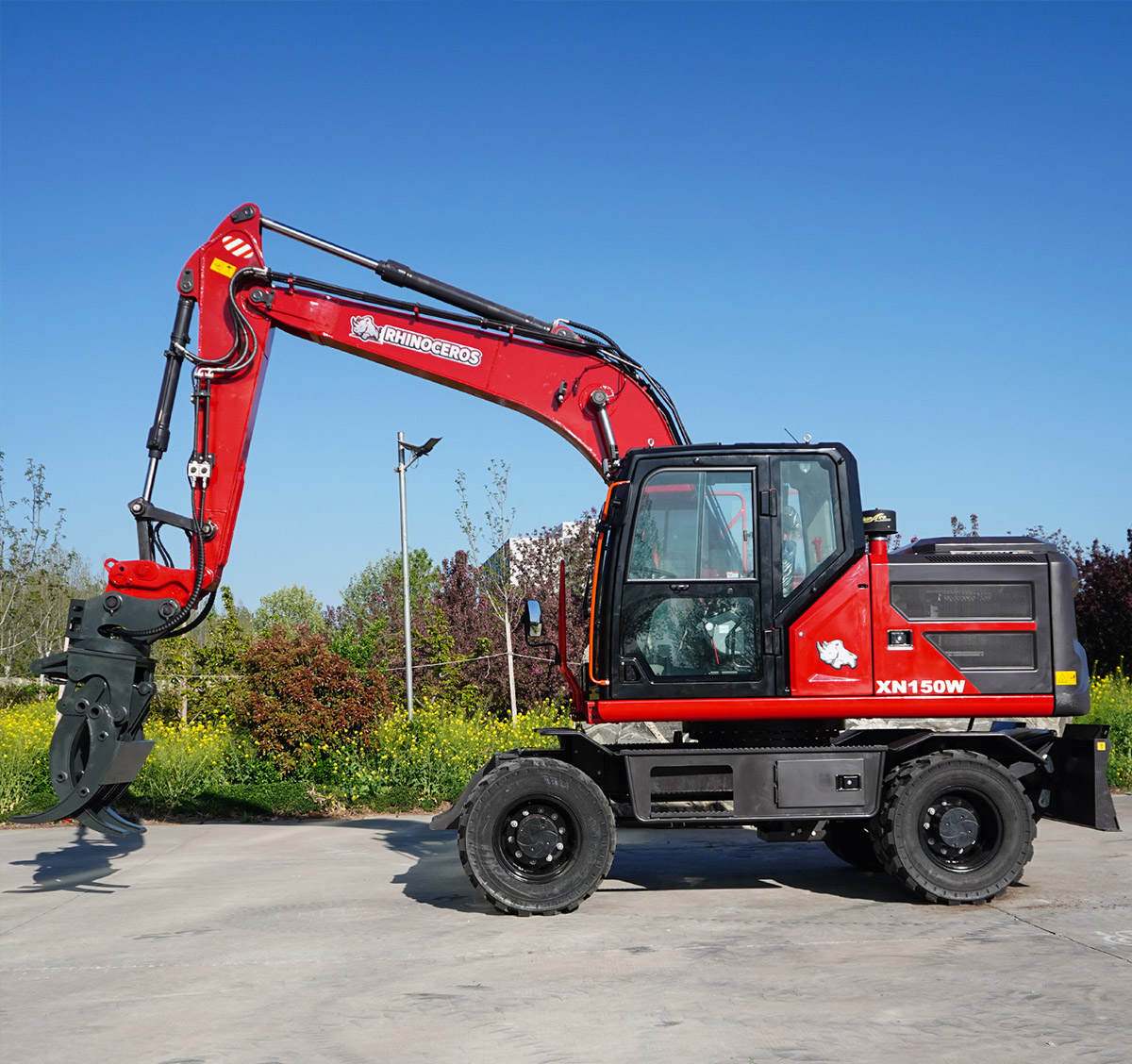
Cold temperature increases hydraulic fluid viscosity, making it thicker and slower to flow through the system's pumps and valves. Industry winterization guidance describes this directly: severely increased viscosity can prevent fluid from distributing evenly or providing sufficient lubrication fast enough when a machine starts cold, according to heavy equipment winterization guidance. That's the mechanical root of the sluggish, hesitant feel a hydraulic system often has on a cold start, before it's had time to warm up and thin out.
Running a machine at full load immediately on a cold start forces pumps to push thick, slow-moving fluid under high pressure, which accelerates wear and raises the risk of cavitation, air bubbles forming and collapsing inside the fluid in ways that damage pump internals over time, according to winter excavator maintenance and parts guidance.
The warm-up habit that prevents most of this
Industry best practice calls for idling the engine and gently cycling hydraulic functions for roughly 15 to 20 minutes before heavy work in cold conditions, letting warm fluid circulate through the full system before it's put under real load. That single habit addresses the majority of cold-related hydraulic stress described above, and it costs nothing except a short delay at the start of a shift.
Documented case data from cold-climate equipment operators found that a structured warm-up and pre-start routine reduced winter startup failure rates from roughly 30 percent down to below 5 percent. That's a large enough gap that skipping the warm-up isn't really a time-saving shortcut, it's a bet against a fairly likely failure.
Batteries: the other major cold-weather failure point
Battery capacity drops meaningfully in sub-zero conditions, which is why a machine that started reliably in warmer weather can suddenly struggle to crank once temperatures fall well below freezing. Cold-weather guidance for heavy equipment recommends off-machine battery storage at room temperature where practical, along with a battery warming blanket or block heater for machines that must stay outdoors, to preserve cranking capacity through overnight lows.
A weak battery in cold weather compounds the hydraulic viscosity problem rather than existing separately from it: a slow crank draws down an already-strained cold battery faster, and a battery too weak to fully crank the engine means the hydraulic warm-up cycle never gets the chance to happen in the first place.
Five things worth checking before the first cold snap, not after
Hydraulic fluid viscosity rating, confirmed against the lowest expected temperature in the region, switching to winter-grade fluid if needed
Battery condition and cranking capacity, tested before cold weather arrives rather than discovered during a failed cold start
Seal and hose condition, since rubber becomes brittle and prone to cracking in freezing temperatures
Cab heating and defrosting systems, confirmed functional before an operator needs them for visibility and comfort
Fuel tank management, keeping tanks fuller at the end of a shift to reduce condensation that can freeze in fuel lines overnight
Why rubber components deserve specific attention
Seals, hoses, and any rubber-based components become measurably more brittle as temperatures drop below freezing, raising real risk of cracking or structural failure, particularly under the vibration and flexing that comes with normal machine operation. This applies to hydraulic hoses throughout the system and, on tracked equipment, to the tracks themselves, though a wheel excavator's tires face a related but distinct cold-weather issue: tire pressure drops as temperature falls, which affects traction and can lead to uneven wear if not checked and adjusted through the season.
The operator comfort factor, and why it's a safety issue too
Cold weather affects the operator, not just the machine, and that has real safety implications. A cold, distracted operator is more prone to mistakes, and frost or ice buildup on cab windows genuinely reduces visibility during operation. Confirming that cab heating, defrosters, and wipers are fully functional before cold weather sets in isn't a comfort nicety, it's a visibility and attention issue that affects safe operation directly, according to cold-weather operating guidance from multiple equipment manufacturers.
What this means for road travel in winter conditions
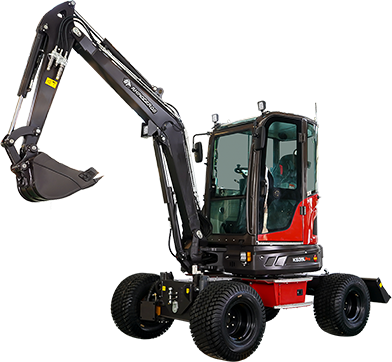
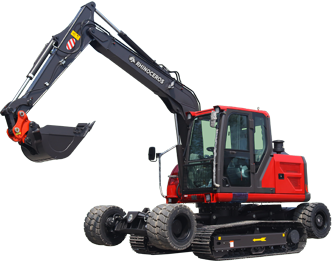
For a wheel excavator specifically, winter conditions add a layer beyond the general cold-weather maintenance points above: reduced traction on icy or snow-covered surfaces affects a wheeled undercarriage differently than a tracked one, and travel between job sites, one of a wheel excavator's core advantages in milder conditions, deserves extra caution when road surfaces are compromised. This doesn't eliminate the mobility advantage covered elsewhere for wheel excavators moving between scattered job sites, but it does mean winter route planning should factor in reduced safe travel speed rather than assuming the machine's rated top speed is achievable in all conditions.
Storage considerations between winter jobs
Where a machine sits between uses matters as much as how it's operated during a shift. Storing hydraulic cylinders in a retracted position where possible protects exposed rod surfaces from ice and road salt corrosion during idle periods. Indoor or covered storage, where available, meaningfully reduces the cold-weather stress described throughout this article compared with leaving a machine exposed to overnight temperature swings, though this isn't practical for every job site or fleet operation.
Confirm cold-weather specifications for your specific model
Recommended hydraulic fluid grades, battery specifications, and cold-weather operating limits vary by specific engine and hydraulic system configuration. Confirm current cold-weather operating guidance directly with Rhinoceros for the specific wheel excavator model and configuration being used, particularly for regions with sustained sub-zero conditions where standard fluid and battery specifications may need adjustment.
Cold-weather attachments and add-ons worth considering
Beyond maintenance habits, some equipment-level additions genuinely help in sustained cold-climate operation. A block heater keeps engine coolant warm during overnight shutdowns, meaningfully easing cold starts the next morning. A battery warming blanket serves the same purpose for cranking capacity specifically. Heated wiper parks and washer fluid rated for extreme low temperatures keep visibility functional rather than fighting frozen washer lines partway through a shift. None of these are strictly required to operate in cold weather, but fleets working sustained winter conditions across a season generally find the upfront cost pays for itself in avoided downtime.
How this compares to hot-weather operating stress
It's worth noting cold isn't the only seasonal extreme that stresses a wheel excavator's systems, even though it's the focus of this article. Hot climates create a different set of hydraulic and cooling-system challenges, elevated fluid temperature reducing lubrication effectiveness, increased cab cooling demand, and different maintenance timing considerations entirely. A fleet operating across a full range of seasonal conditions benefits from treating both extremes as distinct maintenance categories rather than assuming a single year-round maintenance schedule covers both adequately.
What a proper pre-start inspection actually looks like in winter
Beyond the general checklist above, a cold-weather pre-start routine benefits from a specific sequence. Start by checking gauges immediately after ignition, coolant temperature, oil pressure, and battery voltage, and stop if any reading looks abnormal rather than assuming it will normalize once the engine's running. Begin the warm-up cycle at idle rather than immediately engaging hydraulic functions under load. Cycle each hydraulic function gently and individually rather than all at once, letting warmed fluid reach each circuit before asking it to perform under real pressure. This sequence takes only a few minutes longer than an immediate cold start but meaningfully reduces the wear and failure risk documented throughout this article.
A realistic scenario: the machine that "won't start" but isn't broken
A common cold-morning scenario: a wheel excavator cranks slowly, catches, then stalls, or starts but feels sluggish and unresponsive for the first several minutes. The instinct is often to suspect a mechanical fault, but this pattern is frequently just cold hydraulic fluid and a cold battery working exactly as physics predicts, not a sign anything is actually broken. Jumping straight to heavy diagnostic work in this scenario, before ruling out the basic cold-weather explanation, wastes time on a problem that a proper warm-up routine would have prevented or resolved on its own.
That's not to say every cold-weather symptom is benign. A machine that fails to crank at all despite a good battery, or one that shows genuine fault codes rather than just sluggish response, warrants real diagnostic attention. The distinction matters: sluggish-but-functioning in cold conditions is often normal physics, while a hard failure to start or an active fault code is a different problem requiring a different response.
Building winter readiness into a fleet maintenance calendar
Reactive cold-weather maintenance, addressing problems as they appear once temperatures drop, is a more expensive pattern than proactive seasonal preparation scheduled ahead of the first hard freeze. Fleets that treat winterization as a scheduled event, fluid changes, battery testing, seal inspection, all completed before sustained cold arrives, consistently report fewer mid-season breakdowns than fleets addressing each issue individually as it surfaces. Scheduling oil and hydraulic fluid changes ahead of the first cold snap specifically matters, since diesel anti-gel additives and winter-grade hydraulic fluid both need time to properly circulate through a system before cold weather actually tests them.
This same logic extends to parts availability. Ordering winter-grade hydraulic fluid, a battery warming blanket, or replacement seals before the season starts avoids the scramble that comes with sourcing them during an active cold snap, when demand for the same components spikes across every fleet in a region simultaneously.
A simple way to approach winter operation
Treat the first hard freeze of the season as a checklist trigger, not a surprise. Confirm fluid viscosity is rated for the coldest expected temperature, verify battery condition, inspect seals and hoses for early brittleness, and build the 15 to 20 minute warm-up cycle into the daily routine before heavy work begins. That combination addresses the overwhelming majority of cold-weather failures documented across the industry sources cited above, at a cost of a few minutes per shift rather than an unplanned repair mid-winter.
Frequently asked questions
How long should a wheel excavator warm up before heavy work in cold weather?
Industry guidance generally recommends 15 to 20 minutes of idling and gentle cylinder cycling to circulate warm hydraulic fluid before full-load operation.
Does cold weather affect a wheel excavator's tires differently than an excavator's tracks?
Yes. Tire pressure drops with falling temperature and needs regular checking, while tracks become more brittle and prone to cracking rather than losing pressure.
Is it necessary to switch to a different hydraulic fluid for winter operation?
Often yes in regions with sustained sub-zero temperatures, since standard fluid can become too thick to circulate properly; confirm the recommended winter-grade fluid for your specific machine.
Can a weak battery affect hydraulic performance indirectly?
Yes. A weak battery struggles to fully crank the engine, which can prevent the hydraulic warm-up cycle from happening properly, compounding cold-related hydraulic issues.
Should hydraulic cylinders be left extended or retracted during winter storage?
Generally retracted where possible, to protect exposed rod surfaces from ice and road salt corrosion during idle periods.
Does Rhinoceros provide specific cold-weather operating guidance for its wheel excavators?
Confirm current cold-weather specifications and recommendations directly with Rhinoceros for the specific model and region you're operating in.
Cold-weather operating recommendations vary by specific engine, hydraulic system configuration, and regional climate; confirm current specifications directly with Rhinoceros before operating in sustained sub-zero conditions.