 中文
中文
 Español
 Francés
 Русский
 Português
 العربية
 Deutsch
 Italiano
 한국인
한국인
 Melayu
 ไทย
ไทย
 Việt
Việt
 bahasa Indonesia
 қазақ
қазақ
 Nederlands
 Ελληνικά
 Magyar
 čeština
 Suomalainen
 Filipino
What Size Skid Steer Loader Do You Really Need? A Contractor’s Guide to Avoid Costly Buying Mistakes
What Size Skid Steer Loader Do You Really Need? A Contractor’s Guide to Avoid Costly Buying Mistakes
Walk onto any jobsite and you'll probably see a skid steer loader somewhere nearby.
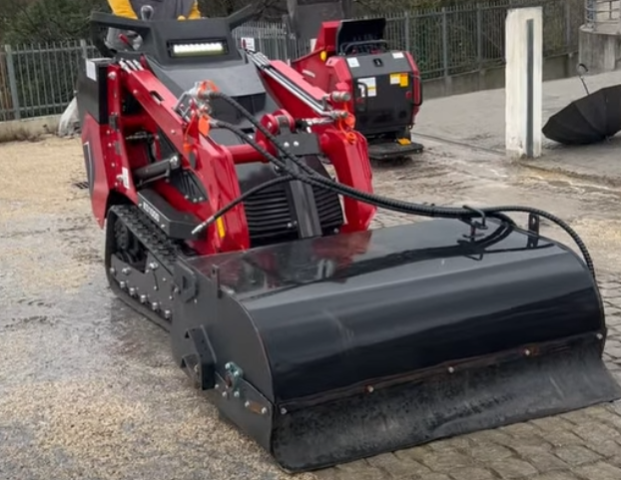
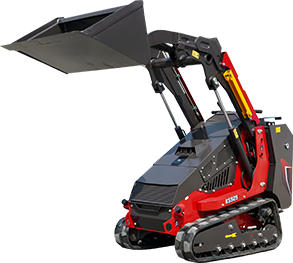
Rhinoceros KS1000 Skid Steer Loader Clearing a Jobsite in Portugal
They're moving pallets, loading trucks, grading driveways, clearing debris, drilling post holes, and handling dozens of other tasks that once required multiple machines.
But when it's time to buy one, many contractors make the same mistake:
They focus on horsepower first.
In reality, horsepower is rarely the reason a skid steer succeeds or fails on a project.
The better question is:
What size skid steer loader actually matches your daily work?
Start With The Job, Not The Machine
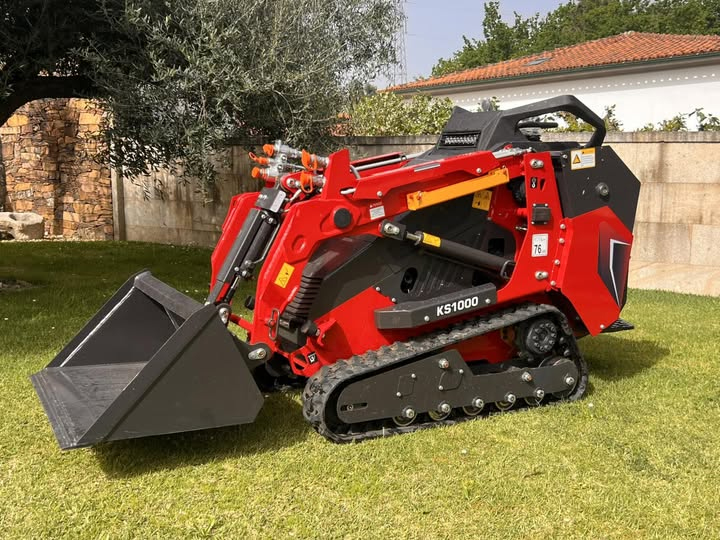
KS1000 in a courtyard in Portugal
A machine that performs perfectly on a residential landscaping project may become a costly burden on a commercial construction site.
Before comparing brands or prices, identify where the loader will spend most of its time.
For example:
Landscaping companies often prioritize maneuverability and transport convenience.
Farmers usually need pallet handling, feed movement, and general material loading.
Construction contractors often require higher lift capacity and stronger hydraulic performance.
Municipal crews need machines that can operate multiple seasonal attachments throughout the year.
The best skid steer is not necessarily the biggest one.
It's the machine that completes the majority of your work efficiently.
Understanding Lift Capacity
Many first-time buyers underestimate the importance of rated operating capacity.
A skid steer may have enough engine power, but if the machine cannot safely lift the materials used every day, productivity suffers.
As a general guideline:
Under 1,500 lbs ROC
Suitable for:
Residential landscaping
Small farms
Property maintenance
Light material handling
1,500–2,500 lbs ROC
Ideal for:
General contractors
Utility work
Medium construction projects
Agriculture
Above 2,500 lbs ROC
Best for:
Commercial construction
Heavy material handling
Demolition projects
Aggregate yards
Choosing too much capacity increases fuel consumption, transportation costs, and purchase price.
Choosing too little creates limitations on every job.
Wheels Or Tracks?
This decision often affects productivity more than engine size.
Wheeled Skid Steers
Advantages:
Faster travel speeds
Lower maintenance costs
Better on pavement and hard surfaces
Lower purchase price
Best for:
Concrete work
Warehouses
Urban construction
Agricultural yards
Track Loaders
Advantages:
Superior traction
Better flotation on soft ground
Reduced ground pressure
Improved grading performance
Best for:
Mud
Snow
Wet terrain
Land clearing
Uneven job sites
If your machine spends most of its life on hard surfaces, wheels are often the smarter investment.
If traction regularly limits productivity, tracks quickly justify the additional cost.
Hydraulics Matter More Than Most Buyers Realize
Attachments have transformed skid steers from loaders into multi-purpose tool carriers.
Today's contractors commonly run:
Augers
Sweepers
Grapples
Trenchers
Brush cutters
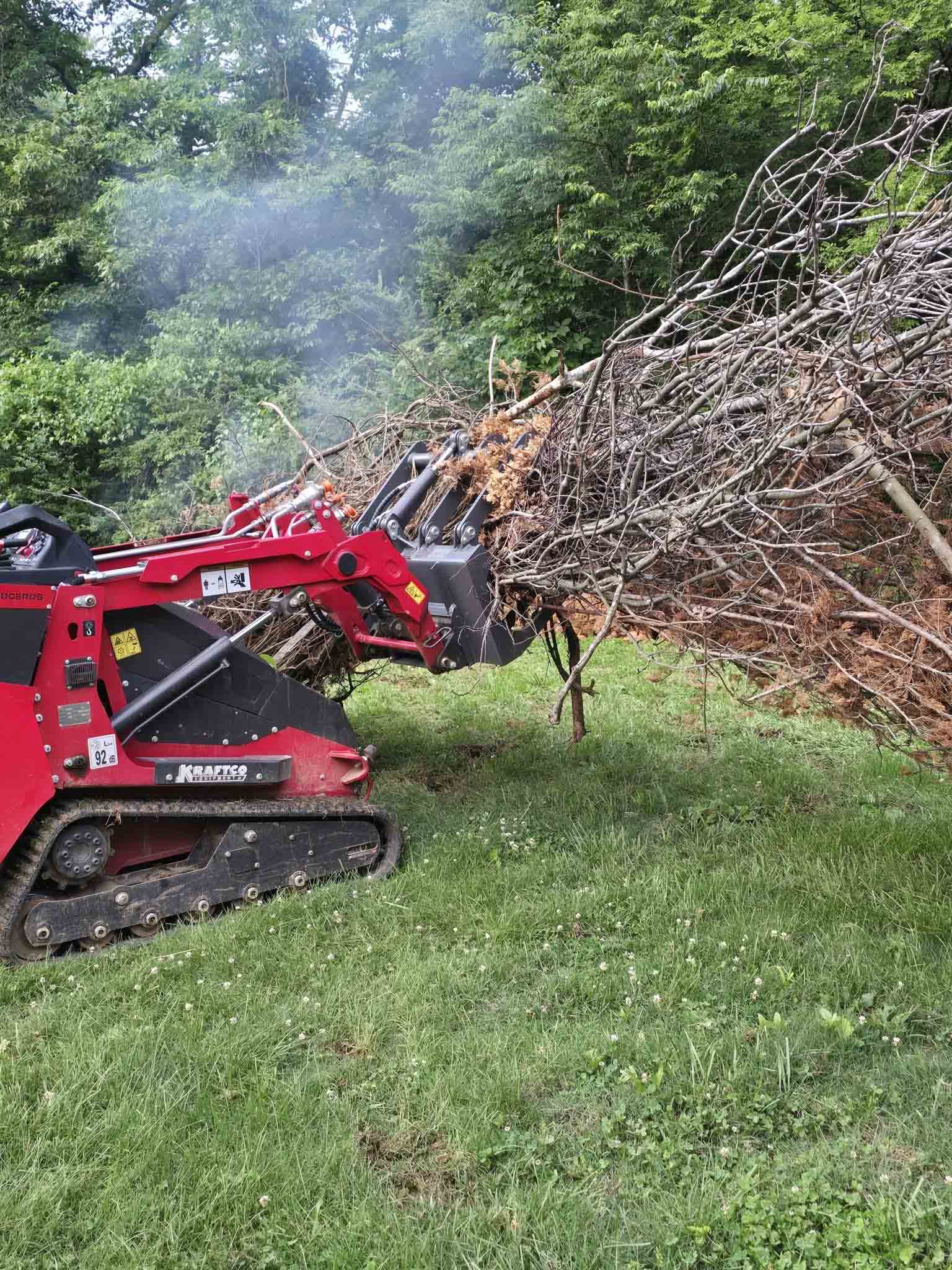
Rhinoceros KS1000 Skid Steer Loader Clearing Brush in the USA
Snow blowers
Each attachment requires hydraulic flow.
A machine with insufficient hydraulic output may operate the attachment, but performance will be disappointing.
Always select the machine around the attachments you expect to use over the next five years—not only the tools you own today.
The Hidden Cost Most Buyers Ignore
Purchase price is easy to compare.
Ownership cost is harder.
Fuel consumption, maintenance, downtime, parts availability, and service support often determine the real cost of ownership.
A machine that costs less initially can become more expensive if replacement parts are difficult to obtain or technical support is unavailable.
Reliable dealer support and fast spare parts supply remain critical factors for contractors who depend on machine uptime.
Choosing The Right Skid Steer Loader
The right skid steer is rarely the largest or most expensive model.
It is the machine that matches your terrain, attachment requirements, lifting needs, and daily workload.
For contractors looking for a balance of lifting performance, hydraulic capability, durability, and operating efficiency, modern skid steer loaders such as the Rhinoceros skid steer series provide a practical solution across construction, agriculture, landscaping, and municipal applications.
When selected correctly, a skid steer loader becomes more than a machine.
It becomes the most frequently used piece of equipment on the jobsite.