 中文
 Español
 Francés
 Русский
 Português
 العربية
 Deutsch
 Italiano
 한국인
 Melayu
 ไทย
 Việt
 bahasa Indonesia
 қазақ
 Nederlands
 Ελληνικά
 Magyar
 čeština
 Suomalainen
 Filipino
What Keeps a Wheel Excavator Stable While Digging on Rubber Tires
Reviewed by Justin, Product Engineer·Based on official factory specifications, August 2026
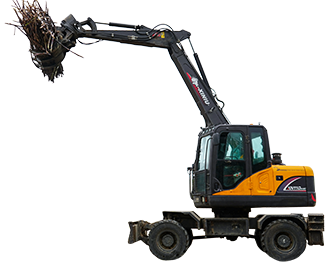
Quick answer: A crawler excavator gets its digging stability from a long, continuous track contact patch. A wheel excavator’s tires give it a much smaller footprint, which is why the category commonly relies on a front stabilizer blade to widen the effective support base during digging—separate from the wheels used for travel. Whether a specific model includes one is worth confirming rather than assuming.
Road travel is the headline feature of a wheel excavator, but it changes the stability question during digging in a way that’s worth understanding before assuming it behaves like a smaller crawler machine.
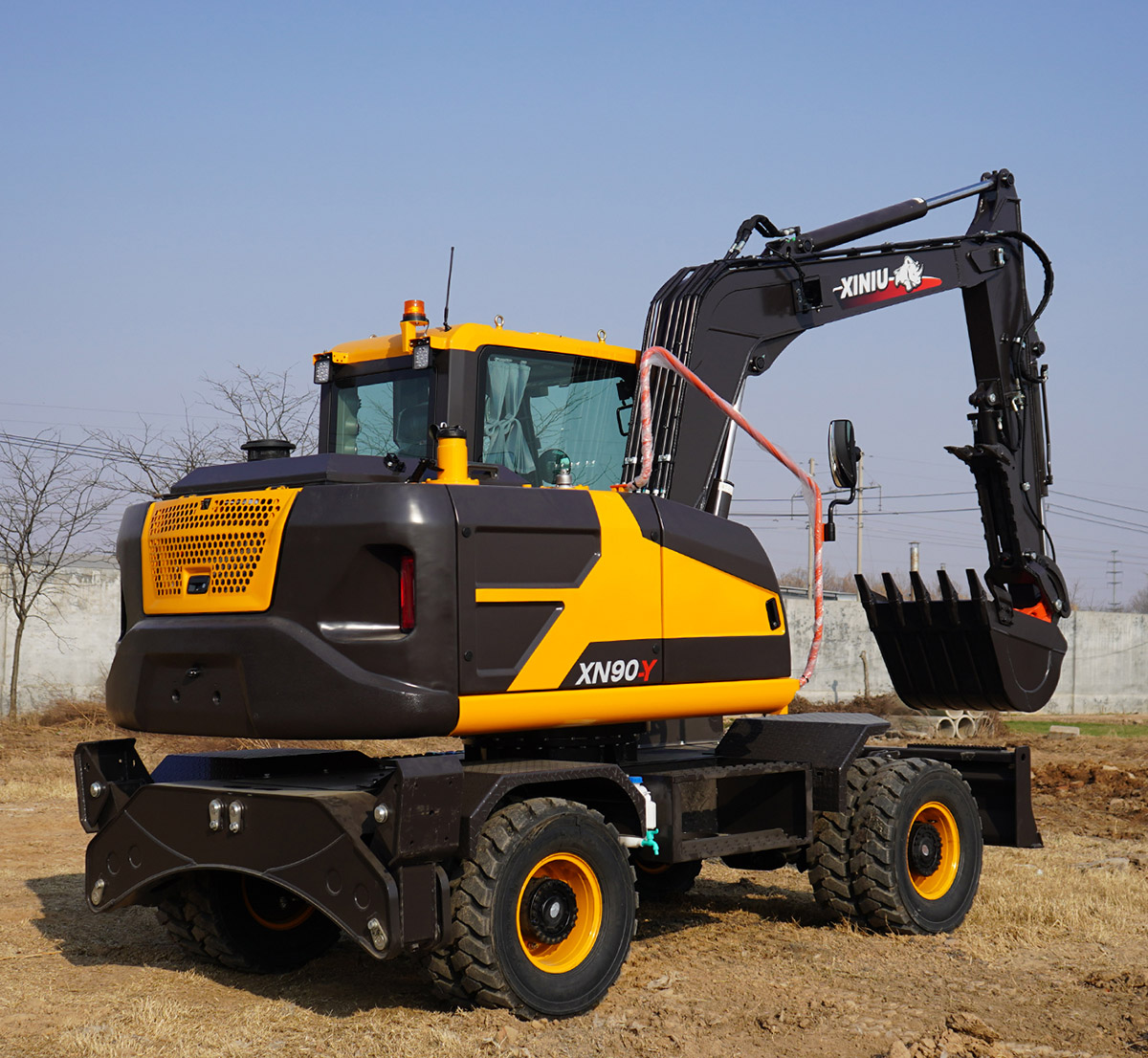
Why Tire Contact Changes the Stability Question
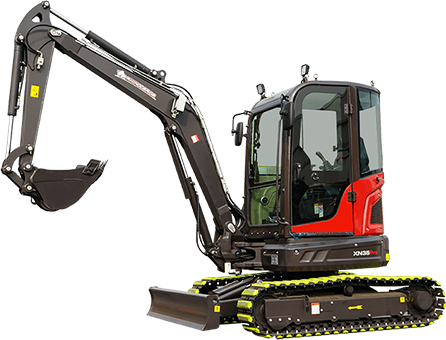
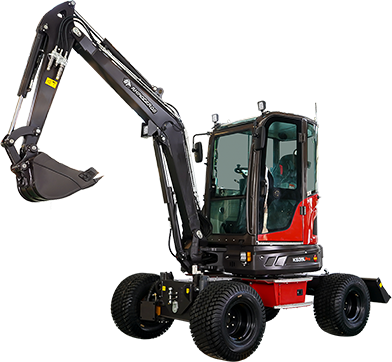
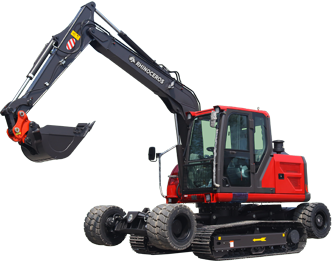
A crawler excavator’s track spreads the machine’s weight across a long, continuous ground contact patch, which is a large part of why crawler machines handle soft or uneven ground and heavier digging forces with a wide stability margin. Tires, by contrast, contact the ground at four comparatively small points. That’s a fair tradeoff for road travel, but it means the digging stability question has to be solved differently than it is on a crawler machine.
The Role of a Front Stabilizer Blade
Many wheel excavators address this with a front-mounted blade that can be lowered to the ground before digging, widening the machine’s effective support base and taking load off the tires during the dig cycle. It’s a separate function from the wheels used for travel—the blade isn’t used while driving between sites, only during digging itself. Whether a specific model in the lineup includes this feature and how it’s configured is worth confirming directly rather than assuming it’s standard across every model.
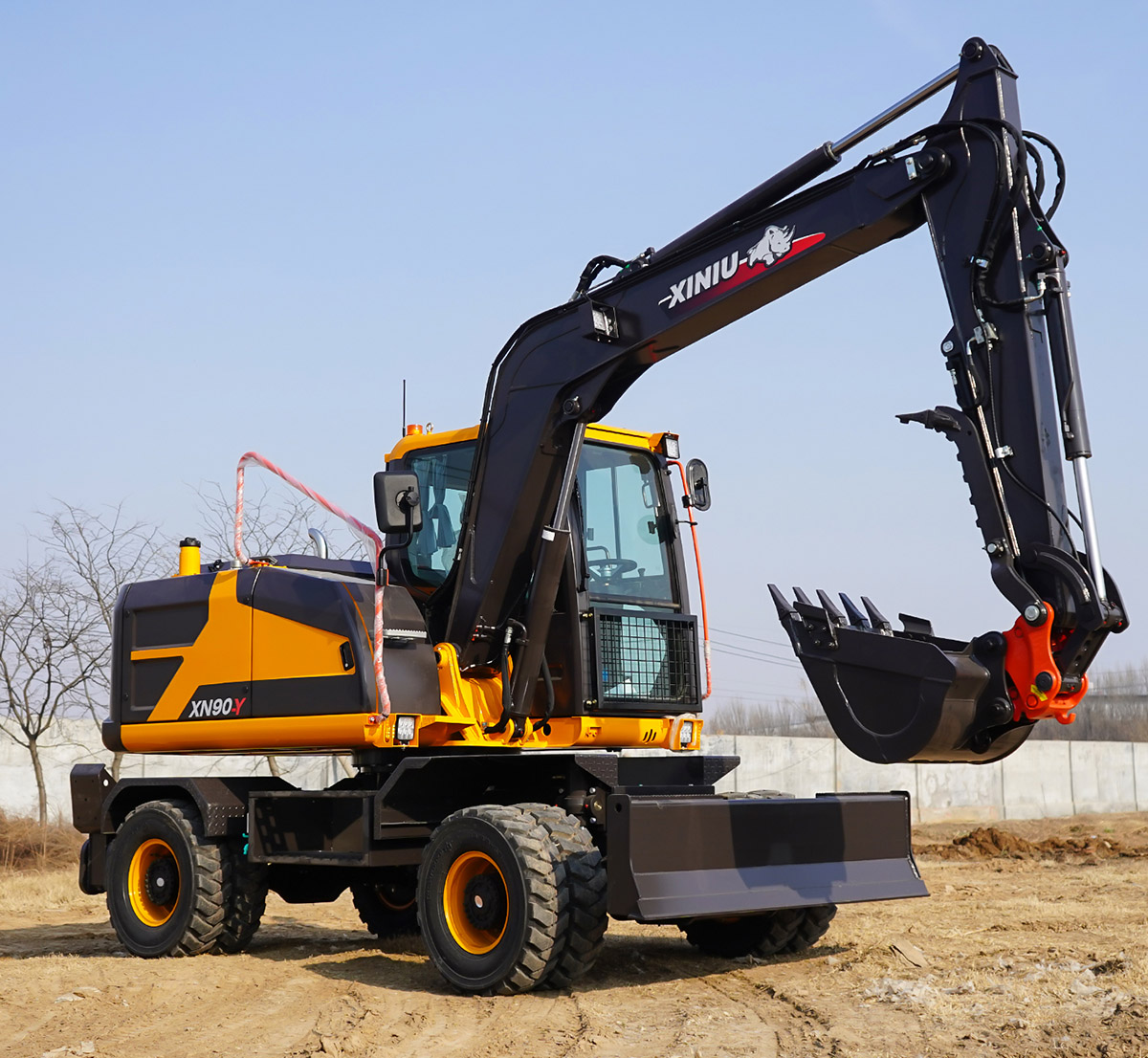
What This Means for Where You Position the Machine
Because the stability setup is different from a crawler machine, positioning matters more. Digging with the blade properly set and the machine oriented so digging forces are directed through the stabilized base—rather than sideways across it—makes a bigger difference on a wheel excavator than it does on a crawler machine, where the long track already provides stability in more directions.
What Doesn’t Change Regardless of Configuration
A stabilizer blade widens the support base; it doesn’t change the machine’s rated digging reach or lift capacity. Operating within the rated envelope for the specific model still applies exactly the same way it would on any excavator—the blade improves stability within those limits, it doesn’t extend them.
Frequently Asked Questions
Do all wheel excavators have a front stabilizer blade?
It’s common across the category but not universal. Confirm the specific configuration for a given model rather than assuming it’s standard.
Does tire pressure affect digging stability the way it affects travel comfort?
Tire condition and pressure affect the machine’s overall footprint and load distribution, which plays a role in stability, but the stabilizer blade—where equipped—is the primary mechanism addressing digging stability specifically.
Is a stabilizer blade something to confirm before buying, not assume?
Yes. It’s a configuration detail worth confirming for the specific model, the same way any other feature should be verified against the official spec sheet rather than assumed from the category in general.
This content describes general engineering principles common to the wheel excavator category and does not confirm specific feature configurations for any individual Rhinoceros model; confirm exact configuration directly with Rhinoceros before purchase.