 中文
 Español
 Francés
 Русский
 Português
 العربية
 Deutsch
 Italiano
 한국인
 Melayu
 ไทย
 Việt
 bahasa Indonesia
 қазақ
 Nederlands
 Ελληνικά
 Magyar
 čeština
 Suomalainen
 Filipino
How to Check and Adjust Mini Dumper Track Tension
Reviewed by Justin, Product Engineer·Based on official factory specifications and industry reporting, August 2026
TL;DR: Press the middle of the track. It should sag roughly 1-3 cm. Looser and it slips or de-tracks; tighter and it wears out the undercarriage faster.
Track tension is one of those maintenance items that's easy to ignore right up until it causes a real problem, a slipped track mid-job or a set of rollers worn out years early. Checking it takes about ten minutes. Ignoring it costs considerably more than that.
Why this matters more on a loaded dumper than an empty one
A mini dumper spends more of its working life carrying weight than a typical mini excavator, which changes the stakes on track tension specifically. Loose tracks under a loaded bucket slip and de-track more readily than they would empty, and the load itself accelerates wear on an already-loose track's rollers and sprockets. Getting tension right isn't just a smoothness issue on a dumper, it directly affects how safely a loaded machine handles.
What "correct tension" actually looks like
On level ground, press down on the middle of the track between the rollers. A properly tensioned track typically sags somewhere in the range of 1 to 3 centimeters, roughly half an inch to just over an inch, though the exact target varies by specific model and should be confirmed against the machine's operator manual rather than assumed universally, according to compact track equipment tensioning guidance.
Too loose, and the track visibly sags well beyond that range, slips on the sprocket, or shows a tendency to de-track during turns. Too tight, and there's little to no give at all when pressed, which puts constant stress on the idler and tensioner even when the machine isn't moving.
Signs the tension is off, before it becomes a bigger problem
Too loose
Excessive sag between the sprocket and front idler, a track that slips or jumps on the sprocket under load, rattling or banging noises during operation, and a machine that feels shaky at higher travel speeds are all signs tension has drifted too loose, according to track tensioning maintenance guidance.
Too tight
A track with little to no visible sag, noticeably higher effort or fuel use during travel, and accelerated wear on the idler and tensioner components all point to over-tensioning. Both extremes shorten the undercarriage's working life, just through different mechanisms.
How the adjustment mechanism actually works
On most compact tracked equipment, tensioning is handled through a grease-fitting tensioner rather than a mechanical bolt adjustment. Tightening involves connecting a grease gun to the fitting and pumping grease in slowly, which pushes the front idler forward and tightens the track, checking sag after every few pumps rather than all at once, according to undercarriage maintenance and tensioning guidance.
Loosening works the opposite direction, through a release valve rather than the grease fitting. This step requires real caution: the grease inside is under significant pressure, the valve should never be turned more than one full rotation at a time, and standing to the side of the valve rather than directly in front of it matters, since escaping grease under pressure can cause injury if the operator is positioned incorrectly.
How often to actually check it
A quick visual check as part of the daily pre-start walkaround catches obvious problems early. A proper measured check with a tape measure, done weekly or after any job involving unusually rough or muddy conditions, catches the gradual drift that a visual glance alone can miss. Machines in their first 30 operating hours, still in the break-in period, benefit from more frequent checks specifically, since tension can shift faster during that early wear-in phase than it does once the undercarriage has settled.
Five habits that extend undercarriage life beyond tensioning alone
Clean the undercarriage regularly, since built-up mud and debris affects how accurately sag can even be measured
Avoid unnecessarily sharp turns, which stress tracks more than straight-line travel does
Reduce unnecessary travel distance when a shorter route or better site setup is available
Inspect rollers and sprockets alongside tension checks, since they wear as a related system
Document each check, including the date and measured sag, to catch a drifting pattern before it becomes a failure
What happens if this gets skipped for months
Track tension doesn't stay static on its own. Normal wear gradually loosens tension over time, which means a machine checked and adjusted correctly at purchase can drift out of range within weeks or months of regular use without anyone touching the tensioner. A machine that hasn't had its tension checked in a long stretch is a reasonable candidate for a full inspection before the next job, not just a quick visual glance, since the drift compounds gradually enough that it's easy to miss day to day.
What makes rubber tracks different from steel in this context
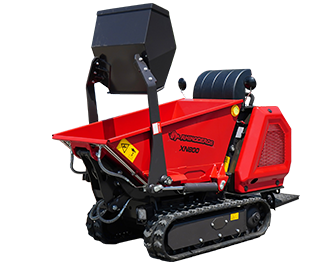
Most mini dumpers run rubber tracks rather than steel, and that material choice affects tensioning specifically. Rubber tracks reduce surface damage and provide strong traction on landscaping, residential, and paved job sites, which is exactly why they're standard on this equipment class, but rubber also stretches and reacts to wear differently than steel does over time, according to rubber track adjustment guidance. That stretch characteristic is part of why tension drifts gradually on its own even without any single dramatic event causing it, and why a periodic check matters more for rubber tracks than it might for a steel-tracked machine that holds tension more consistently over time.
A quick pre-adjustment checklist
Before making any adjustment, park on level ground, turn off the engine, and let it cool if it's been running. Confirm the machine is empty or at rest rather than mid-load, since an accurate sag reading depends on consistent conditions each time it's checked. Keeping a simple log, even just a date and a measurement jotted down, turns individual checks into a pattern that shows drift before it becomes a problem, rather than a series of disconnected snapshots that don't reveal a trend.
Confirm the exact spec for your specific model
Sag targets, tensioning mechanism details, and recommended check intervals vary across the Rhinoceros mini dumper lineup and by specific track type. Confirm the exact tension specification and adjustment procedure in the operator manual for the specific model being used, rather than applying a general industry range without checking it against the manufacturer's own guidance.
How this connects to resale value and long-term ownership
Undercarriage condition is one of the first things a used-equipment buyer inspects, and a well-documented history of tension checks and adjustments signals a machine that's been genuinely cared for rather than run until something broke. This same habit that prevents mid-job breakdowns also protects the machine's value over its working life, since visible roller and sprocket wear from chronic mistensioning is exactly the kind of finding that costs a seller real money at resale time.
A note on cost: prevention versus replacement
A full roller and sprocket set replacement, the kind of repair chronic mistensioning eventually causes, is a meaningfully larger expense than the ten minutes a week a proper tensioning routine actually costs. There's no realistic scenario where skipping tension checks saves money over the machine's working life; it only defers a larger cost while quietly making it more likely.
Frequently asked questions
Can I adjust track tension without a grease gun?
On most compact tracked equipment using a grease-fitting tensioner, no. Confirm the specific tensioning mechanism for your model, since some designs do use mechanical bolt adjusters instead.
Is it dangerous to loosen a track tensioner myself?
It can be if done carelessly, since the grease is under real pressure. Turn the release valve slowly, never more than one full rotation at a time, and stand to the side rather than in front of the valve.
Does track tension need to be checked differently in winter?
Cold temperatures can affect rubber track flexibility, which is worth factoring into visual inspections during cold-weather operation alongside the standard tensioning routine.
How much does incorrect tension actually shorten track life?
It varies by severity and how long the incorrect tension goes uncorrected, but both over- and under-tensioning are consistently cited across the industry as leading causes of premature undercarriage wear.
Should tension be checked more often on muddy or rocky job sites?
Yes. Rough or debris-heavy terrain accelerates tension drift compared with flat, clean work surfaces, which is why post-job checks matter more after unusual site conditions.
Is a slightly loose track worse than a slightly tight one?
Both cause real problems through different mechanisms, slippage and de-tracking risk versus accelerated component stress, so neither should be treated as the safer side to err toward.
Tensioning procedures and specifications vary by model and track type; confirm the exact procedure in your Rhinoceros operator manual before performing adjustments.