 中文
中文
 Español
 Francés
 Русский
 Português
 العربية
 Deutsch
 Italiano
 한국인
한국인
 Melayu
 ไทย
ไทย
 Việt
Việt
 bahasa Indonesia
 қазақ
қазақ
 Nederlands
 Ελληνικά
 Magyar
 čeština
 Suomalainen
 Filipino
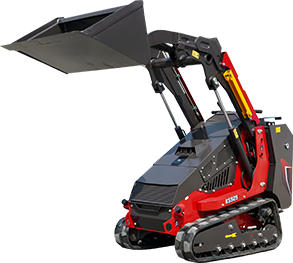
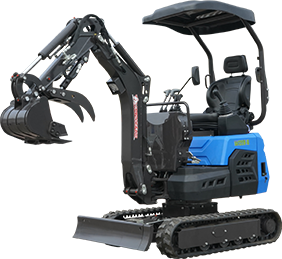
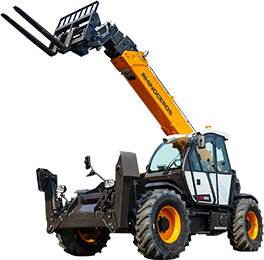
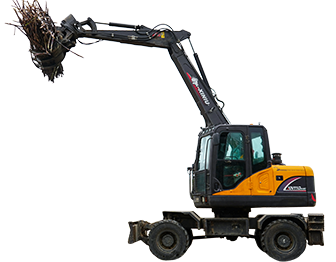
Mini Dumper Tipping Risk: Load Distribution on Slopes and Uneven Ground
Reviewed by Justin, Product Engineer· Based on official factory specifications, August 2026
Quick answer: A mini dumper tips from the side, not straight backward, and it almost always happens on a cross-slope with an off-center or overloaded bucket, not on flat ground. The lighter the machine relative to its rated payload, the more the load itself — not the chassis — determines where the center of gravity sits, so smaller electric models deserve more caution on uneven ground than their size suggests.
Most mini dumper tipping incidents share the same setup: a loaded bucket, a slope running across the direction of travel rather than straight up it, and a load that shifted slightly to one side before anyone noticed. None of that requires a defective machine. It just requires ground that isn’t flat and a driver who hasn’t adjusted for it.
The Number Most Buyers Never Check: Payload-to-Weight Ratio
Every mini dumper has a machine weight and a rated payload, and the relationship between the two says more about stability than either figure alone.
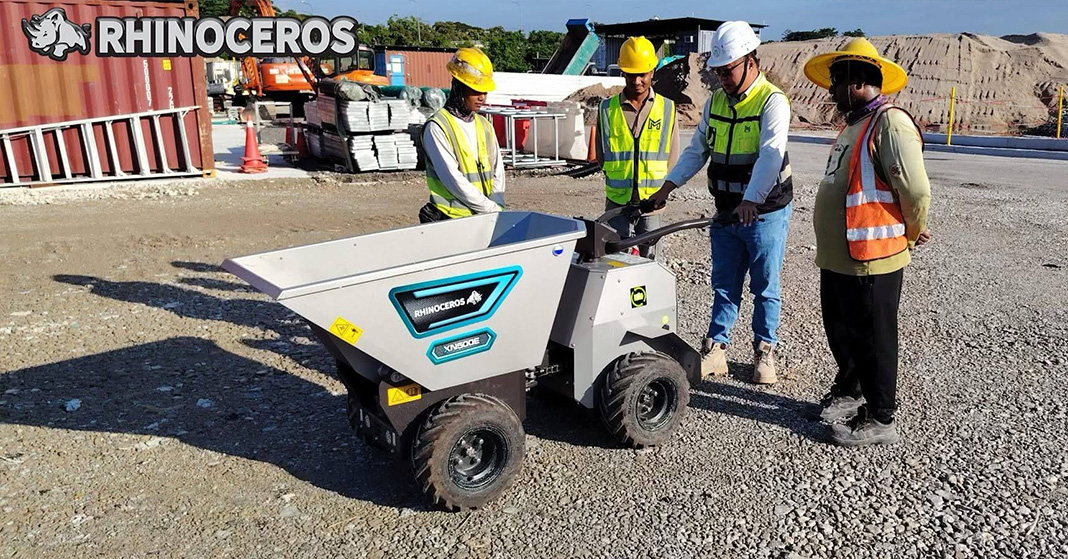
| Model | Machine Weight | Rated Payload | Payload / Weight Ratio |
|---|---|---|---|
| XN500E | 290 kg | 500 kg | 1.72×; |
| KS2700TE | 1520 kg | 1200 kg | 0.79×; |
| KS3000 | 1580 kg | 1360 kg | 0.86×; |
Source: Rhinoceros official factory specification pages, rhinocerosequipment.com, August 2026.
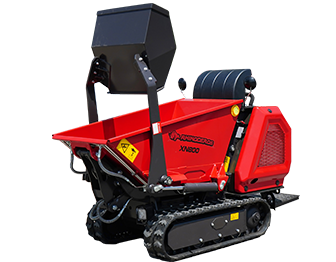
The XN500E stands out here. It carries more than one and a half times its own weight, which means a fully loaded XN500E is mostly load, not machine. That’s not a flaw in the design -it’s exactly why a small electric dumper is useful on tight residential sites-but it does mean the operator, not the chassis, is doing most of the work of keeping the center of gravity in a safe place once that bucket is full.
Why This Matters More on a Cross-Slope Than a Straight One
Driving straight up or down a slope keeps the load centered between the tracks or wheels. Driving across a slope shifts weight toward the downhill side with every degree of tilt, and a loaded bucket amplifies that shift because the load sits above and ahead of the machine’s own center of gravity. A machine that feels completely stable on flat ground can feel noticeably different the moment that same load is carried across even a gentle grade.
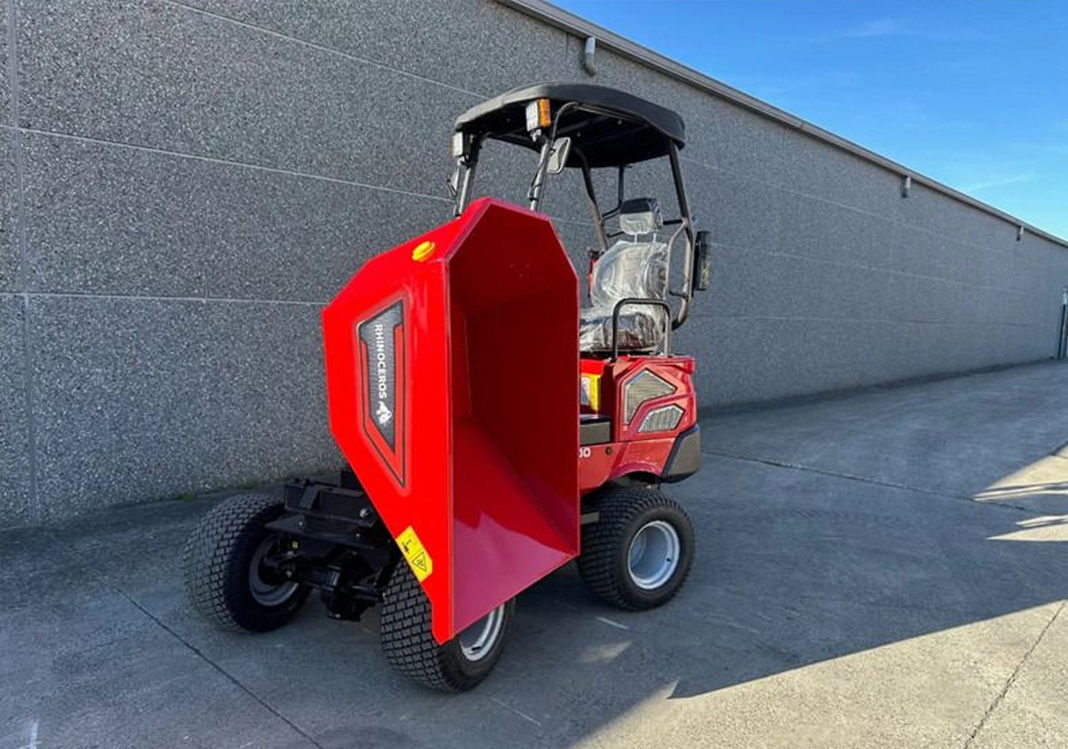
This is also where a wider stance earns its keep. KS3000’s 1090 mm width gives it more side-to-side margin than the XN500E’s 889 mm or the KS2700TE’s 900 mm, which is part of why the lighter, narrower models call for more conservative slope handling even though they’re easier to maneuver everywhere else.
Loading Rules That Actually Prevent This
Three habits account for most of the difference between a routine job and an incident report:
1. Load to the Rated Capacity, Not the Bucket's Visual Limit
A bucket that looks half-empty can already be near its rated payload if the material is wet soil, concrete, or gravel rather than mulch or sand. Weight, not volume, is what shifts the center of gravity.
2. Change Direction, Not the Load, When the Ground Slopes
Where possible, route the path so the machine travels straight up or down a grade rather than across it, even if that means a longer path between the pile and the drop point.
3. Keep the Bucket Low While Traveling
A raised, loaded bucket moves the center of gravity higher and further from the machine’s base, which reduces the margin on uneven ground before the load itself is even a factor.
None of this replaces the specific slope and load ratings in a model’s operator manual -those figures vary by configuration and should be the final word on any given site.
Frequently Asked Questions
Is a lighter mini dumper less safe than a heavier one?
Not inherently less safe, but it does shift more of the stability equation onto how the load is placed, since the load makes up a larger share of the total weight once it’s loaded. Operator technique matters more on lighter machines, not less.
Does track width matter more than machine weight for stability?
Both matter, but a wider stance gives a more forgiving margin for uneven ground and cross-slope work, independent of how heavy the machine itself is.
What's the single biggest cause of mini dumper tipping incidents?
Traveling across a slope with a loaded bucket rather than straight up or down it, particularly when the load has shifted slightly to one side before the operator notices.
Specifications reflect standard configurations and may vary by option package; confirm current specifications and rated capacities directly with Rhinoceros or the operator manual before operation. This content provides general safety guidance and does not replace formal operator training or manufacturer-specific safety documentation.