 中文
 Español
 Francés
 Русский
 Português
 العربية
 Deutsch
 Italiano
 한국인
 Melayu
 ไทย
 Việt
 bahasa Indonesia
 қазақ
 Nederlands
 Ελληνικά
 Magyar
 čeština
 Suomalainen
 Filipino
High-Tip vs Standard-Tip Mini Dumpers: Which Do You Need?
Reviewed by Justin, Product Engineer· Based on official factory specifications and industry reporting, August 2026
TL;DR: A high-tip dumper unloads directly into a truck or skip bin, over 1.3 meters up. A standard-tip dumper unloads onto the ground. The extra height only matters if you're actually loading a container.
Two mini dumpers can carry the exact same weight and still solve completely different problems, depending on one spec most buyers skip past: how high the skip lifts before it tips.
What "tipping height" actually describes
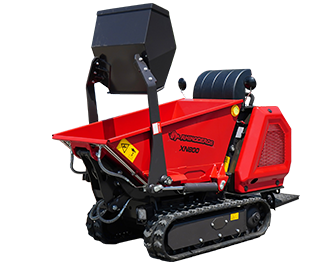
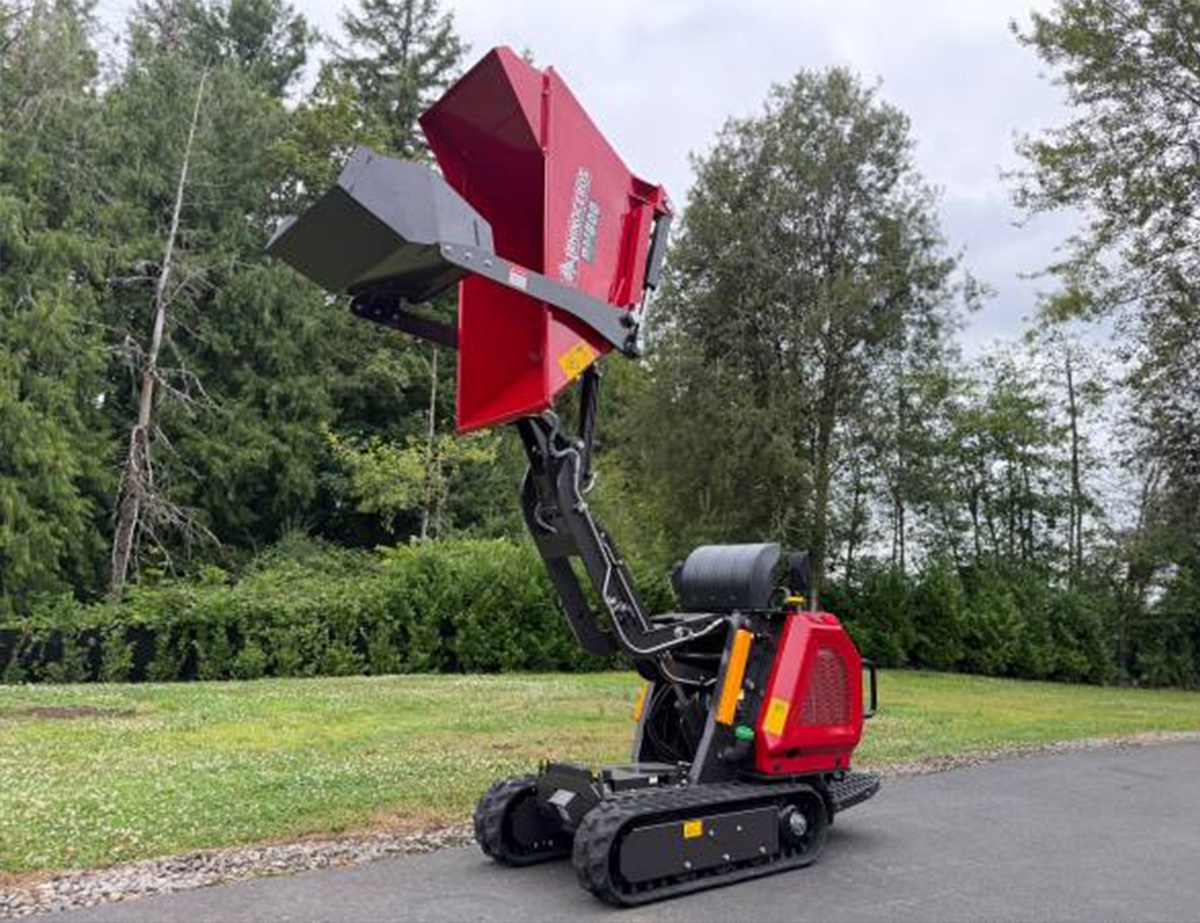
A standard-tip mini dumper's skip pivots forward or to the side at a fixed, relatively low point, unloading its contents onto the ground directly in front of or beside the machine. A high-tip model raises the entire skip on vertical guides before tipping, typically reaching somewhere in the 1.3 to 2.0 meter range depending on the model, letting the load drop straight into a truck bed, skip bin, or raised hopper instead of onto the ground.
That single mechanical difference determines whether a load needs a second handling step or not. On a standard-tip machine, material dumped on the ground still has to be shoveled, forked, or loaded again into whatever's actually hauling it away. On a high-tip machine, the mini dumper is doing that final loading step itself.
Rotating Bucket
Why this spec gets overlooked
Payload and bucket volume dominate most spec sheet comparisons, since they're the numbers that determine how much material moves per trip. Tipping height rarely gets the same attention, even though it determines how much labor happens after the trip is already complete. A buyer comparing two machines purely on payload can end up with a machine that carries material efficiently but still requires a second worker with a shovel at the drop point, which defeats a meaningful part of the labor-saving case for owning a mini dumper in the first place.
Five questions that tell you which one you need
Does material regularly need to end up in a truck, skip bin, or raised container rather than on the ground?
Is there normally a second person available to handle a ground-level reload?
How much does the specific job's dump destination height vary, truck bed one day, ground pile the next?
Does the site have overhead clearance for a raised skip, low ceilings, power lines, tree branches?
Is stability on a slope or soft ground a concern, since a raised load shifts the center of gravity higher?
A job that consistently dumps onto the ground, backfilling a trench, spreading material across a yard, doesn't need the added height or cost of a high-tip model. A job that consistently loads into a truck or container gets real, ongoing labor savings from it.
The trade-offs a high-tip mechanism brings
Added mechanical complexity
Vertical guide rails and the hydraulics to lift a loaded skip that high are more complex than a simple pivot-and-tip mechanism, which generally means a higher purchase price and one more system to maintain over the machine's life.
A higher center of gravity while lifting
Raising a loaded skip shifts weight upward right as the machine is often stationary and mid-cycle, which is exactly when stability matters most. This isn't a reason to avoid high-tip models, but it is a reason to confirm a specific model's rated capacity during the lift cycle, not just its rated payload while driving.
Reduced clearance under obstacles
A high-tip skip needs headroom to actually reach its full height, which can matter on sites with low tree cover, power lines, or indoor ceiling clearance that a standard-tip machine never has to consider.
Where high-tip genuinely earns its cost
Demolition debris removal, where material needs to go straight into a skip bin or dumpster rather than being repiled on the ground, is close to the clearest case for a high-tip machine. So is any job moving material directly onto a waiting truck bed for offsite disposal, where a standard-tip machine would require either driving the truck to ground level and shoveling up, or adding a second loader specifically for that transfer step.
Landscaping supply yards moving material repeatedly between storage piles and delivery trucks also benefit consistently, since the same lift-and-load cycle repeats throughout the day, and the labor saved on each cycle compounds fast across dozens of repetitions.
Where standard-tip remains the better, simpler choice
Trench backfilling, spreading mulch or aggregate across a yard, and general site cleanup where material ends up on the ground either way get no real benefit from the added height. In these cases, a standard-tip machine's lower cost and simpler mechanism is the more sensible purchase, and the money saved is better spent on payload capacity or a second machine entirely.
Tipping angle matters alongside tipping height
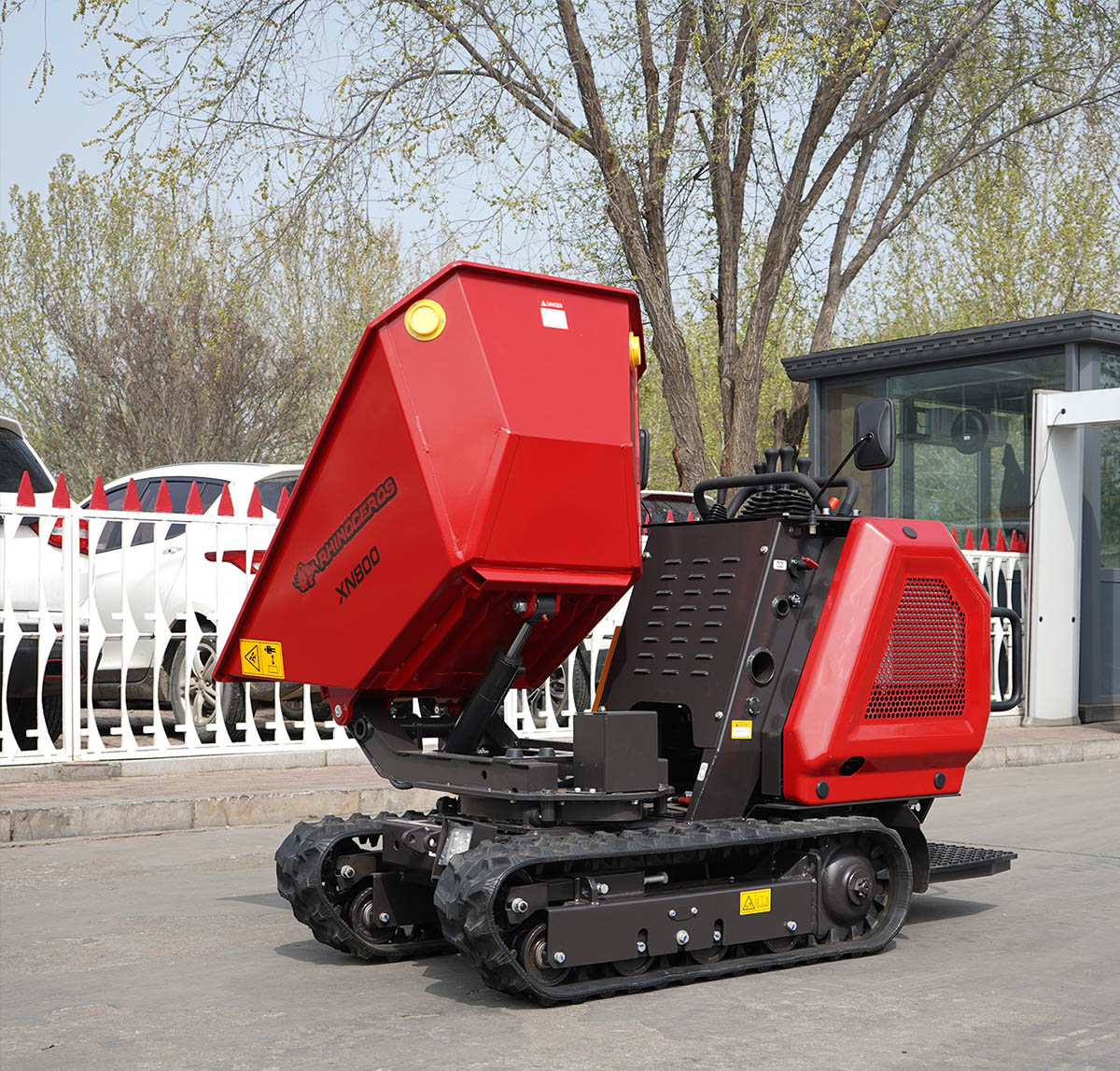
Height isn't the only dumping spec worth checking. Tipping angle, how far the skip actually rotates before material clears it, affects how cleanly a load empties. Industry-documented tipping mechanisms on compact tracked dumpers commonly reach around 100 degrees of rotation, which is generally enough for most loose materials to clear the skip without manual assistance, though sticky or wet material can still require a firm shake or a scrape regardless of angle. A skip with a shallow tipping angle can leave material stuck in the corners, adding back some of the manual labor a powered dumper is meant to eliminate.
Payload rating changes during the lift, and that matters
A mini dumper's advertised payload figure typically reflects its rated hauling capacity while driving on level ground, not necessarily its rated capacity while lifting a load to full tip height. Industry buying guidance specifically distinguishes rated payload from lifting capacity, noting that a high-tip machine can carry a different maximum load safely than it can lift safely to full height, and recommends checking both figures separately rather than assuming one implies the other. This distinction is easy to miss on a spec sheet that only prints a single payload number.
Material density: the variable that breaks naive comparisons
Volume and weight aren't the same thing, and this matters more with a high-tip machine specifically because overloading during a lift is a real stability risk, not just a wear-and-tear concern. Wet soil, concrete, or gravel can weigh dramatically more per cubic meter than mulch or dry sand, and a skip that looks half-full by volume can already be at its rated weight limit. Matching the rated payload to the heaviest material actually being moved, not the lightest, is the safer way to size a purchase, particularly for a high-tip model where the load is fully elevated during part of the cycle.
A side-loading variant worth knowing about
Beyond front-tip and high-tip, some mini dumpers offer a side-rotating skip that tips left or right in addition to, or instead of, straight forward. This is particularly useful in narrow passages or trench work where the machine can't be positioned directly in front of the intended drop point, letting the operator dump to the side without repositioning the whole machine. It's a narrower use case than the high-tip versus standard-tip decision, but worth asking about specifically for jobs involving tight corridors or confined indoor spaces.
Confirm actual specs before assuming
Tipping height, tipping angle, and lift-cycle payload rating all vary by specific model and configuration. Before assuming a given Rhinoceros mini dumper offers high-tip capability or a specific dump height, confirm directly with Rhinoceros for the model being considered, since this article describes the general category distinction rather than a specific unit's confirmed specifications.
How this compares across manufacturers, briefly
High-tip capability isn't unique to any one brand, and looking at how it's positioned across the wider market helps calibrate expectations. Compact tracked dumper manufacturers commonly market high-tip models specifically around unloading into skips or over garden walls without a ground-transfer step, with published tipping heights in roughly the 1.3 to 1.5 meter range on machines in the sub-1-ton class, rising toward 2 meters on larger compact models. That range gives a useful benchmark for what "high-tip" typically means in this size category, distinct from the much taller tipping heights seen on large-scale box dumpers and industrial bin tippers built for an entirely different, larger-scale application.
The labor case, worked through with a real scenario
Picture a demolition cleanup where broken material needs to go from a pile inside a building out to a skip bin parked at the curb. With a standard-tip machine, the operator dumps at ground level near the skip, then either the operator or a second worker shovels that pile up and over the skip's rim, repeating that extra step for every single trip. With a high-tip machine, the skip lifts and dumps directly over the bin's rim, and that second handling step disappears entirely.
Multiplied across dozens of trips in a day, that difference isn't marginal. It's the difference between one person completing the job alone and needing a second person standing by specifically to handle the ground-to-skip transfer, which is exactly the kind of hidden labor cost that's easy to miss when comparing two machines purely on payload and price.
Combining high-tip with other mini dumper features
High-tip capability is a mechanism choice, not a power source or undercarriage choice, and it's available across diesel, electric, tracked, and wheeled configurations depending on the manufacturer's specific lineup. A buyer who's already narrowed down power source and undercarriage type for other reasons, discussed in separate comparisons of tracked versus wheeled dumpers and diesel versus electric models, should treat the tipping mechanism as a genuinely separate decision layered on top of those choices, not something that automatically comes bundled with any particular configuration.
What the hydraulic system behind the tip mechanism needs
Both standard-tip and high-tip mechanisms rely on hydraulics, but a high-tip system generally asks more of that hydraulic circuit, since it's lifting the loaded skip a greater vertical distance rather than simply rotating it. Industry documentation of hydraulic tipping systems on compact tracked dumpers notes the use of anti-wear hydraulic oil specifically to keep the tipping cycle smooth and controlled under repeated daily use, which is worth asking about as part of a maintenance conversation before purchase, since hydraulic fluid type and change intervals affect long-term reliability more than most buyers initially expect.
What happens if the tipping mechanism fails mid-job
It's worth thinking through the failure case before it happens, not after. A standard-tip mechanism that fails generally still allows manual workarounds, propping the skip, or handling smaller loads by other means, since the mechanism is simpler to begin with. A high-tip mechanism that fails is a more disruptive event, since the added height and vertical guide system aren't easily worked around manually, and a machine stuck mid-lift with a loaded skip is also a genuine safety concern on site. This isn't a reason to avoid high-tip models, but it is a reason to ask a supplier directly about typical failure points and parts availability for the specific lifting mechanism before committing to a purchase, rather than treating the mechanism as a black box that simply works until it doesn't.
A simple way to decide
If the honest answer to "where does this material actually end up" is consistently a truck bed, skip bin, or raised container, the labor savings from a high-tip mechanism accumulate fast enough to justify the added cost and complexity. If the answer is consistently the ground, whether for backfilling, spreading, or piling, a standard-tip machine does the same core job for less money and one less system to maintain.
Frequently asked questions
Can a high-tip mini dumper also be used like a standard-tip machine?
Generally yes, since it can still dump at a lower point during the lift cycle if a full high-tip isn't needed for a given load, though this depends on the specific model's control range.
Does a higher tipping height mean a taller overall machine?
Not necessarily during transport, since the vertical guide mechanism typically extends only when actively lifting, keeping the machine's travel height closer to a standard-tip model's footprint.
Is a high-tip mechanism more prone to breakdowns than a standard tip?
It has more moving parts, vertical guides and additional hydraulics, which does mean a longer maintenance checklist, though this doesn't automatically translate to more frequent failures with proper upkeep.
Does tipping angle matter more for wet or dry material?
Generally more for wet, sticky, or cohesive material, which is more likely to stick to the skip's sides at a shallow angle than dry, loose material that clears more easily regardless.
Should I choose based on tipping height or payload capacity first?
Neither should be chosen in isolation. Match tipping height to where material actually needs to end up, and match payload to the heaviest material being moved, since both specs solve different problems on the same machine.
Does Rhinoceros offer high-tip mini dumper models?
Confirm current lineup and configuration options directly with Rhinoceros for the specific application you have in mind.
Specifications and configuration availability vary by manufacturer and model; confirm current specifications directly with Rhinoceros before purchase.