 中文
 Español
 Francés
 Русский
 Português
 العربية
 Deutsch
 Italiano
 한국인
 Melayu
 ไทย
 Việt
 bahasa Indonesia
 қазақ
 Nederlands
 Ελληνικά
 Magyar
 čeština
 Suomalainen
 Filipino
Tier 4 & Stage V on a Mini Dumper: What They Actually Cover
Reviewed by Justin, Product Engineer·Based on official factory specifications and industry reporting, August 2026
TL;DR: EPA Tier 4 Final and EU Stage V are emissions standards, not marketing terms. They cover different pollutants, apply to different engine sizes, and matter most at import and resale.
A spec sheet listing "Tier 4 Final compliant" tells a buyer almost nothing on its own. What it actually covers, why it exists, and whether it even applies to a specific engine size are three separate questions most listings never answer.
What these standards actually regulate
EPA Tier 4 Final and EU Stage V are diesel engine emissions standards, not general product safety certifications. They set limits specifically on particulate matter, PM, and nitrogen oxides, NOx, the two pollutant categories most associated with diesel exhaust's health and environmental impact. A compliant engine uses some combination of improved combustion design, exhaust after-treatment, and filtration to keep emissions of both under the regulated thresholds.
Tier 4 Final is the U.S. Environmental Protection Agency's standard, phased in over the 2010s as the final stage of a multi-tier emissions reduction program for non-road diesel engines. EU Stage V is the European Union's roughly equivalent standard, and the two are similar enough in stringency that many manufacturers design a single engine platform to meet both simultaneously, though they aren't identical in every technical detail.
Why engine size actually matters here
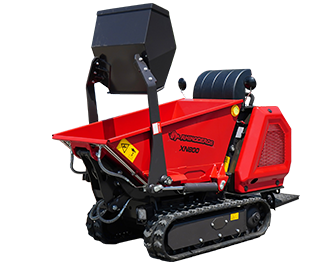
Emissions standards for small non-road diesel engines, the size range used in mini dumpers, are generally less complex to meet than the standards for larger construction engines, since smaller engines produce less total pollutant output to begin with. The KS3000's Kubota 14.2 kW diesel engine falls into this smaller compact equipment category, where compliance is a well-established, mature part of engine design rather than a newly emerging requirement.
This matters for a buyer's expectations: compliance on a small engine like this isn't a cutting-edge feature worth paying a premium for. It's a baseline requirement for legal sale and import in most major markets, and it's worth confirming rather than treating as a differentiator between competing machines that likely all meet the same baseline.
Five things that actually determine whether a specific machine is compliant
The specific engine model and its published emissions certification, not just the general brand name
The destination market, since a machine compliant for one region may not automatically be certified for another
Whether any exhaust after-treatment components are present and functioning, since compliance depends on the full system, not just the engine block
The engine's power output category, since different kW ranges fall under different specific sub-requirements within the same overall standard
Documentation from the manufacturer confirming certification for the specific configuration being purchased, not a general product line claim
Where this actually matters to a buyer
Import and customs clearance
Emissions compliance documentation is frequently required for customs clearance when importing equipment, and a machine without proper certification paperwork for the destination market can face delays, additional inspection, or in some cases be refused entry entirely. This is one of the most concrete, immediate ways emissions compliance affects a buyer directly, regardless of how the machine will actually be used once it arrives.
Resale value and future buyers
A machine with clear, documented emissions compliance for a given market is generally an easier resale, since a future buyer doesn't have to investigate compliance status themselves before purchasing. Missing or unclear documentation can complicate a resale even when the engine itself would technically meet requirements, simply because the paperwork trail is incomplete.
Government and municipal contract eligibility
Some government and municipal contracts specifically require documented emissions compliance as a bidding condition, particularly for work in urban areas or on public projects with environmental requirements attached. A contractor bidding on this kind of work needs the documentation ready before the bid, not scrambled together after winning it.
Diesel versus electric: how this factors into the choice
Electric mini dumpers sidestep this entire compliance category, since there's no diesel exhaust to regulate. For a buyer weighing diesel against electric primarily on emissions grounds, that's a genuine structural difference, not just a marketing point, though it's worth weighing against the runtime, charging infrastructure, and upfront cost trade-offs covered in comparisons elsewhere between diesel and electric mini dumper models.
What emissions compliance doesn't tell you
It's worth being direct about what this specification doesn't cover. Emissions compliance says nothing about the engine's reliability, fuel efficiency, or maintenance requirements, those are separate specifications worth evaluating independently. A compliant engine can still be a poor fit for a specific job if its power output, torque characteristics, or maintenance schedule don't match the work being done. Treating emissions compliance as a proxy for overall engine quality is a common but mistaken shortcut.
How to verify compliance before you buy, not after
Ask the supplier directly for the specific engine model's emissions certification documentation, matched to the destination market the machine is being shipped to. A general statement that the product line is "Tier 4 compliant" without a specific engine model and market reference is worth following up on before finalizing a purchase, particularly for any import into a market with strict enforcement, since the paperwork gap discovered at customs is a far more expensive problem to solve than confirming it upfront.
Confirm current status directly
Emissions standards, certification requirements, and specific engine compliance status can change over time and vary by exact configuration. Confirm current emissions certification for the specific Rhinoceros mini dumper model and engine configuration being purchased directly with Rhinoceros, rather than relying on general product category assumptions.
Where to check the standards directly, not through a summary
Rather than relying solely on a manufacturer's marketing summary, the underlying regulations are publicly published by the regulating bodies themselves. The U.S. EPA maintains official documentation of its nonroad diesel engine emissions standards, including the Tier 4 program, on its own regulatory site, according to the EPA's nonroad diesel engine emissions program documentation. The European Commission similarly publishes the technical requirements underlying Stage V directly, according to the European Commission's non-road mobile machinery regulatory framework. Checking a specific claim against the regulator's own published framework, rather than a secondhand summary, is the more reliable way to confirm what a given standard actually requires for a specific engine category.
How after-treatment systems actually achieve compliance
Meeting these standards on a small diesel engine typically involves some combination of improved combustion efficiency in the engine itself and exhaust after-treatment components downstream. Common after-treatment approaches in this engine class include diesel particulate filters, which trap particulate matter before it exits the exhaust system, and in some configurations, systems that reduce nitrogen oxide output through catalytic processes. Industry guidance on nonroad diesel compliance consistently notes that after-treatment components require their own maintenance attention, since a clogged or failing filter can affect engine performance independent of the underlying engine's mechanical condition, according to nonroad diesel emissions standards technical reference.
This is a practical maintenance point worth knowing regardless of a buyer's interest in the regulatory details: an emissions-compliant engine's after-treatment system is a real mechanical component with its own service needs, not a one-time certification that requires no further attention once the machine ships.
What happens when a machine isn't properly documented
A machine that's mechanically compliant but lacks proper documentation faces a different problem than a genuinely non-compliant one, but the practical consequences at import or resale can look similar. Customs authorities generally need to see specific certification paperwork, not just take a supplier's word that a machine meets a given standard, and missing documentation can trigger delays, additional inspection fees, or in stricter jurisdictions, refused entry, even for equipment that would otherwise pass on its actual emissions performance.
This is why the documentation itself, not just the underlying engineering, deserves attention before a purchase is finalized, particularly for any cross-border transaction where the paperwork trail matters as much as the machine's actual mechanical compliance.
How this differs across power output categories
Nonroad diesel emissions standards aren't a single flat requirement applied identically across every engine size. Regulatory frameworks generally break engines into power output bands, with different implementation timelines and technical thresholds for each band, meaning a small engine in the KS3000's power class was subject to a different compliance pathway than a much larger construction engine, even though both eventually fall under the broader Tier 4 or Stage V umbrella. This is part of why a compliance claim needs to reference the specific engine model and power output, not just the standard's name, to actually mean something verifiable.
A note on terminology confusion in the marketplace
"Tier 4" and "Stage V" get used loosely enough in general marketplace listings that it's worth double-checking what's actually being claimed. Some listings reference older interim standards, Tier 4 Interim rather than Tier 4 Final, which are less stringent and phased out earlier, while using similar-sounding language that can read as equivalent to a buyer unfamiliar with the distinction. Confirming the exact standard referenced, Final versus Interim, or the specific Stage number for EU listings, avoids assuming a stronger compliance claim than what's actually being represented.
Why this rarely differentiates one compact machine from another
It's worth stepping back and being honest about what this specification actually signals in a buying decision. In the compact equipment class where mini dumpers sit, baseline emissions compliance for the relevant market is close to universal among established manufacturers, not a rare feature that separates serious suppliers from unreliable ones. A supplier who can't produce basic compliance documentation is a red flag worth taking seriously, but a supplier who can is meeting a baseline expectation, not offering something exceptional. The more useful differentiators between competing machines in this class tend to be engine reliability, parts availability, and after-treatment component maintenance cost, not the underlying compliance standard itself, which is largely uniform across the category once you're comparing machines actually certified for the same destination market.
A simple way to approach this before buying
Start with the destination market's specific requirement, not the machine's marketed compliance claim. Confirm which standard actually applies to the engine's power category in that market, request documentation matched to that specific standard and engine model, and treat a vague or unmatched compliance claim as a reason to ask more questions rather than proceed. This sequence, market requirement first, documentation second, purchase third, avoids the more common and more expensive sequence of discovering a documentation gap only after the machine has already shipped.
Frequently asked questions
Do all diesel mini dumpers need to meet Tier 4 Final or Stage V standards?
Requirements depend on the destination market and engine size category, so it's worth confirming the specific applicable standard for where the machine will actually be used and sold.
Is Tier 4 Final the same standard as EU Stage V?
They're separate standards from different regulatory bodies with similar stringency for many engine categories, but they aren't identical in every technical requirement, so compliance with one doesn't automatically guarantee compliance with the other.
Does emissions compliance affect a diesel mini dumper's fuel efficiency?
Not directly. Compliance and fuel efficiency are separate engineering outcomes, though modern compliant engines are often also designed with efficiency improvements as part of the same development process.
Can a non-compliant machine still be used on private property?
This depends entirely on local regulations, which vary by jurisdiction, so it's worth confirming local rules directly rather than assuming private use avoids compliance requirements entirely.
Does buying an electric mini dumper avoid emissions compliance questions entirely?
Yes for diesel exhaust emissions specifically, since there's no combustion engine involved, though electric models have their own separate regulatory considerations around battery and electrical safety certification.
How do I confirm a specific Rhinoceros model's emissions certification?
Request documentation directly from Rhinoceros for the specific engine model and destination market before finalizing a purchase or import order.
Emissions standards and certification requirements vary by jurisdiction and change over time; confirm current requirements directly with Rhinoceros and relevant local authorities before purchase or import.