 中文
中文
 Español
 Francés
 Русский
 Português
 العربية
 Deutsch
 Italiano
 한국인
한국인
 Melayu
 ไทย
ไทย
 Việt
Việt
 bahasa Indonesia
 қазақ
қазақ
 Nederlands
 Ελληνικά
 Magyar
 čeština
 Suomalainen
 Filipino
Mini Dumper Buying Guide: Wheel vs Crawler vs Electric
Reviewed by Justin, Product Engineer·Based on official factory specifications, updated July 2026·Sources cited below
Quick answer: Wheel dumpers like the KS3000 move fast between loads on firm ground; crawler dumpers trade that speed for stability on loose or sloped material; electric dumpers like the XN500E trade both for zero-emission, low-noise hauling indoors or on noise-restricted sites. The right type depends on what your ground looks like and where the material has to go, not on which one hauls more in a single bucket.
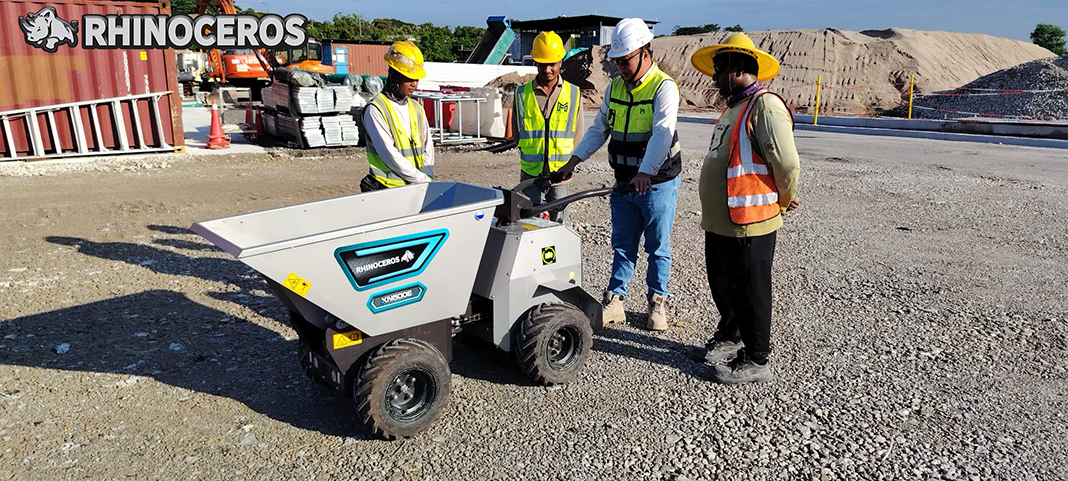
A dumper's job is simple: move material from one point to another, over and over, all day. What actually varies is the ground it has to cross to do that, and that's the question this guide answers first.
Wheel Dumpers: Speed on Firm Ground
A wheel dumper's tires roll faster across compacted yards and paved approach paths than a tracked undercarriage can, which shortens the cycle time on jobs with a lot of back-and-forth hauling. The KS3000 pairs a Kubota engine with four-wheel drive and hydraulic articulated steering, giving it traction on firm ground while keeping the turning radius tight enough for tighter yards.
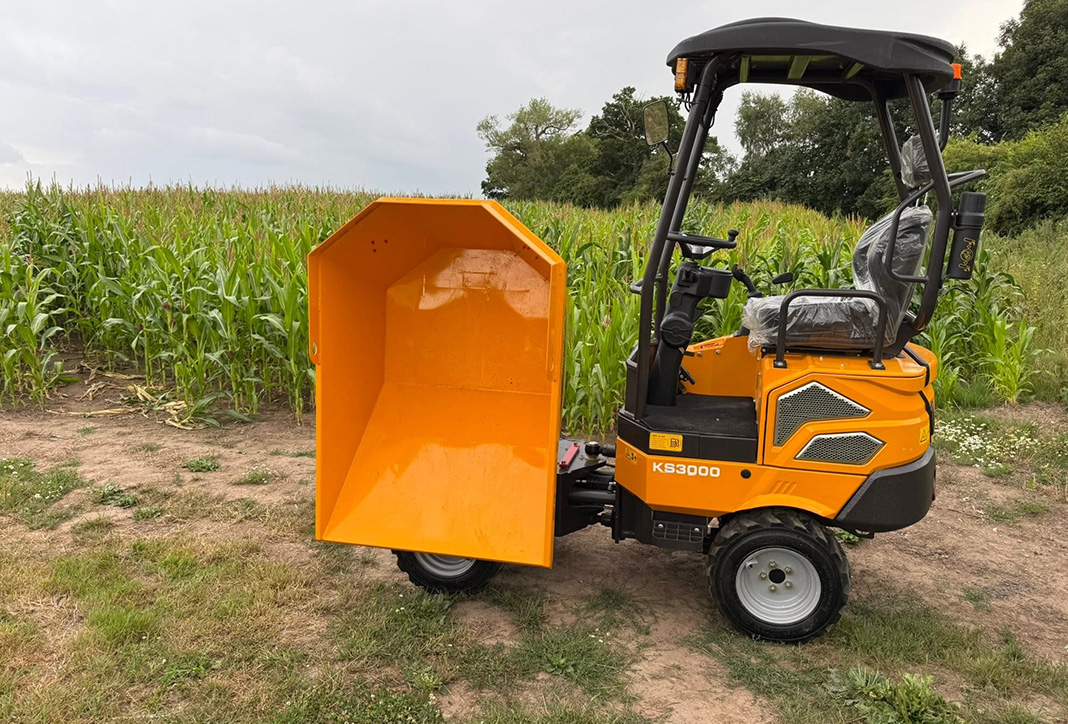
| Spec | KS3000 Wheel Dumper |
|---|---|
| Machine Weight | 1580 kg |
| Max Load Weight | 1360 kg |
| Tipping Bucket Capacity | 0.5 cbm |
| Width | 1090 mm |
| Max Travel Speed | 8 km/h |
| Engine | Kubota, 14.2 kW |
Source: Rhinoceros official factory specification page, rhinocerosequipment.com, July 2026.
Crawler Dumpers: Stability Where Wheels Struggle
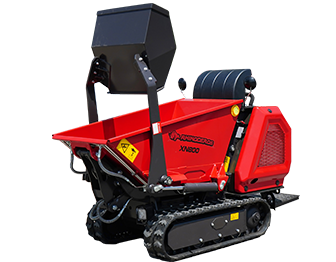
Tracks spread weight across a longer, continuous contact area than tires, which helps a loaded dumper hold traction on loose soil, mud, or a graded slope where a wheeled machine would need to slow down or risk wheel spin. That stability comes at the cost of the wheel dumper's road speed, so a crawler dumper suits sites where the ground condition, not the travel distance, is the limiting factor.
Rhinoceros builds a crawler dumper line alongside the wheel and electric models; exact weight, capacity, and engine specs vary by model and are best confirmed on the current product page before comparing directly against the KS3000 numbers above.
Electric Dumpers: Zero Emissions for Restricted Sites
The XN500E swaps the diesel engine for a permanent magnet DC brushless motor and a lithium battery pack, which removes exhaust and cuts noise enough to work inside occupied buildings or on residential streets without the complaints a diesel engine invites. That trade comes with a battery runtime to plan around instead of a fuel tank to refill.
| Spec | XN500E Electric Dumper |
|---|---|
| Machine Weight | 290 kg |
| Max Load Capacity | 500 kg |
| Bucket Capacity | 0.28 cbm |
| Width | 889 mm |
| Battery Runtime | Approx. 4-6 hours per charge |
| Drive System | Permanent magnet DC brushless motor, four-wheel drive |
Source: Rhinoceros official factory specification page, rhinocerosequipment.com, July 2026.
Matching the Dumper to the Ground
A firm, paved yard with frequent short hauls favors the wheel dumper's speed. A loose, wet, or sloped site favors the crawler dumper's stability, even at a slower pace. An indoor, residential, or noise-restricted job favors the electric dumper regardless of ground condition, since the noise and emissions problem outweighs the ground question entirely.
Frequently Asked Questions
Can a wheel dumper handle loose or muddy ground at all?
Within limits. Four-wheel drive and a load-sensing hydraulic system help maintain traction, but consistently wet or loose ground favors a crawler dumper's larger contact area over a wheeled one.
How does load capacity compare between the KS3000 and XN500E?
The KS3000 carries close to three times the load of the XN500E (1360 kg versus 500 kg), reflecting its larger size class rather than a difference in build quality between the two power sources.
Does an electric dumper cost more to run than a diesel one?
Running cost depends on local electricity and fuel prices and duty cycle, and should be worked out for your specific site rather than assumed; the more consistent difference is noise and emissions, not cost.
Sources
Rhinoceros (Shandong Kenstone Heavy Machinery Co., Ltd.) - KS3000 official specification page, retrieved July 2026
Rhinoceros (Shandong Kenstone Heavy Machinery Co., Ltd.) - Dumper product line, retrieved July 2026
View the full specifications at rhinocerosequipment.com.
Specifications reflect standard configurations and may vary by option package; confirm current specifications directly with Rhinoceros before purchase.