 中文
 Español
 Francés
 Русский
 Português
 العربية
 Deutsch
 Italiano
 한국인
 Melayu
 ไทย
 Việt
 bahasa Indonesia
 қазақ
 Nederlands
 Ελληνικά
 Magyar
 čeština
 Suomalainen
 Filipino
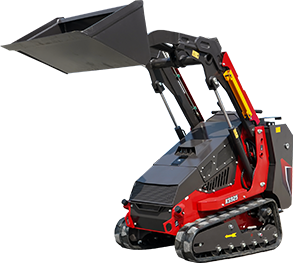
KS1000's 1371kg tipping capacity isn't what you can actually carry
By Justin, Product Engineer · Based on official factory specifications and SAE/ISO industry standards, September 2026
TL;DR: The KS1000's listed 1371kg is a tipping capacity, the point where the machine would tip forward, not a safe working load. The actual safe lifting figure, the rated operating capacity, is a fraction of that number, and the fraction is different for tracked and wheeled machines.
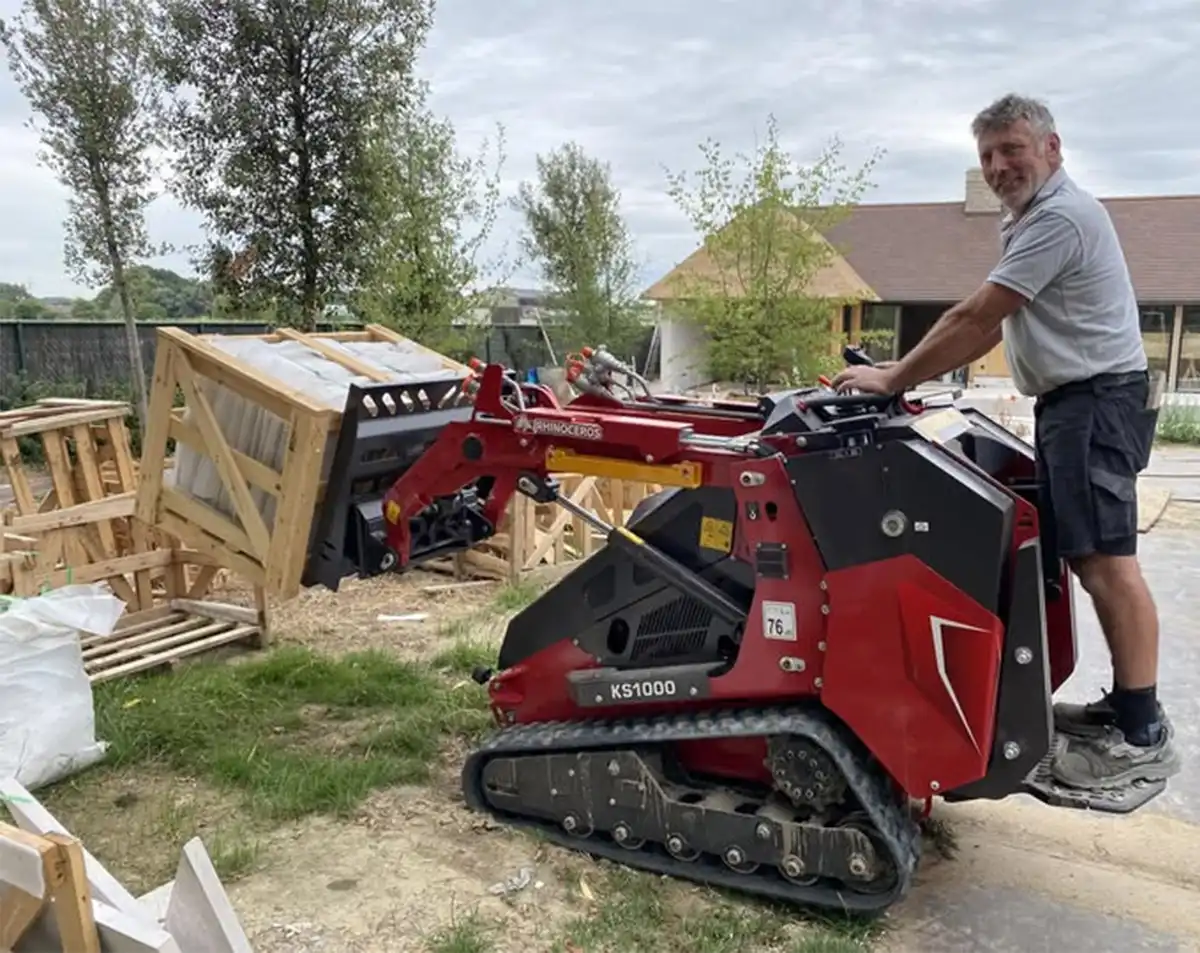
The real spec this article explains
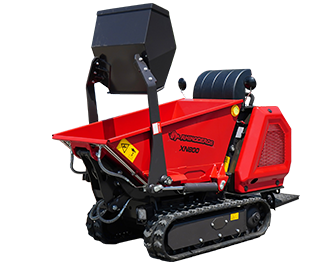
Our KS1000 compact crawler loader page lists a tipping capacity of 1371kg. It is tempting to read that as "how much this machine can carry." It is not. Tipping capacity and rated operating capacity are two distinct, specifically defined terms across the loader industry, and confusing them is one of the most common misreadings of a loader spec sheet.
What tipping capacity actually measures
Tipping capacity (sometimes called tipping load) is measured in a specific, standardised way: weight is loaded into the bucket at the machine's maximum reach, and the test continues until the point where the rear of the machine just begins to lift off the ground. That weight is the tipping load. It is a stability threshold, not a working number, and operating a machine anywhere near it leaves no safety margin at all.
What rated operating capacity actually measures, and why it is a different number
Rated operating capacity (ROC) is the figure engineers and safety standards actually intend operators to work within. It is defined as a fraction of the tipping load, specifically to build in a stability margin before the machine gets anywhere near actually tipping.
This is the part that matters most for a tracked machine like the KS1000: the fraction is not the same for every loader type. Under the current SAE J818 standard, rated operating capacity is defined as 50% of tipping load for wheeled skid steers, but only 35% of tipping load for compact track loaders, because of how a track's pivot geometry behaves differently from wheels as a load shifts. A parallel standard, ISO 14397-1, governs rated operating capacity for earth-moving machinery internationally and is applied similarly by manufacturers selling into markets that reference ISO rather than SAE.
Applied to a tracked machine like the KS1000, that means a published tipping capacity of 1371kg does not simply convert to roughly 685kg of safe working load the way it would on a wheeled machine under the 50% rule. Depending on which standard and test condition the figure is measured under, the real, safe working number could come out meaningfully lower.
Why we are not publishing a specific rated operating capacity here
Our current KS1000 listing states the tipping capacity. It does not separately publish a rated operating capacity figure, or state which standard and percentage that figure would be calculated under for this specific model. Rather than estimate a number for you, which standard compliance and precise ROC calculation require actual testing to confirm, we think the more useful thing is to tell you clearly: ask us for the KS1000's rated operating capacity directly, and ask which standard and test condition it is measured under.
| Term | What it measures | Should you work near this number? |
|---|---|---|
| Tipping capacity (1371kg, confirmed) | The load at which the machine begins to tip forward in a controlled test | No. This is a stability threshold, not a working limit. |
| Rated operating capacity (not separately published) | A safety-margined fraction of tipping load, 35% to 50% depending on the standard and machine type | This is the number intended as a working guideline, and it should be confirmed before loading the machine near its limits. |
Why this matters beyond the spec sheet
Underestimating this gap has real consequences. Loading a tracked loader based on its tipping capacity, rather than its actual rated operating capacity, removes the safety margin the standard exists to provide, and increases the risk of the machine tipping forward, especially at full reach, on a slope, or on soft ground where the practical tipping point can be lower than the flat, firm-ground test condition the figure was measured under.
Questions to ask before you load the KS1000 near its limits
What is the KS1000's rated operating capacity, as a specific figure, not just the tipping capacity?
Which standard, and which percentage of tipping load, was that figure calculated under?
Does that figure change with different buckets or attachments, given their own added weight?
How does ground condition or slope affect the practical safe load compared with the flat, firm-ground test condition?
Send us your typical load and working conditions through our inquiry form, and we will confirm the KS1000's rated operating capacity for your configuration. You can review the full specification on the KS1000 product page, or compare other models on our crawler loader range.
Frequently asked questions
Is 1371kg how much the KS1000 can safely carry?
No. 1371kg is the tipping capacity, the point at which the machine would begin to tip. The safe working figure, rated operating capacity, is a fraction of that number.
How much lower is rated operating capacity than tipping capacity?
Under current SAE J818 standards, it is 50% of tipping load for wheeled skid steers and 35% of tipping load for compact track loaders. The exact figure for the KS1000 has not been separately published; confirm it directly with Rhinoceros.
Why is the percentage different for tracked machines?
Tracked machines behave differently from wheeled machines as a load shifts, due to how the track's pivot geometry handles weight distribution, which is reflected in the standard's lower percentage for tracked loaders.
Does ground condition affect this?
Yes. Both tipping capacity and rated operating capacity are measured on flat, firm ground as a test condition. Slopes and soft or uneven ground reduce the practical safe working load below the published figures.
Does this apply to attachments other than the standard bucket?
Yes. A heavier attachment reduces the remaining safe load capacity for whatever material is being carried, since the attachment's own weight counts against the rated operating capacity.
Where can I get the KS1000's actual rated operating capacity?
Ask Rhinoceros directly, and ask which standard and test condition the figure is based on.
Feature availability and specifications vary by configuration; confirm current figures directly with Rhinoceros before operating near rated limits. Standards information is drawn from published SAE and ISO documentation and is general industry guidance, not a confirmed rated operating capacity for the KS1000 unless separately provided by Rhinoceros.