 中文
 Español
 Francés
 Русский
 Português
 العربية
 Deutsch
 Italiano
 한국인
 Melayu
 ไทย
 Việt
 bahasa Indonesia
 қазақ
 Nederlands
 Ελληνικά
 Magyar
 čeština
 Suomalainen
 Filipino
Floating boom and handle positioning: what these two features actually change
By Justin, Product Engineer · Based on official factory specifications and industry operating documentation, September 2026
TL;DR: Floating boom and handle positioning solve two different problems. Floating boom helps you grade and level ground without gouging it. Handle positioning is about making daily greasing faster and less awkward. They are listed together on the spec sheet, but they matter at different moments of owning the machine.
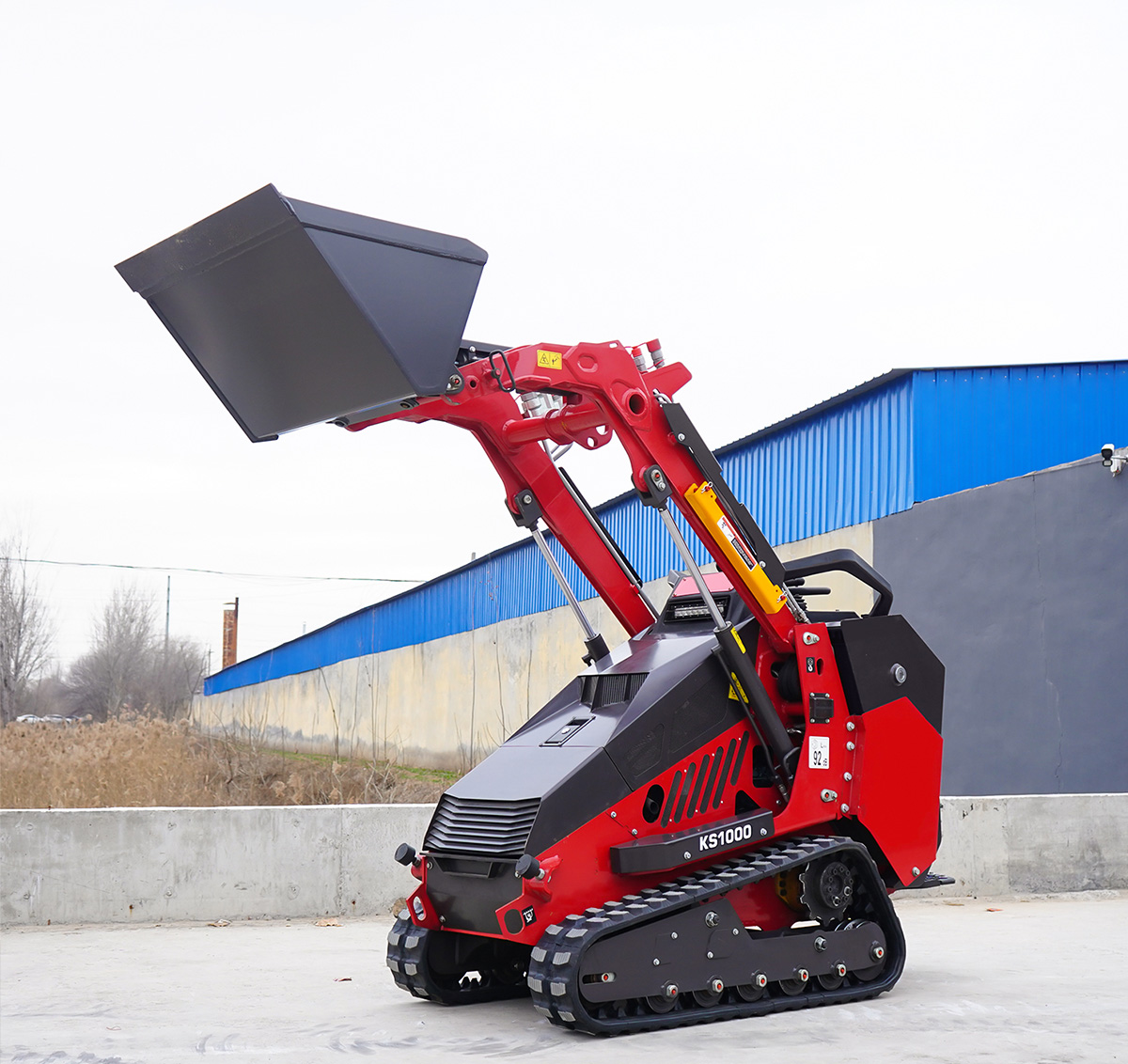
The real spec this article explains
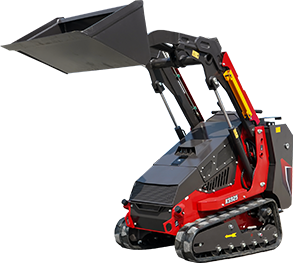
Our KS1000 compact crawler loader lists both a floating boom and handle positioning for easy greasing. These sit on the spec sheet as two short phrases, but they address two completely separate parts of owning the machine: one is about what you can do with it on a job, the other is about how much time you spend maintaining it.
What floating boom (float mode) actually does
Float mode is a well-established function across compact loaders and skid steers industry-wide, not unique terminology. Industry guides on grading with a loader explain the mechanism clearly: normally, hydraulic lift cylinders hold the boom rigidly at whatever height you set it to, so if the machine rolls over a bump, the attachment lifts with it. Float mode opens the hydraulic valve on the lift circuit so the boom and bucket can move freely up and down under their own weight, following the ground's contour instead of staying locked at a fixed height.
In practice, this is what lets an operator drag a bucket backward across loose material and leave a smooth, even surface instead of a series of gouges, because the bucket rides the ground rather than being forced into it at a fixed depth. The same function is commonly used for backdragging to level a grade, smoothing loose fill, and clearing snow without scraping into the gravel or surface underneath.
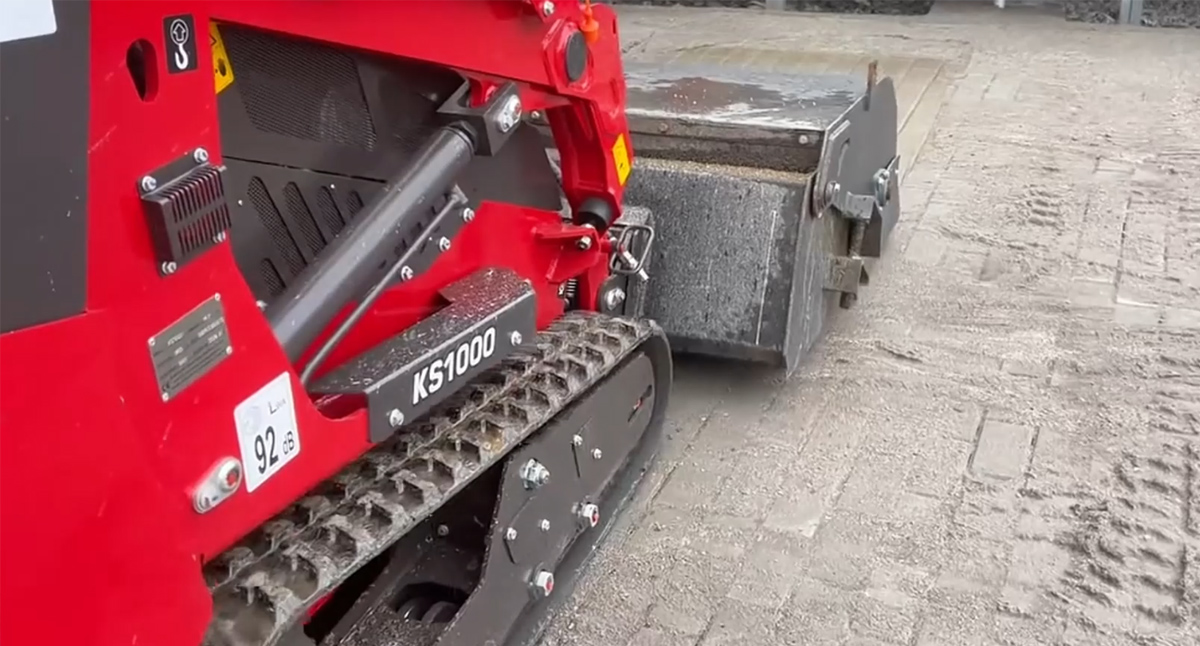
What handle positioning for easy greasing is addressing
This is a maintenance-focused feature rather than an operating one. Our listing confirms handle positioning is built to make routine greasing easier, though the exact mechanical design is not detailed on our current page. The problem this kind of feature generally addresses is a familiar one on compact equipment: grease points on a boom or linkage can end up in awkward, hard-to-reach positions once the boom is lowered or retracted for storage, which discourages operators from greasing as often as the maintenance schedule calls for.
Confirm with us directly whether this means the boom or handle can be positioned to park at a convenient height and angle for greasing, or whether it refers to a different specific mechanism, since we want to describe this accurately rather than guess at the engineering detail.
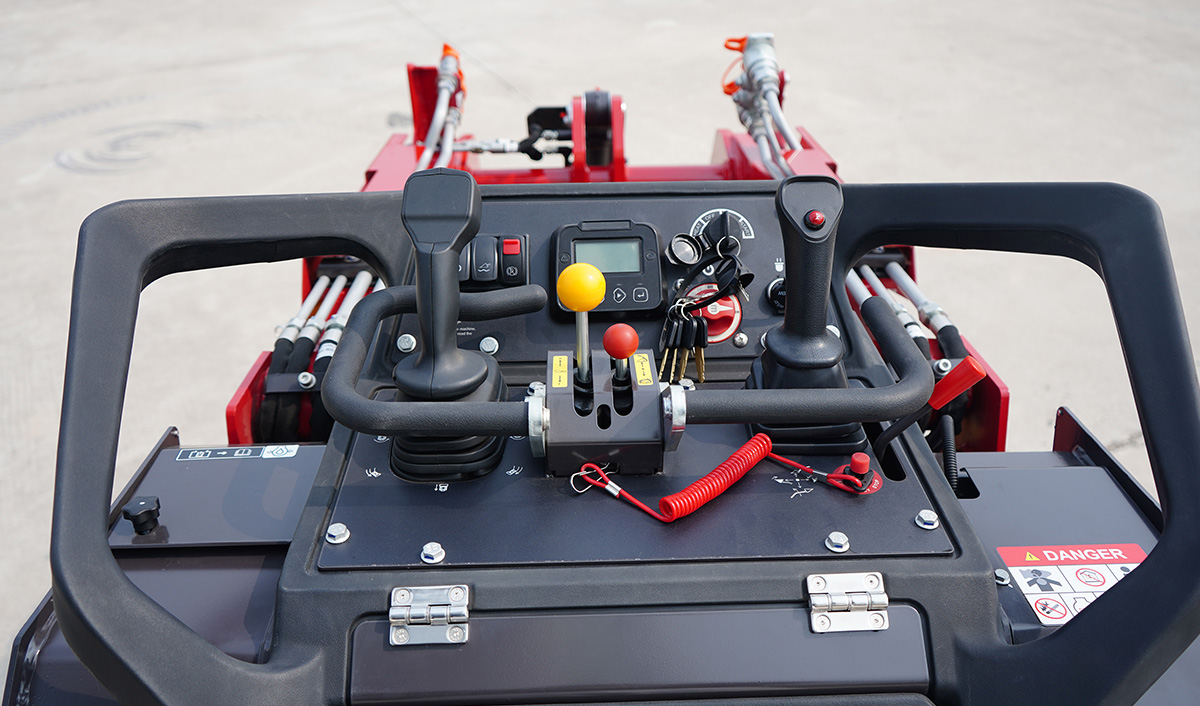
Why both matter, for different reasons
| Floating boom | Handle positioning for easy greasing | |
|---|---|---|
| When it matters | During grading, levelling, and finishing work | During routine daily or weekly maintenance |
| What it changes | How evenly the bucket follows ground contour without gouging | How quickly and comfortably grease points can be reached |
| Who benefits most | Operators doing finish grading or snow clearing | Anyone responsible for the machine's daily service routine |
| Risk if skipped or ignored | Uneven, gouged surfaces requiring rework | Grease points neglected due to awkward access, accelerating wear on pivot points |
Why the maintenance side is worth taking seriously
It is easy to focus spec-sheet attention on what a machine can do on a job and underweight how easy it is to actually maintain. A pivot or linkage that is awkward to grease tends to get greased less often than it should, not because the operator does not care, but because the access is uncomfortable enough that the task gets put off. Over time, that shows up as accelerated wear on exactly the components that a few extra seconds of greasing would have protected. A design detail that makes this task faster and more comfortable is a small thing on the spec sheet with a real effect on how long those components actually last.
Questions to ask about both features
Does float mode on the KS1000 affect only the lift (boom) function, or also the bucket tilt/curl function?
How is float mode engaged, a lever detent, a pedal position, or another control method?
What specifically does handle positioning change about grease point access, and which points does it apply to?
What is the recommended greasing interval, and does handle positioning reduce the time that routine takes?
Ask us directly through our inquiry form for the specific operating and maintenance detail behind either feature. You can review the full KS1000 specification on its product page.
Frequently asked questions
Is floating boom unique to the KS1000?
No. Float mode is a widely used function across compact loaders and skid steers industry-wide, usually applied to grading, levelling, and finishing work.
What does float mode actually feel like to operate?
With float engaged, the boom and attachment move freely up and down under their own weight rather than staying locked at a set height, following the ground's contour as you drive.
Does float mode affect the bucket's tilt function too?
On most compact loaders industry-wide, float mode applies only to the lift (boom) cylinders, not the bucket curl function. Confirm this specifically for the KS1000 with Rhinoceros.
What does "handle positioning for easy greasing" actually mean on the KS1000?
Our listing confirms this as a feature aimed at making routine greasing easier. The specific mechanical design has not been detailed on our current page; confirm the exact mechanism directly with Rhinoceros.
Does easier greasing really affect how long the machine lasts?
Indirectly, yes. Grease points that are awkward to reach tend to be serviced less consistently, which can accelerate wear on pivot points over time. Features that make the task faster support more consistent maintenance.
How often should a compact loader's grease points be serviced?
This varies by manufacturer and model. Confirm the recommended greasing interval and specific grease points for the KS1000 in its service documentation.
Feature availability and specific mechanical design vary by model and configuration; confirm current specifications and maintenance procedures directly with Rhinoceros before operating or servicing the machine.