 中文
 Español
 Francés
 Русский
 Português
 العربية
 Deutsch
 Italiano
 한국인
 Melayu
 ไทย
 Việt
 bahasa Indonesia
 қазақ
 Nederlands
 Ελληνικά
 Magyar
 čeština
 Suomalainen
 Filipino
What does the KS1000's "anti-stop system" actually prevent?
By Justin, Product Engineer · Based on official factory specifications and industry engineering documentation, September 2026
TL;DR: An anti-stop (anti-stall) system keeps the hydraulic system from demanding more power than the engine can deliver at once, so the engine does not stall when you drive and lift at the same time. It is a well-established feature across compact loaders, not unique terminology.
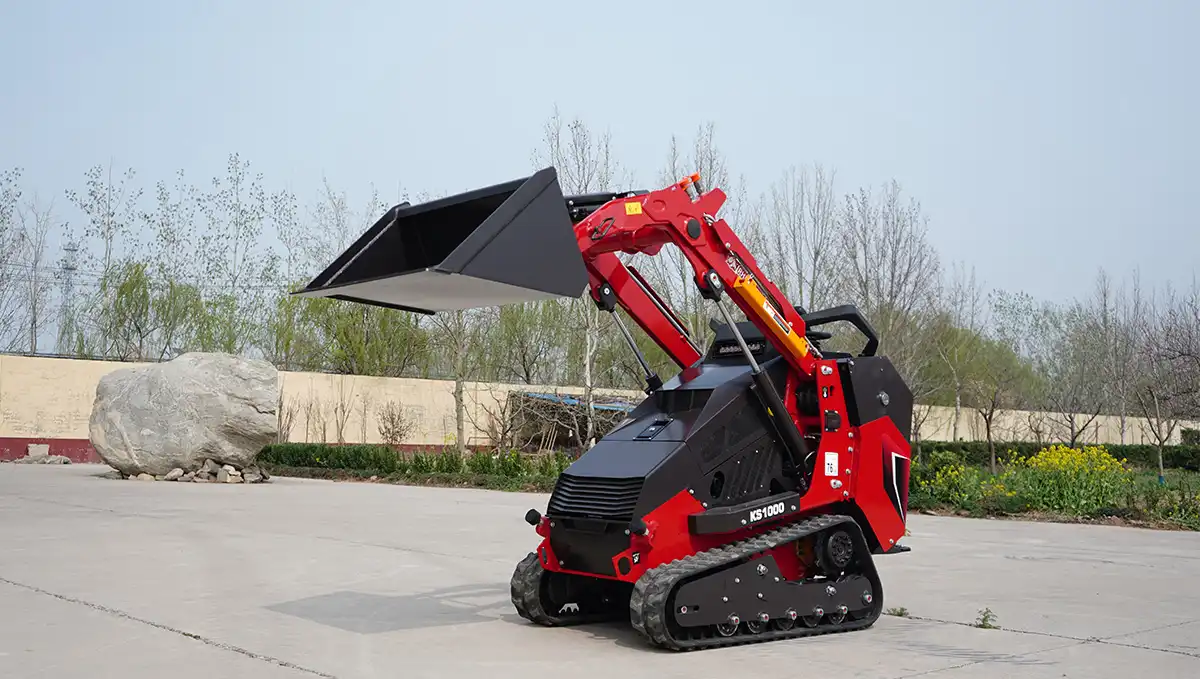
The real spec this article explains
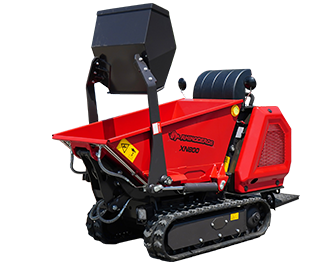
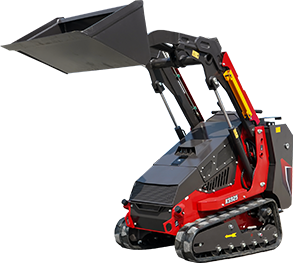
Our KS1000 compact crawler loader is listed with an anti-stop system, alongside a Kubota engine, a BONDIOLI hydraulic pump, and a double gear pump. The term can sound vague on a spec sheet. In practice, it describes a specific, well-understood engineering problem on any hydrostatic-drive loader, and a specific way of solving it.
Why a loader's engine can stall in the first place
A compact loader like the KS1000 has no mechanical transmission. Industry engineering explanations of this type of machine describe the drive system as fully hydraulic: the engine turns hydraulic pumps, and those pumps power separate hydraulic motors that drive the tracks or wheels, while another circuit powers the lift arms and attachment. The problem is that driving and lifting both draw on the same engine. One detailed technical explanation of this exact mechanism notes that between the pumps driving the tracks and the pump powering the implement, the hydraulic system can demand more power from the engine than the engine is actually able to produce. If that demand is not managed, the engine bogs down and can stall, typically at the worst moment, such as when breaking a loaded bucket out of a pile while also trying to move.
What an anti-stall system actually does
This is not a new or unusual idea. Major loader manufacturers document the same mechanism under different names. Caterpillar's own technical explanation of its skid steer and multi-terrain loaders describes an anti-stall device in which the hydraulic pumps sense the load and are designed not to exceed the power the engine can produce. Komatsu documents a similar function under the name Automatic Power Control, describing it as a patented anti-stall hydraulic system that lets the operator work at full engine power during demanding tasks without the engine stalling.
In plain terms, the system continuously balances how much hydraulic flow and pressure the pumps are allowed to call for against what the engine can actually deliver at its current speed. When you push the machine to do two power-hungry things at once, drive hard into a pile while also lifting, the system holds back just enough hydraulic demand to keep the engine running, rather than letting it stall and cutting your work short.
Where you would actually notice this on the KS1000
| Situation | What happens without this protection | What the anti-stop system is meant to prevent |
|---|---|---|
| Driving into a pile while lifting the boom | Combined power demand can exceed what the engine produces, risking a stall | Hydraulic demand is managed so the engine keeps running through the load spike |
| Running a high-flow attachment while travelling | Sudden load changes can bog the engine down | Power delivery is balanced across functions rather than allowed to stack uncontrolled |
| Cold start or low engine speed under load | Engine is more vulnerable to stalling at lower RPM | System accounts for available power at the engine's current operating point |
What this does not mean
An anti-stall system does not give the machine more total power than its engine and pump combination is rated for. It does not let you lift beyond the machine's actual tipping or rated operating capacity. What it changes is how gracefully the machine behaves when you ask two power-hungry functions to happen together, keeping the engine running instead of cutting out, rather than increasing what the machine can fundamentally do.
Questions to ask if you are comparing this across brands
Is the anti-stall function built into the hydraulic pump design itself, or managed through the engine's electronic control?
Does the system require any operator input, or does it work automatically in the background?
How does the machine behave at the edge of its power limit, a gradual power taper, or a harder cutoff?
Ask us directly about the KS1000's specific implementation through our inquiry form if you want the exact engineering detail for your configuration. You can review the full KS1000 specification on its product page, or compare it against our other compact loaders on the crawler loader range.
Frequently asked questions
What does "anti-stop system" mean on the KS1000?
It refers to an anti-stall function that manages hydraulic power demand so the engine does not stall when drive and lift functions compete for power at the same time.
Is this a unique Rhinoceros feature?
No. The same underlying mechanism is documented across major compact loader and skid steer manufacturers under different names, including Caterpillar's anti-stall device and Komatsu's Automatic Power Control.
Does an anti-stall system increase the loader's lifting capacity?
No. It manages how the engine and hydraulics behave under combined load; it does not change the machine's rated tipping or operating capacity.
Will I notice this system working during normal operation?
Usually only indirectly, as smoother, uninterrupted operation when driving and lifting together, rather than the engine bogging down or cutting out.
Does this replace good operating technique?
No. It reduces the risk of stalling under combined load, but working within the machine's rated capacity and avoiding unnecessary simultaneous strain is still good practice.
How is this different from an operator presence safety system?
They are unrelated. An anti-stall system manages engine and hydraulic power. An operator presence system is a safety interlock tied to the operator's seated position, covered in our compact loader safety documentation separately if applicable to a given model.
Feature availability varies by model and configuration; confirm current specifications directly with Rhinoceros before purchase. Industry explanations of anti-stall mechanisms are drawn from published engineering documentation from other manufacturers and describe the general principle, not a confirmed internal design claim for the KS1000 unless separately verified.