 中文
中文
 Español
 Francés
 Русский
 Português
 العربية
 Deutsch
 Italiano
 한국인
한국인
 Melayu
 ไทย
ไทย
 Việt
Việt
 bahasa Indonesia
 қазақ
қазақ
 Nederlands
 Ελληνικά
 Magyar
 čeština
 Suomalainen
 Filipino
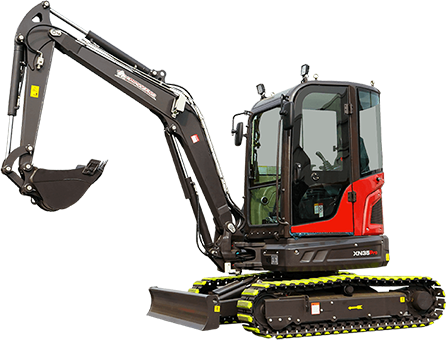
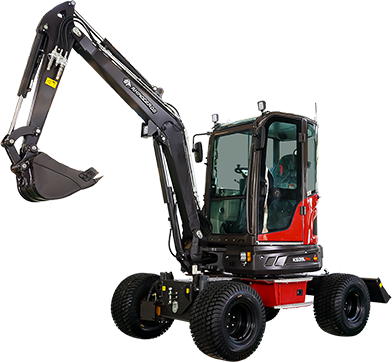
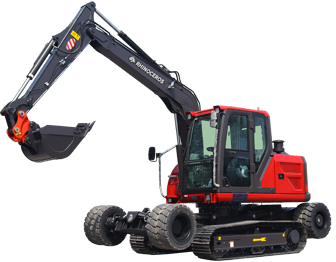
How Do Wheel Excavators Stay Stable Without Tracks?
Reviewed by Justin, Product Engineer·Based on official factory specifications, August 2026
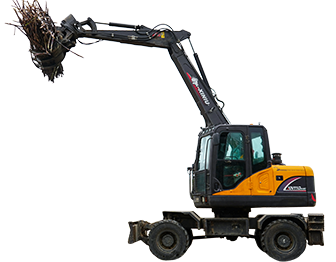
Quick answer: A wheel excavator doesn't rely on its tires for digging stability at all—it relies on outriggers and a front dozer blade that lift the wheels off the ground and plant the machine on rigid contact points before the arm ever swings. The wheels are for getting to the job. They're not what holds the machine steady once it starts one.
The question "how does a wheel excavator not tip over without tracks" assumes the tires are doing the same job tracks do on a crawler machine. They're not, and that's the part most buyers researching wheel excavators for the first time miss.
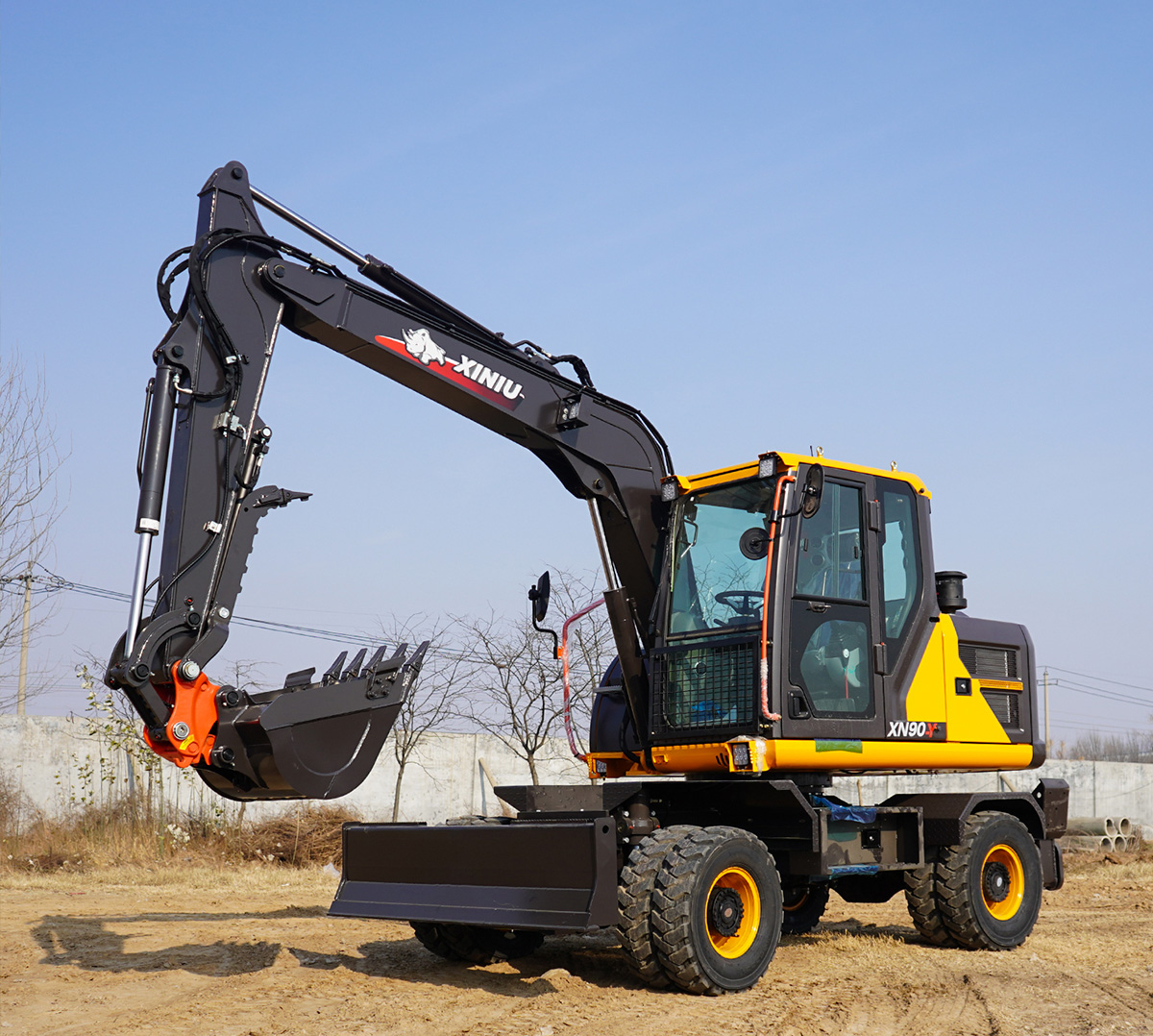
Tracks Stabilize by Footprint. Wheel Excavators Stabilize by Anchoring.
A crawler excavator stays stable because its tracks give it a long, continuous footprint on the ground—weight and digging force spread across that whole length. A wheel excavator can't rely on the same trick; four tire contact points don't give it that spread, especially at full arm extension where digging force is highest.
So it solves the problem a different way. Before digging starts, outriggers extend down and the front dozer blade drops, both making contact with the ground independently of the tires. That converts the machine from something balanced on four small tire patches into something anchored on rigid points positioned specifically to resist the tipping forces digging creates.
Two Systems, Two Jobs
Outriggers: Resisting Side-to-Side Tipping
Outriggers extend outward from the sides of the machine and plant against the ground, widening the effective base far beyond the width of the tires alone. That wider base is what resists the machine tipping sideways when the arm swings and the bucket is loaded off to one side—the exact scenario where a narrower stance would run out of margin.
Dozer Blade: Resisting Forward Tipping and Absorbing Digging Force
The front-mounted blade does double duty. It drops to the ground to anchor the front of the machine against forward tipping when the arm digs at full reach, and it doubles as a leveling and backfilling tool between digging passes—a feature crawler excavators in this class don't typically have as standard.
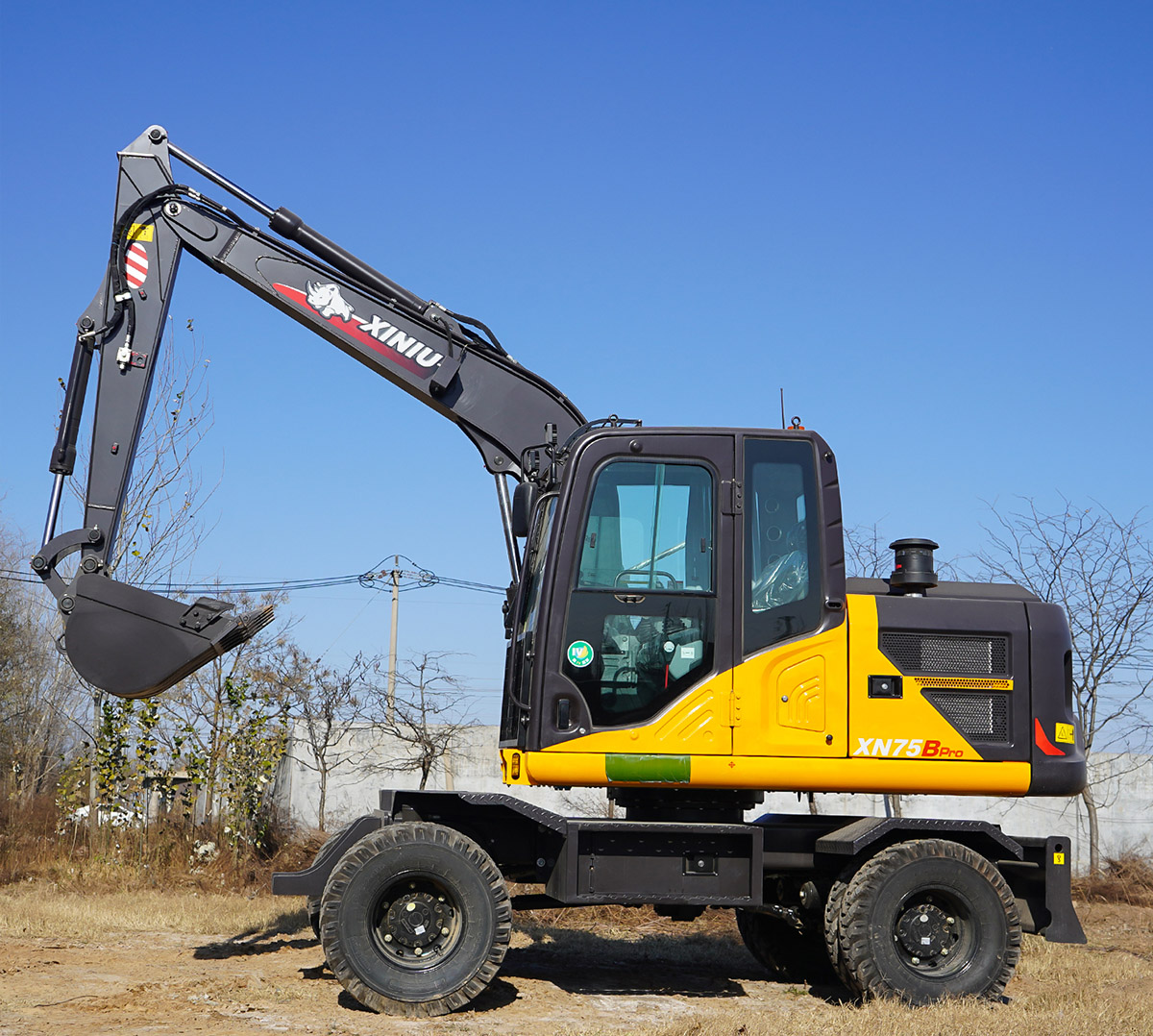
Why This Setup Exists Instead of Just Building a Heavier Machine
Adding weight is the crawler approach to stability—more mass, more footprint, more resistance to tipping. A wheel excavator takes the opposite approach: stay light and mobile for road travel, then create stability on demand only when it's actually digging. That's why a wheel excavator that weighs less than an equivalent crawler machine can still dig confidently at full reach—the outriggers and blade are doing work the extra mass would otherwise have to do.
Frequently Asked Questions
Do the outriggers extend automatically, or does the operator control them?
Operator-controlled, typically from the cab before starting a dig, along with the dozer blade positioning.
Can a wheel excavator dig safely without deploying the outriggers?
Light-duty work close to the machine may be possible without full outrigger deployment, but full-reach digging is what the outrigger and blade system is specifically designed to support, and skipping it reduces the stability margin the design relies on.
Does the dozer blade replace a separate attachment for backfilling?
In many cases, yes—the same blade used for stabilization during digging can also push material back into a trench between passes, without switching attachments.
Specifications and features reflect standard configurations and may vary by option package; confirm current specifications directly with Rhinoceros before purchase.