 中文
 Español
 Francés
 Русский
 Português
 العربية
 Deutsch
 Italiano
 한국인
 Melayu
 ไทย
 Việt
 bahasa Indonesia
 қазақ
 Nederlands
 Ελληνικά
 Magyar
 čeština
 Suomalainen
 Filipino
Hammer mode vs dual-pipe mode: why a tilt bucket may move only one way
Hammer mode vs dual-pipe mode: why a tilt bucket may move only one way
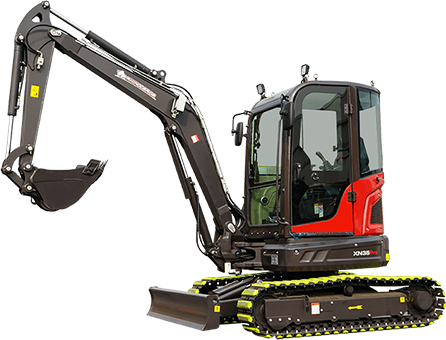
The XN35PRO has a valve that sets its auxiliary hydraulics to hammer mode or dual-pipe mode. Here is what each mode does, which attachments need which, and the fault it causes when it is set wrong.
A real case: the tilt bucket that only moved one way
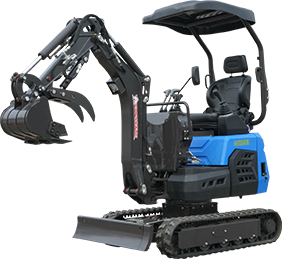
An independent dealer, Parsons Link Equipment, reviewed this machine under the name RH40, the same excavator we sell as the XN35PRO. When they fitted a tilt bucket, it would only move to one side, and one of the two auxiliary lines showed no pressure. The cause was a selector valve on the machine. It had arrived set to hammer mode. Turning it to the dual-pipe side sent flow to both lines, and the bucket tilted both ways. The reviewer also noted the wrench that fits the valves is supplied in the toolbox.
That is one reviewer's experience with one unit, but it is a very useful one, because the same symptom happens on any machine when the mode does not match the attachment.
One-way versus two-way flow
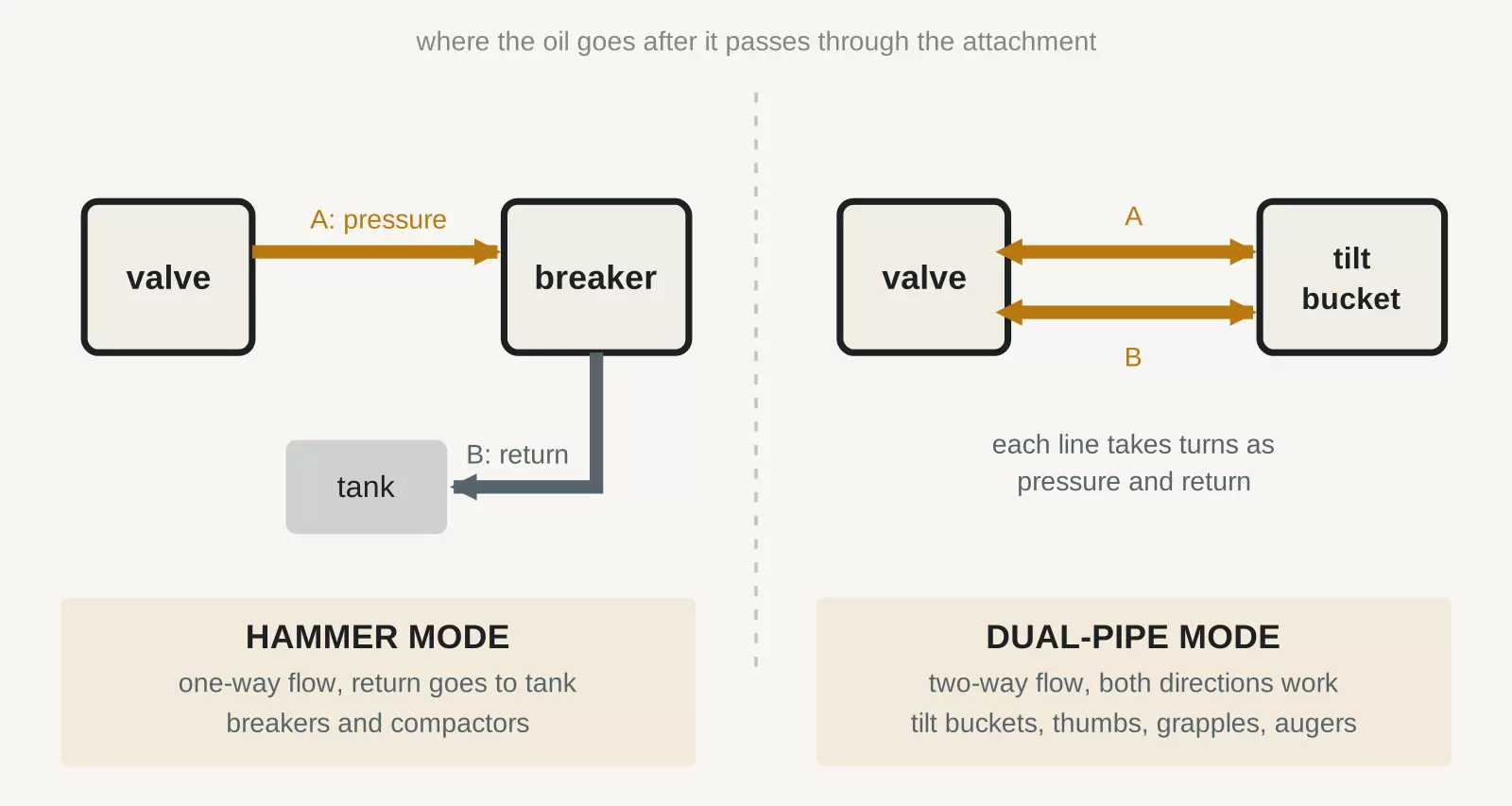
Auxiliary hydraulic circuits come in two kinds. In a one-way (single-acting) circuit, one line carries pressure to the attachment and the oil returns to the tank by a separate line. This is often called a breaker circuit, because hydraulic breakers and compactors need pressurised oil in one direction and low back pressure on the return. In a two-way (double-acting) circuit, both lines connect to the control valve, and each one alternates between carrying pressure and carrying return as the attachment moves in each direction.
Anything that needs two movements, such as open and close or tilt left and tilt right, needs two-way flow.
| Attachment | Flow it needs | Mode |
|---|---|---|
| Hydraulic breaker | One-way, low back pressure on return | Hammer mode |
| Compactor | One-way | Hammer mode |
| Tilt bucket | Two-way | Dual-pipe mode |
| Grapple, shear | Two-way (open and close) | Dual-pipe mode |
| Auger | Two-way (rotate both directions) | Dual-pipe mode |
Is a mode switch unusual?
The reviewer said they had not seen this valve on other machines. The design itself is established, though. Attachment and hydraulic kit makers describe switching valves that choose between return to tank and return to the control valve, and note that most two-way circuits can be set into one-way mode through a valve block so breakers can be run safely. Such a switching valve is typically added when a plumbing kit is installed that provides both functions. The advantage here is that the selector is already part of the machine, instead of an aftermarket addition.
Other practical details from the review
Fittings. The valve block on the reviewed unit took an M22 seal-face connector, which the dealer found different from what they usually see, and ordered adapters to fit standard quick couplers. Check fitting sizes before ordering couplers or attachments.
Case drain. A case drain return line was already installed, which attachments with a hydraulic motor, such as a flail mower, use. The reviewer ran a mower and felt almost no vibration.
Thumb circuit. A three-way valve served the thumb, with a separate shut-off valve.
What this does not mean
The mode switch does not change how much oil the machine delivers. It only changes where the oil returns. The reviewer did not test this unit's auxiliary flow in gallons per minute, and flow is a separate limit on powered attachments, as explained in our guide to. Always check the attachment maker's requirements for flow, pressure, and mode.
Questions to ask before you buy
Which mode does the machine ship in, and where is the selector valve?
What is the auxiliary flow in litres per minute for my configuration?
What fitting size and thread does the auxiliary block use, and are quick couplers included?
Is a case drain line fitted for motor attachments?
Tell us which attachments you plan to run through our inquiry form and we can confirm the setup. You can review the full specification on the XN35PRO product page.
Frequently asked questions
Why does my tilt bucket only move to one side?
The auxiliary valve is probably in hammer mode, which returns oil to the tank. A two-way attachment needs dual-pipe mode so both lines carry flow.
What is hammer mode?
A one-way setting where one line carries pressure and the oil returns to the tank. It suits breakers and compactors.
What is dual-pipe mode?
A two-way setting where both auxiliary lines alternate between pressure and return. It suits tilt buckets, thumbs, grapples, and augers.
Is the mode switch unique to the XN35PRO?
No. Switching valves are a known design, usually added with a plumbing kit. Having it built into the machine is the convenience.
Does switching modes change the machine's hydraulic flow?
No. It changes where the oil returns, not how much the pump delivers.
What is the XN35PRO's auxiliary flow rate?
The independent review did not test it, and it is not a figure we have published here. Ask us for the confirmed flow for your configuration.
Feature availability varies by model and configuration; confirm current specifications directly with Rhinoceros before purchase. The independent review described reflects one dealer's observations and is not a claim by Rhinoceros. One-way and two-way circuit descriptions come from published hydraulic kit and attachment guides.