 中文
 Español
 Francés
 Русский
 Português
 العربية
 Deutsch
 Italiano
 한국인
 Melayu
 ไทย
 Việt
 bahasa Indonesia
 қазақ
 Nederlands
 Ελληνικά
 Magyar
 čeština
 Suomalainen
 Filipino
KS450E turf tire option: which sites actually need it
By Justin, Product Engineer · Based on official factory specifications and tire engineering documentation, September 2026
TL;DR: The optional turf tire protects grass and finished lawns by spreading weight over a wider, shallower tread. It is the right choice for landscaping and lawn work, but it is not the right choice for muddy, loose, or uneven ground, where the standard tire's deeper tread grips better.
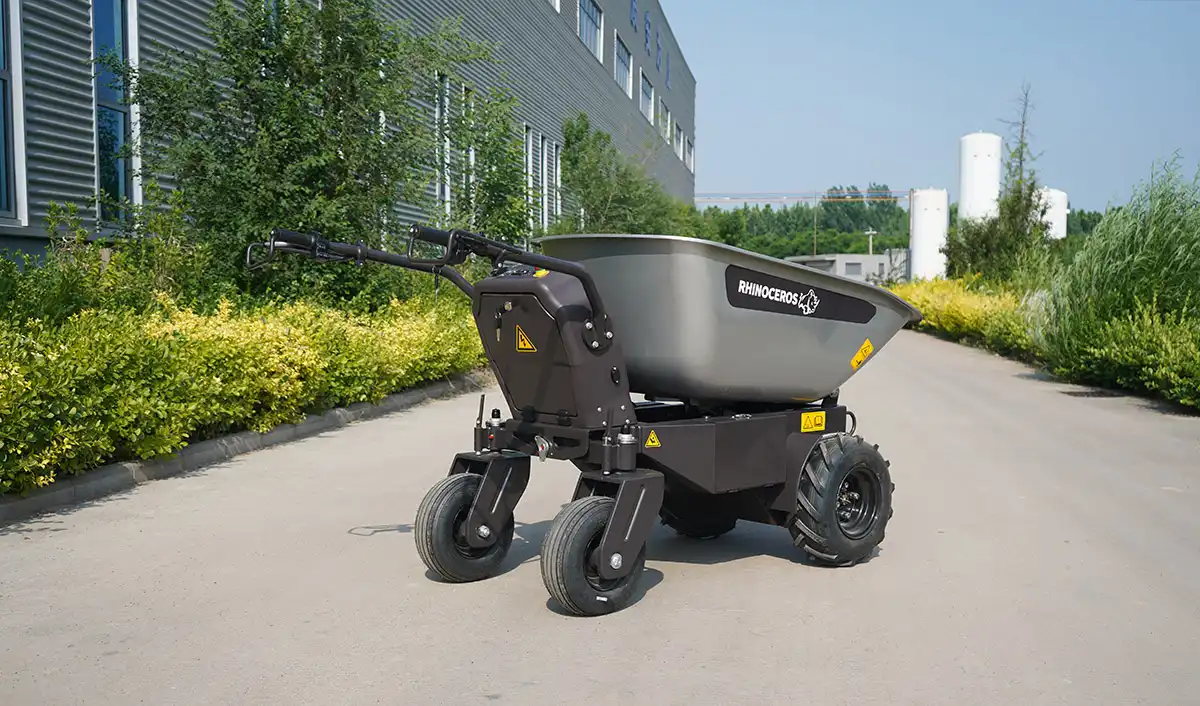 Standard Tires
The real spec this article explains
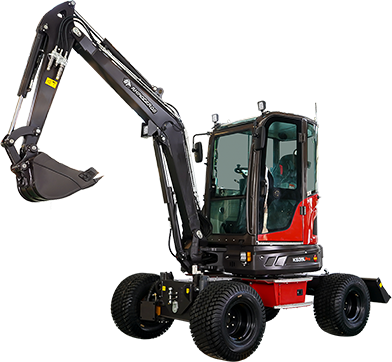
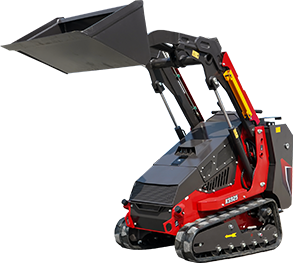
Our official KS450E listing includes an optional turf tire upgrade over the standard tire. The purpose of this option is grass and surface protection, not extra traction. It is worth understanding what that trade-off actually involves before assuming "optional upgrade" automatically means "better in every situation."
Why turf tires are built the way they are
Industry documentation on turf tire design is consistent: a turf tire uses a wide, shallow tread pattern specifically to spread the machine's weight evenly across a larger contact area, which reduces ground disturbance and avoids digging up or marking the surface underneath. A landscaping industry guide on equipment tire selection describes this tread style as non-directional, with shallow grooves and a slightly rounded edge, purpose-built to maximize how much of the tire touches the ground and minimize damage while turning.
The trade-off is traction. The same shallow tread that protects grass has less biting edge in soft, loose, or wet material, and a standard or more aggressive tread, with deeper lugs that mechanically grip loose ground, will generally outperform a turf tire the moment the surface stops being firm, maintained turf.
Side by side
| Standard tire | Turf tire (optional upgrade) | |
|---|---|---|
| Best suited ground | Mixed conditions, loose soil, construction-adjacent sites | Finished lawns, maintained turf, golf courses, delicate landscaping |
| Ground disturbance | Higher on soft or finished surfaces | Minimal; weight spread across a wider, shallower contact area |
| Traction in soft, loose, or wet conditions | Generally better | Reduced; shallow tread has less bite in loose material |
| Risk of visible marking on grass | Higher | Low |
Where the turf tire genuinely earns its place
If your work is primarily on finished lawns, maintained landscaping, golf courses, or any job where the client cares about the ground looking undisturbed when you leave, the turf tire's protection is the whole point of paying for the upgrade. This matters most for landscapers, garden contractors, and anyone doing material delivery across a lawn that has to look presentable afterward, not during construction, but when the job is done.
Where the standard tire is actually the better choice
If your work regularly crosses muddy ground, loose fill, freshly disturbed soil, or uneven terrain, the turf tire's shallow tread works against you: industry sources are consistent that a shallow, turf-oriented tread loses grip sooner in mud and loose material than a standard or more aggressive tread. A site under active construction, a muddy access route, or rough ground with no grass to protect in the first place removes the entire reason to choose the turf option, and the standard tire's better traction becomes the more practical choice.
A simple way to decide
| Your job | Better tire choice |
|---|---|
| Finished lawn or landscaping, client cares about the grass after you leave | Turf tire |
| Golf course or similarly turf-sensitive maintained ground | Turf tire |
| Active construction site, no grass to protect | Standard tire |
| Muddy, loose, or freshly disturbed soil | Standard tire |
| Mixed jobs across both conditions | Weigh which condition you cross more often, or ask about keeping both tire sets |
What to ask before you order
-
What is the specific tread pattern on the standard tire, so you know exactly what you are comparing the turf option against?
-
Can tires be swapped later between jobs, or is this fixed at the time of order?
-
Does the turf tire change the machine's overall width, which could affect gate or doorway clearance?
Send us a description of your typical job sites through our inquiry form, and we can help you decide whether the turf tire fits your work. You can review the full specification on the KS450E product page, and check your access points against our 930mm width and gate access guide.
Frequently asked questions
What does the KS450E's turf tire option actually do?
It protects grass and finished surfaces by spreading the machine's weight over a wider, shallower tread, reducing marking and ground disturbance.
Is the turf tire better than the standard tire in every situation?
No. It trades traction for surface protection. On muddy, loose, or uneven ground, the standard tire generally grips better.
Which jobs actually need the turf tire?
Finished lawn and landscaping work, golf courses, and any job where the ground has to look undisturbed when you leave.
Will the turf tire struggle in mud or loose soil?
Yes, generally. Its shallow tread has less bite than a standard tread in soft or loose material.
Can I switch between tire options depending on the job?
Confirm this directly with Rhinoceros, since this depends on how the wheels and tires are fitted on this model.
What if my work crosses both turf and rougher ground regularly?
Weigh which condition you cross more often, or ask us whether maintaining both tire sets is practical for your situation.
Feature availability varies by configuration; confirm current specifications directly with Rhinoceros before ordering. Tire tread trade-offs described are general principles from landscaping and utility equipment tire documentation and are not confirmed tread specifications for the KS450E's specific tire options unless separately provided by Rhinoceros.