 中文
 Español
 Francés
 Русский
 Português
 العربية
 Deutsch
 Italiano
 한국인
 Melayu
 ไทย
 Việt
 bahasa Indonesia
 қазақ
 Nederlands
 Ελληνικά
 Magyar
 čeština
 Suomalainen
 Filipino
Double speed: when to shift to high, when to stay in low
Double speed: when to shift to high, when to stay in low
Our spec sheet lists double-speed travel. Here is the mechanism behind high and low range, and a practical guide to when each one is actually the right choice.
The real spec this article explains
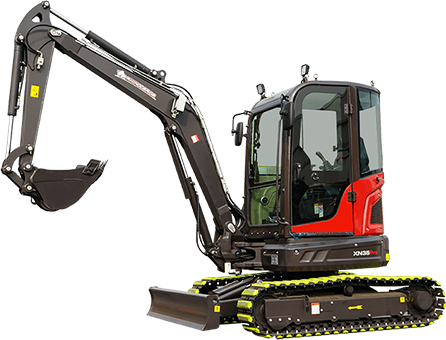
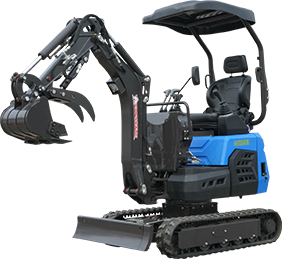
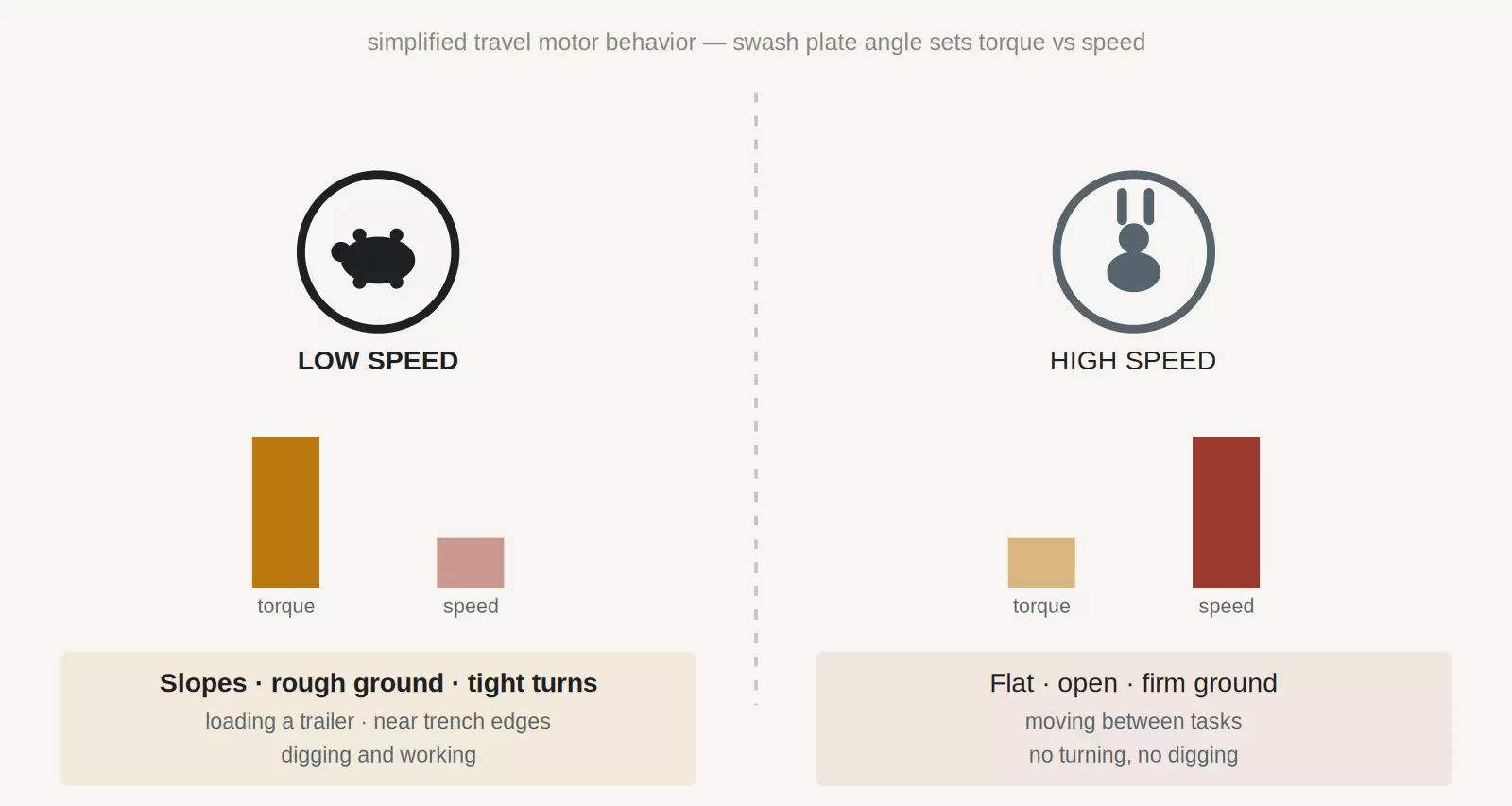
Our XN13 mini excavator page lists double-speed travel, with a maximum travel speed of 3.6 km/h. The two-icon control most mini excavator operators already recognise, a turtle for low speed and a rabbit for high speed, is universal across the industry, and the mechanism behind it is worth understanding so you use each setting the way it was actually designed to be used.
What is physically happening inside the travel motor
A mini excavator's track is driven by a hydraulic piston motor. Technical explanations of this mechanism describe a swash plate inside the motor whose angle determines the balance between torque and speed: a steep swash plate angle produces a long piston stroke, which means high displacement, high torque, and low speed. When high-speed mode is engaged, pilot pressure moves a small piston that reduces the swash plate angle, lowering displacement and torque while increasing speed. This is a real, physical trade-off happening inside the motor, not a cosmetic setting.
When to use low speed
Operating guidance across mini excavator manufacturers and trade sources is consistent on this point. Low speed is the correct choice for:
Slopes and inclines. Multiple operator guides state directly: travel at low speed on slopes, rough ground, and near edges, since low speed preserves the torque and fine control needed to stay in command of the machine.
Rough or uneven ground. Operation manuals instruct keeping to low speed on rough terrain specifically to avoid sudden starts, stops, or direction changes that can destabilise the machine.
Tight turns and precise positioning. High speed is explicitly not recommended for turning; operator guidance notes the machine does not turn well in high-speed mode and recommends dropping to low speed before any turn.
Loading and unloading from a trailer. Operator manuals specifically instruct walking at low speed, following a signalman's direction, when loading or unloading the excavator.
Working near trenches or edges. Low speed gives the control margin needed when the consequences of a misjudged movement are serious.
When to use high speed
High speed is the right choice in a narrower set of conditions: flat, open, firm ground, when the machine simply needs to cover distance between one task and another, with no turning and no attachment work involved. Operator guidance is specific that high speed is for quick travel between tasks, not for any work requiring precision.
The real cost of using high speed
High speed is not simply "faster for free." Industry documentation on mini excavator travel speed reports that running in high gear increases fuel consumption by roughly 10 to 15% compared with low gear, a genuine operating cost to weigh against the time saved. For reference, published data across the mini excavator class (0 to 6 tons) shows typical high-range speeds of 3.0 to 5.3 km/h, with a median around 4.4 km/h; our own listing confirms the XN13's travel speed at 3.6 km/h, within that range.
Side by side
| Low speed (turtle) | High speed (rabbit) | |
|---|---|---|
| Torque / pulling force | High | Reduced |
| Travel speed | Lower | Higher |
| Slopes and rough ground | Correct choice | Avoid |
| Turning | Controlled turning | Poor; avoid turning at high speed |
| Trailer loading / unloading | Correct choice | Avoid |
| Flat, open ground, moving between tasks | Usable, just slower | Correct choice |
| Fuel consumption | Lower | Roughly 10–15% higher |
What this does not mean
Double-speed travel is not about choosing a "better" or "worse" mode; the two exist because no single setting serves both precision work and open-ground transit well. Staying permanently in high speed to save time is not a shortcut; it works against control on exactly the terrain where mini excavators spend most of their working hours. Staying permanently in low speed is safe but unnecessarily slow once you are clear of the work area.
Questions to confirm for your specific XN13
Does the machine automatically drop to low speed under load, or does it require manual downshifting?
What is the confirmed low-range travel speed? Our listing publishes the 3.6 km/h maximum, but the separate low-range figure should be confirmed in the operator manual for your unit.
Are there specific slope angle limits beyond which low speed alone is not considered safe?
Ask us directly through our inquiry form for the XN13's full operator documentation. You can review the full specification on the XN13 product page.
Frequently asked questions
What does double-speed travel actually mean on the XN13?
The travel motor can run in two modes: a low-speed, high-torque mode and a high-speed, lower-torque mode, controlled by changing the hydraulic motor's swash plate angle.
When should I use low speed?
On slopes, rough or uneven ground, during tight turns, when loading or unloading from a trailer, and whenever precise control matters more than travel time.
When should I use high speed?
Only on flat, open, firm ground, when simply moving between tasks with no turning or attachment work involved.
Does high speed use more fuel?
Yes. Industry documentation reports roughly 10 to 15% higher fuel consumption in high gear compared with low gear.
Why does the machine sometimes drop back to low speed on its own?
Many mini excavators automatically reduce to low speed when track load rises, such as on an incline, to protect torque and control. This is expected mechanical behaviour, not a fault.
What is the XN13's confirmed travel speed?
Our listing confirms a maximum travel speed of 3.6 km/h. The separate low-range figure is not published on our current page; confirm it directly with Rhinoceros or in the operator manual.
Feature availability and exact speed figures vary by configuration; confirm current specifications and operator instructions directly with Rhinoceros before use. Operating guidance described here reflects consistent practice across mini excavator manufacturers and is general safety guidance, not a substitute for the XN13's own operator manual.